
Posted by TJ Hopkins on May 11th 2026
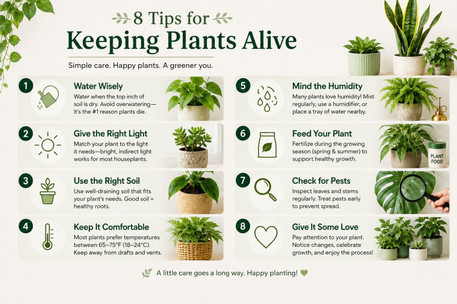
8 Tips for Keeping Plants Alive
Keeping plants healthy doesn’t have to be complicated. Whether you’re growing houseplants indoors or tending a small garden, a few simple habits can make all the difference. Healthy plants brighten your home, improve air quality, and create a more relaxing environment. If you’ve struggled with droopy leaves, yellowing plants, or mystery plant deaths, these easy tips can help you grow stronger, happier plants.
1. Water Wisely
One of the most common mistakes plant owners make is overwatering. Many plants prefer their soil to dry slightly between waterings. Before adding water, stick your finger about an inch into the soil. If it feels dry, it’s time to water.
Different plants have different watering needs. Succulents and cacti need much less water than tropical plants. Always make sure pots have drainage holes to prevent root rot.
Helpful Watering Tips
- Water deeply instead of lightly sprinkling
- Empty excess water from saucers
- Reduce watering during winter months
- Use room-temperature water for indoor plants
2. Give Plants the Right Light
Light is essential for plant growth. Some plants thrive in bright direct sunlight, while others prefer indirect or low light conditions. Understanding your plant’s lighting needs can prevent weak growth and leaf damage.
South-facing windows often provide the brightest light indoors, while east-facing windows offer gentler morning sunlight.
Signs Your Plant Needs More Light
- Leggy or stretched stems
- Slow growth
- Pale leaves
- Leaning toward windows
Signs of Too Much Light
- Brown leaf edges
- Scorched spots
- Wilting despite moist soil
3. Use Quality Soil
Healthy roots begin with healthy soil. Using the right potting mix helps plants absorb nutrients and drain properly. Avoid compacted garden soil for indoor containers because it can hold too much moisture.
Choose soil mixes designed for your specific plant type:
- Cactus mix for succulents
- Orchid bark for orchids
- Moisture-retaining soil for tropical plants
Fresh soil also helps reduce pests and disease problems.
4. Keep Temperatures Comfortable
Most common houseplants prefer temperatures between 65°F and 75°F. Sudden temperature changes can stress plants and slow growth.
Keep plants away from:
- Heating vents
- Air conditioners
- Drafty windows
- Fireplaces
Stable temperatures help plants stay healthy year-round.
5. Maintain Proper Humidity
Many indoor plants originate from tropical environments and enjoy higher humidity levels. Dry indoor air, especially during winter, can cause crispy leaf edges and poor growth.
Ways to Increase Humidity
- Mist plants lightly
- Use a humidifier
- Place plants together
- Set pots near trays filled with water and pebbles
Plants like ferns, calatheas, and peace lilies especially appreciate added moisture in the air.
6. Feed Your Plants
Plants need nutrients to grow strong stems, healthy roots, and vibrant leaves. Fertilize during the active growing season, usually spring and summer.
Choose a balanced plant fertilizer and follow package instructions carefully. Too much fertilizer can damage roots and burn leaves.
General Fertilizing Tips
- Feed more during active growth
- Reduce feeding in winter
- Water before fertilizing
- Avoid overfeeding
Healthy feeding routines encourage lush growth and stronger plants.
7. Check for Pests Regularly
Even healthy plants can attract pests like spider mites, aphids, fungus gnats, or mealybugs. Inspect leaves and stems often so you can catch problems early.
Common Signs of Plant Pests
- Sticky leaves
- Tiny webs
- Yellow spots
- Visible insects
- Distorted growth
Treat infestations early using insecticidal soap, neem oil, or by wiping leaves clean with a damp cloth.
8. Give Your Plants Attention
Plants respond well to regular care and observation. Rotate pots occasionally so all sides receive light evenly, remove dead leaves, and monitor changes in growth.
Paying attention helps you spot problems before they become serious. Plus, caring for plants can be relaxing and rewarding.
Final Thoughts
Keeping plants alive is all about consistency and understanding their basic needs. With proper watering, lighting, soil, humidity, and occasional feeding, most plants can thrive indoors or outdoors.
Start small, learn from your plants, and enjoy the process of growing greener spaces around your home. A little care truly goes a long way.