
Posted by TJ Hopkins on Jun 23rd 2026
8 Ways to Prevent Woodpecker Damage to Trees
Woodpeckers are fascinating birds that play an important role in nature by controlling insect populations and creating nesting cavities used by other wildlife. However, when they begin drilling holes in ornamental, shade, or fruit trees, they can cause significant damage to bark and wood. Repeated pecking may weaken branches, expose trees to disease, and leave unsightly holes that take years to heal. Fortunately, there are several humane and effective ways to discourage woodpeckers while still protecting these valuable birds.
Why Woodpeckers Peck Trees
Woodpeckers drill into trees for several reasons. They may be searching for insects hidden beneath the bark, creating nesting cavities, storing food, or establishing territory through loud drumming. Trees that are stressed, damaged, or infested with insects often attract woodpeckers because they provide easy access to food. Understanding why the birds are visiting your trees can help you choose the most effective prevention methods.
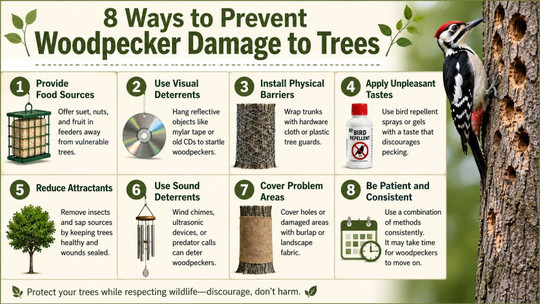
1. Provide Alternative Food Sources
Offering suet, nuts, seeds, and fruit at bird feeders can sometimes reduce woodpecker activity on valuable trees. Place feeders well away from vulnerable trees to encourage the birds to feed elsewhere. Suet feeders are especially attractive to many woodpecker species and may help redirect their attention.
2. Use Visual Deterrents
Reflective objects can make woodpeckers uncomfortable and discourage them from returning. Hang old CDs, reflective tape, aluminum strips, or commercial bird deterrent devices near damaged trees. Movement and flashing light often make these areas less appealing.
3. Install Physical Barriers
Wrapping trunks with hardware cloth, plastic tree guards, or fine mesh can protect bark from further damage. Leave enough space between the barrier and the bark to allow air circulation and prevent moisture buildup. Physical barriers are often one of the most effective long-term solutions.
4. Apply Unpleasant Tastes
Bird-safe repellents, gels, or sprays designed for woodpeckers may discourage pecking by creating an unpleasant taste or texture. Always follow product directions carefully and select products labeled for use on trees.
5. Reduce Insect Attractants
Woodpeckers are often searching for insects beneath the bark. Maintaining healthy trees through proper watering, mulching, pruning, and pest management can reduce insect populations and make trees less attractive. Sealing wounds and removing dead wood may also help.
6. Use Sound Deterrents
Wind chimes, motion-activated devices, or predator calls may temporarily discourage woodpeckers. These methods often work best when combined with visual deterrents and changed periodically so birds do not become accustomed to them.
7. Cover Problem Areas
If woodpeckers repeatedly attack the same spot, covering the damaged area with burlap, landscape fabric, or protective wrap may discourage additional drilling. Repairing holes and protecting exposed wood can also help prevent insects and diseases from entering the tree.
8. Be Patient and Consistent
Woodpeckers can be persistent, especially during nesting or breeding season. Combining several deterrent methods and using them consistently often produces the best results. It may take several weeks before birds abandon a favorite tree.
Keep Trees Healthy
Healthy trees are naturally more resistant to insects, diseases, and wildlife damage. Regular watering during drought, proper mulching, annual pruning, and monitoring for pests can help maintain tree vigor and reduce the likelihood of woodpecker problems.
Protect Trees While Respecting Wildlife
Woodpeckers are valuable members of the ecosystem, and the goal should be to discourage damage rather than harm the birds. By using humane deterrents, maintaining healthy trees, and acting early when damage first appears, homeowners can protect their landscapes while still supporting local wildlife.