
Posted by TJ Hopkins on Jun 26th 2026
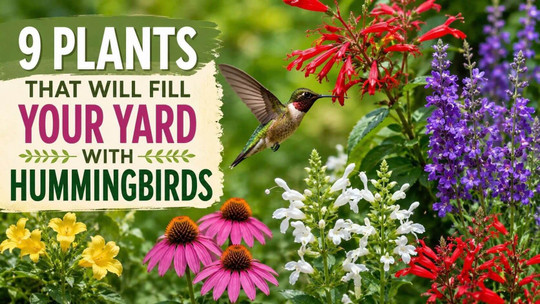
9 Plants That Will Fill Your Yard with Hummingbirds
If you love watching hummingbirds zip around your garden, planting the right flowers is one of the best ways to attract them. Hummingbirds are naturally drawn to brightly colored, nectar-rich blooms, especially those in shades of red, pink, purple, and orange. By choosing a variety of flowering plants that bloom from spring through fall, you can provide these tiny pollinators with a reliable food source all season long.
Here are nine of the best plants to grow if you want your yard buzzing with hummingbird activity.
1. Bee Balm (Monarda didyma)
Bee balm is one of the most dependable hummingbird plants you can grow. Its bright red, pink, or purple tubular flowers are packed with nectar and bloom throughout summer.
Why hummingbirds love it:
- High nectar production
- Long bloom period
- Fragrant flowers attract butterflies and bees too
Growing Tips:
- USDA Zones: 4–9
- Full sun to partial shade
- Moist, well-drained soil
- Height: 2–4 feet
2. Cardinal Flower (Lobelia cardinalis)
With brilliant scarlet-red flower spikes, cardinal flower is almost irresistible to hummingbirds. It naturally grows near streams and ponds, making it perfect for moist garden locations.
Why hummingbirds love it:
- Bright red tubular blooms
- Flowers during mid-to-late summer
- Excellent native perennial
Growing Tips:
- USDA Zones: 3–9
- Full sun to partial shade
- Consistently moist soil
- Height: 2–4 feet
3. Salvia (Salvia spp.)
Salvias produce abundant spikes of nectar-filled flowers in red, purple, blue, pink, and white. Many varieties bloom from late spring until frost.
Why hummingbirds love it:
- Continuous blooms
- Rich nectar supply
- Heat and drought tolerant
Growing Tips:
- USDA Zones: 4–10 (varies by variety)
- Full sun
- Well-drained soil
- Height: 1–5 feet
4. Penstemon (Penstemon spp.)
Often called beardtongue, penstemon features trumpet-shaped flowers that are perfectly designed for hummingbird beaks.
Why hummingbirds love it:
- Tubular flowers
- Long blooming season
- Native to many regions of North America
Growing Tips:
- USDA Zones: 3–9
- Full sun
- Well-drained soil
- Drought tolerant once established
5. Coneflower (Echinacea purpurea)
While coneflowers are better known for attracting butterflies and bees, hummingbirds frequently visit their nectar-rich blooms as well.
Why hummingbirds love it:
- Large colorful flowers
- Long summer bloom
- Easy to grow
Growing Tips:
- USDA Zones: 3–9
- Full sun
- Average, well-drained soil
- Height: 2–5 feet
6. Trumpet Vine (Campsis radicans)
This vigorous climbing vine produces dozens of large trumpet-shaped flowers that hummingbirds simply can't resist.
Why hummingbirds love it:
- Extremely high nectar production
- Bright orange-red flowers
- Blooms throughout summer
Growing Tips:
- USDA Zones: 4–9
- Full sun
- Adaptable soil
- Requires sturdy support
Note: Trumpet vine spreads aggressively, so plant it where it has room to grow.
7. Daylily (Hemerocallis spp.)
Daylilies are easy-care perennials that offer colorful blooms in shades of yellow, orange, red, and pink throughout summer.
Why hummingbirds love it:
- Nectar-filled blossoms
- Easy maintenance
- Excellent landscape plant
Growing Tips:
- USDA Zones: 3–9
- Full sun
- Well-drained soil
- Drought tolerant after establishment
8. Coral Honeysuckle (Lonicera sempervirens)
Unlike some invasive honeysuckle species, coral honeysuckle is a native vine that produces clusters of red tubular flowers loaded with nectar.
Why hummingbirds love it:
- Native species
- Long blooming season
- Fragrant flowers
Growing Tips:
- USDA Zones: 4–9
- Full sun to partial shade
- Well-drained soil
- Great for fences and trellises
9. Agastache (Hummingbird Mint)
Agastache produces tall flower spikes in shades of purple, pink, orange, and red from early summer until frost.
Why hummingbirds love it:
- Exceptional nectar source
- Long-lasting blooms
- Highly fragrant foliage
Growing Tips:
- USDA Zones: 5–10
- Full sun
- Dry to moderately moist soil
- Excellent drought tolerance
Tips for Attracting More Hummingbirds
To make your garden even more inviting:
- Plant flowers in large groups instead of single plants.
- Choose varieties that bloom from spring through fall.
- Include several red and tubular flowers.
- Avoid pesticides that can harm pollinators.
- Add a shallow water feature or mister for drinking and bathing.
- Hang a hummingbird feeder filled with fresh sugar water (4 parts water to 1 part sugar—never use red dye).
- Leave small trees and shrubs nearby so hummingbirds have places to perch and rest.
Create a Hummingbird Paradise
A yard filled with nectar-rich flowers can quickly become a favorite stop for hummingbirds throughout the growing season. By planting a mix of native perennials, flowering vines, and colorful annuals, you'll enjoy months of spectacular blooms while providing these remarkable birds with the food they need. Whether you have a large backyard or a small garden bed, adding just a few of these hummingbird-friendly plants can transform your landscape into a lively, colorful oasis.