
Posted by TJ Hopkins on Jul 12th 2026
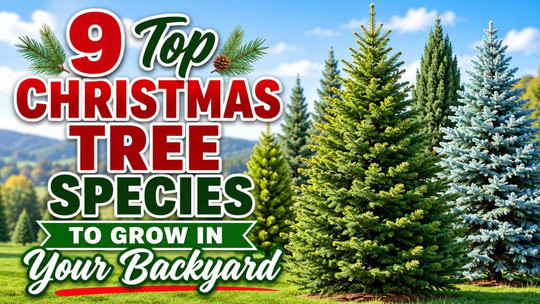
9 Top Christmas Tree Species to Grow in Your Backyard
Nothing says the holidays quite like a fresh Christmas tree. While many people purchase a cut tree each year, growing your own Christmas trees can be a rewarding long-term investment that adds beauty, privacy, and wildlife habitat to your landscape. Whether you're planting a single specimen or creating your own mini Christmas tree farm, choosing the right species is the first step.
Here are nine of the best Christmas tree species you can grow in your backyard.
1. Fraser Fir (Abies fraseri)
Fraser Fir is widely considered one of the finest Christmas trees thanks to its soft needles, symmetrical shape, and excellent needle retention.
Why You'll Love It
- Rich evergreen fragrance
- Soft, dark green needles with silvery undersides
- Outstanding needle retention after cutting
- Strong branches for heavy ornaments
Growing Conditions
- USDA Zones: 4–7
- Sun: Full sun
- Height: 30–50 feet
- Soil: Moist, well-drained, slightly acidic
2. Balsam Fir (Abies balsamea)
Known for its classic Christmas scent, Balsam Fir has been a holiday favorite for generations.
Highlights
- Incredible evergreen aroma
- Dense, attractive branches
- Soft, flat needles
- Great wildlife tree
Growing Conditions
- USDA Zones: 3–6
- Full sun to partial shade
- Prefers cool climates
3. Douglas Fir (Pseudotsuga menziesii)
Although technically not a true fir, Douglas Fir remains one of America's most popular Christmas trees.
Benefits
- Fast growing
- Beautiful blue-green needles
- Pleasant citrus-like fragrance
- Excellent landscape tree
Growing Conditions
- USDA Zones: 4–6
- Full sun
- Well-drained soil
4. Colorado Blue Spruce (Picea pungens)
If you want a striking ornamental tree that doubles as a Christmas tree, Colorado Blue Spruce is an outstanding choice.
Why Grow It
- Brilliant blue foliage
- Perfect pyramidal shape
- Strong branches
- Highly ornamental year-round
Growing Conditions
- USDA Zones: 2–7
- Full sun
- Well-drained soil
5. Norway Spruce (Picea abies)
A fast-growing evergreen that's ideal for larger properties.
Features
- Rapid growth
- Excellent privacy screen
- Traditional Christmas tree appearance
- Long-lived
Growing Conditions
- USDA Zones: 3–7
- Full sun
- Moist, well-drained soil
6. White Spruce (Picea glauca)
White Spruce offers excellent cold hardiness and a dense, attractive shape.
Advantages
- Cold tolerant
- Attractive blue-green needles
- Dense branching
- Wind resistant
Growing Conditions
- USDA Zones: 2–6
- Full sun
- Adaptable to many soil types
7. Scotch Pine (Pinus sylvestris)
One of the easiest Christmas trees to grow and maintain.
Why Choose It
- Excellent drought tolerance
- Fast growth
- Strong needle retention
- Adaptable to many climates
Growing Conditions
- USDA Zones: 3–7
- Full sun
- Well-drained soil
8. Eastern White Pine (Pinus strobus)
Known for its long, soft needles and graceful appearance.
Benefits
- Soft needles perfect for families with children
- Fast-growing shade tree
- Beautiful bluish-green color
- Excellent windbreak
Growing Conditions
- USDA Zones: 3–8
- Full sun to light shade
- Moist, acidic soil
9. Canaan Fir (Abies balsamea var. phanerolepis)
A relatively newer favorite that combines the best qualities of Fraser and Balsam Fir.
Highlights
- Outstanding fragrance
- Excellent needle retention
- Adaptable to more soil conditions
- Naturally symmetrical shape
Growing Conditions
- USDA Zones: 4–7
- Full sun
- Well-drained soil
Tips for Growing Christmas Trees
Growing healthy Christmas trees takes patience, but the results are well worth the effort.
- Plant trees in an area with at least 6–8 hours of sunlight daily.
- Space trees far enough apart to allow good air circulation.
- Water young trees regularly during dry periods.
- Apply mulch to conserve moisture and suppress weeds.
- Avoid over-fertilizing, which can produce weak growth.
- Prune lightly each year to maintain a dense, classic Christmas tree shape.
How Long Does It Take?
Most Christmas tree species require:
- 5–8 years for a small decorative tree
- 7–12 years for a traditional 6–8 foot Christmas tree
- 15+ years for large landscape specimens
The exact timeline depends on the species, climate, soil quality, and overall care.
Final Thoughts
Planting Christmas trees is a rewarding project that brings beauty to your landscape throughout the year while providing the opportunity to harvest your own fresh holiday tree in the future. Whether you prefer the fragrant Fraser Fir, the striking Colorado Blue Spruce, or the fast-growing Norway Spruce, each species offers unique qualities that can make your backyard feel festive for decades to come.