
Posted by TJ Hopkins on Aug 8th 2026
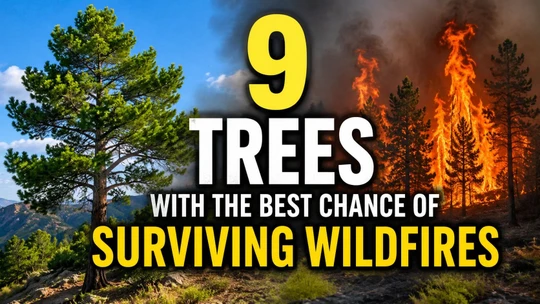
9 Trees with the Best Chance of Surviving Wildfires
Wildfires have become more frequent and intense across many parts of the world, making it more important than ever to choose trees that can better withstand fire. While no tree is completely fireproof, certain species have natural characteristics that help them survive low- to moderate-intensity wildfires. Thick bark, high moisture content, deep root systems, and the ability to recover after fire all increase a tree's chances of survival.
If you live in a wildfire-prone area, planting these resilient trees can help create a more fire-resistant landscape when combined with proper maintenance and defensible space.
1. Giant Sequoia (Sequoiadendron giganteum)
The Giant Sequoia is one of the world's most fire-adapted trees. Its incredibly thick bark—often more than two feet thick—acts as excellent insulation against intense heat. Mature trees are remarkably resistant to fire damage and have evolved alongside periodic wildfires for thousands of years.
Why it survives fires:
- Extremely thick, fibrous bark
- High branches reduce crown fires
- Fire helps release seeds from cones
- Deep, well-established root system
2. Coast Redwood (Sequoia sempervirens)
Coast Redwoods are famous for surviving wildfires. Their thick bark contains little resin, making it less likely to ignite. Even if damaged, these trees can sprout new growth from their trunk and roots.
Why it survives fires:
- Thick, fire-resistant bark
- Ability to resprout after fire
- High moisture content
- Long lifespan and excellent recovery
3. Ponderosa Pine (Pinus ponderosa)
Ponderosa Pine naturally grows in areas where frequent, low-intensity fires occur. Mature trees develop thick bark that protects the living tissue beneath.
Why it survives fires:
- Thick insulating bark
- Self-pruning lower branches
- Tall canopy keeps flames away
- Adapted to recurring natural fires
4. Cork Oak (Quercus suber)
The Cork Oak is one of the most fire-resistant hardwood trees in the world. Its thick cork bark shields the trunk from heat and can regenerate after harvesting or fire damage.
Why it survives fires:
- Thick cork insulation
- Excellent regenerative ability
- Long-lived hardwood
- Highly drought tolerant
5. Live Oak (Quercus virginiana)
Live Oaks have dense wood, thick bark, and broad canopies that often survive moderate wildfires. Mature trees frequently recover even after losing limbs.
Why it survives fires:
- Dense hardwood
- Thick bark
- Strong recovery after damage
- Deep root system
6. Bald Cypress (Taxodium distichum)
Although typically associated with wetlands, Bald Cypress trees are surprisingly resistant to fire when mature. Their thick bark and moist growing conditions reduce fire damage.
Why it survives fires:
- Thick protective bark
- High moisture environment
- Strong root system
- Excellent resilience
7. California Bay Laurel (Umbellularia californica)
This native western tree often survives low- to moderate-intensity fires thanks to its ability to resprout rapidly from its roots after being damaged.
Why it survives fires:
- Vigorous post-fire sprouting
- Deep root system
- Fast recovery
- Native fire adaptation
8. Black Oak (Quercus kelloggii)
Black Oak has evolved alongside wildfire ecosystems throughout western North America. Mature trees often survive surface fires and regenerate vigorously.
Why it survives fires:
- Thick bark on mature trees
- Strong stump sprouting
- Deep root system
- Excellent post-fire recovery
9. Longleaf Pine (Pinus palustris)
Longleaf Pine is one of the most fire-adapted pine species in North America. Young seedlings pass through a unique "grass stage," which protects the growing bud from surface fires. Mature trees withstand repeated fires with ease.
Why it survives fires:
- Thick bark
- Fire-resistant growth habit
- High canopy
- Naturally adapted to frequent burning
Characteristics of Fire-Resistant Trees
The trees most likely to survive wildfires often share several important characteristics:
- Thick bark that insulates living tissue
- High moisture content in leaves and wood
- Deep, extensive root systems
- Lower resin or oil content
- Ability to resprout after fire damage
- Tall canopies with fewer lower branches
These features help trees resist heat, avoid ignition, or recover more quickly after a wildfire.
Fire-Smart Landscaping Tips
Choosing fire-resistant trees is only one part of protecting your property. You should also:
- Remove dead branches and fallen leaves regularly.
- Space trees to reduce the spread of flames.
- Prune lower branches several feet above the ground.
- Keep grass mowed and weeds under control.
- Avoid planting highly flammable shrubs directly beneath trees.
- Create defensible space around buildings by reducing combustible vegetation.
Final Thoughts
No tree is completely immune to wildfire, especially during extreme fire conditions. However, species such as Giant Sequoia, Coast Redwood, Cork Oak, Longleaf Pine, and Ponderosa Pine have evolved remarkable adaptations that give them a much better chance of surviving than many other trees. Combined with good landscape maintenance and proper spacing, these trees can become valuable components of a fire-wise landscape.