
Posted by TJ Hopkins on Jun 20th 2026
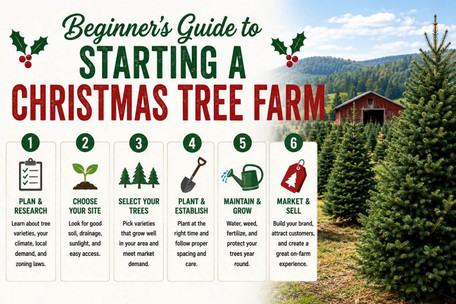
Beginner’s Guide to Starting a Christmas Tree Farm
Starting a Christmas tree farm can be a rewarding long-term investment that combines agriculture, land management, and seasonal retail sales. Whether you have a few acres or a large property, growing Christmas trees can provide both income and a unique experience for customers. Here’s a step-by-step guide to help you get started.
1. Plan and Research
Before planting your first tree, spend time researching the industry and your local market. Consider:
- Climate and growing conditions in your region
- Local demand for Christmas trees
- Available land and zoning regulations
- Competition from nearby tree farms
- Potential income opportunities such as wreaths, garlands, and farm events
A solid business plan will help you estimate costs, determine acreage needs, and establish realistic goals.
2. Choose the Right Site
The success of your farm begins with selecting suitable land. Look for:
- Well-drained soil
- Full sunlight
- Gentle slopes for drainage
- Easy road access for customers
- Adequate water availability
Avoid low areas where water collects, as poor drainage can lead to root diseases and slow tree growth.
3. Select Your Tree Species
Choose species that grow well in your climate and are popular with customers. Common Christmas tree species include:
- Fraser Fir
- Balsam Fir
- Douglas Fir
- Norway Spruce
- Colorado Blue Spruce
- Scotch Pine
- White Pine
Planting several varieties can appeal to different customer preferences and reduce risks from pests or weather conditions.
4. Plant and Establish Your Trees
Most Christmas trees are planted as seedlings or transplants. Proper spacing is important for healthy growth and customer access.
Typical spacing:
- 5 to 7 feet between trees
- 6 to 8 feet between rows
Plant during the recommended season for your area and keep young trees watered during dry periods. Mulching and weed control during the first few years can significantly improve growth rates.
5. Maintain and Grow Your Trees
Christmas trees require ongoing care for several years before they are ready for harvest.
Important maintenance tasks include:
- Mowing between rows
- Controlling weeds
- Fertilizing as needed
- Monitoring for insects and diseases
- Annual shearing to develop proper tree shape
- Irrigating during drought conditions
Most Christmas trees require 6 to 10 years to reach marketable size depending on species and growing conditions.
6. Market and Sell Your Trees
Successful tree farms focus on customer experience as much as tree quality. Consider offering:
- Choose-and-cut trees
- Pre-cut trees
- Wreaths and greenery
- Hot cocoa and refreshments
- Hayrides or holiday events
- Photo areas and farm activities
Social media, local advertising, and community events can help build your customer base. Creating a memorable holiday experience encourages repeat business and word-of-mouth referrals.
How Much Land Do You Need?
Even a small farm can be profitable. A few acres may support several hundred trees, while larger operations can grow thousands. New trees are often planted annually to ensure a continuous harvest each season.
Final Thoughts
Starting a Christmas tree farm requires patience, planning, and ongoing care, but it can become a rewarding family business and a valuable source of seasonal income. By selecting the right site, planting suitable species, and creating an enjoyable customer experience, you can build a successful Christmas tree farm that serves your community for many years.