
Posted by TJ Hopkins on Aug 1st 2026
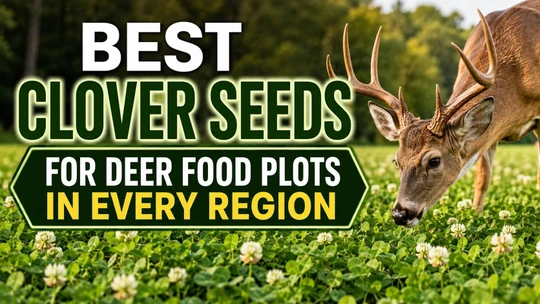
Best Clover Seeds for Deer Food Plots in Every Region
A successful deer food plot starts with choosing the right clover for your climate and hunting goals. Clover is one of the most dependable food plot crops because it provides high-protein forage, attracts deer throughout much of the year, improves soil by fixing nitrogen, and can last for several seasons with proper maintenance.
However, not every clover variety performs equally well in every part of the country. Selecting the best species for your region can make the difference between a thriving food plot and one that struggles.
Why Clover Is a Favorite for Deer Food Plots
Hunters and land managers rely on clover because it offers several advantages:
- High protein levels that support antler growth and overall herd health
- Long growing season compared to many annual food plot crops
- Excellent attraction during spring, summer, and early fall
- Improves soil fertility by adding nitrogen naturally
- Helps reduce erosion
- Can return year after year with proper care
Best Clover Varieties
1. White Clover
White clover is one of the most popular deer food plot choices in North America.
Best Regions
- Northeast
- Midwest
- Pacific Northwest
- Upper South
Advantages
- Extremely attractive to deer
- Excellent grazing tolerance
- Long-lasting perennial
- Handles frequent browsing well
Potential Drawbacks
- Doesn't tolerate drought as well as some other varieties.
2. Ladino Clover
Ladino is a larger, more productive form of white clover.
Best Regions
- Midwest
- Great Lakes
- Northeast
- Appalachian Mountains
Advantages
- Very large leaves
- High forage production
- Outstanding nutrition
- Excellent for heavily hunted areas
3. Red Clover
Red clover grows quickly and establishes faster than many perennial clovers.
Best Regions
- Midwest
- Northeast
- Mid-Atlantic
- Upper South
Advantages
- Fast establishment
- Great first-year production
- Excellent soil improvement
- Highly attractive during spring
4. Crimson Clover
Crimson clover is an annual favorite for southern food plots.
Best Regions
- Southeast
- Gulf Coast
- Southern Atlantic States
Advantages
- Quick fall establishment
- Outstanding winter forage
- Bright crimson blooms
- Excellent companion crop
5. Arrowleaf Clover
Arrowleaf clover extends forage production well into late spring.
Best Regions
- Deep South
- Southeast
- Coastal Plains
Advantages
- Excellent spring growth
- Very high protein
- Great reseeding ability
- Long growing season
6. Alsike Clover
Alsike clover performs exceptionally well in cooler, wetter soils.
Best Regions
- Northern United States
- Canada
- High elevations
Advantages
- Tolerates wet soils
- Cold hardy
- Long-lived perennial
- Excellent companion species
7. Berseem Clover
Often called "Egyptian Clover," Berseem produces tremendous forage in mild climates.
Best Regions
- Southern states
- Southwest
- California
Advantages
- Rapid growth
- Extremely high forage production
- Highly digestible
- Great for winter grazing
8. Balansa Clover
Balansa clover has become increasingly popular among serious food plot managers.
Best Regions
- Southeast
- South Central
- Mild winter climates
Advantages
- Excellent cold tolerance
- Flood tolerant
- Heavy forage production
- Reseeds readily
Best Clover by Region
Northeast
Top Choices:
- White Clover
- Ladino Clover
- Red Clover
- Alsike Clover
Cool temperatures and reliable rainfall make perennial clovers excellent choices.
Midwest
Top Choices:
- Ladino Clover
- White Clover
- Red Clover
Rich soils and moderate rainfall help these varieties produce exceptional forage.
Southeast
Top Choices:
- Crimson Clover
- Arrowleaf Clover
- White Clover
- Balansa Clover
Warm winters allow annual clovers to thrive while extending forage availability.
Deep South
Top Choices:
- Arrowleaf Clover
- Crimson Clover
- Balansa Clover
- Berseem Clover
These varieties perform well despite warmer temperatures and longer growing seasons.
Great Plains
Top Choices:
- White Clover
- Red Clover
Consider mixing clover with drought-tolerant species like chicory to improve resilience during dry periods.
Pacific Northwest
Top Choices:
- White Clover
- Ladino Clover
- Alsike Clover
Cool temperatures and regular rainfall create nearly ideal growing conditions.
Tips for Planting Clover Food Plots
For the best results:
- Test your soil before planting.
- Maintain a soil pH between 6.0 and 7.0.
- Remove weeds before seeding.
- Plant at the recommended seeding depth (typically ¼ inch or less).
- Avoid burying seed too deeply.
- Fertilize according to soil test recommendations.
- Mow periodically to control weeds and encourage new growth.
Should You Plant a Clover Mix?
Many experienced land managers prefer planting multiple clover species together.
Benefits include:
- Longer forage availability
- Better drought resistance
- Improved disease tolerance
- More consistent growth throughout the year
- Greater adaptability to changing weather
Combining white clover, ladino clover, and crimson clover is a popular blend that provides season-long attraction in many regions.
Final Thoughts
Choosing the right clover for your region is one of the most important decisions when establishing a successful deer food plot. White and Ladino clovers remain excellent all-around choices for much of the United States, while Crimson, Arrowleaf, Balansa, and Berseem clovers excel in warmer southern climates.
With proper soil preparation, regular maintenance, and the right clover selection, your food plot can provide nutritious forage that attracts deer year after year.