
Posted by TJ Hopkins on Jul 5th 2026
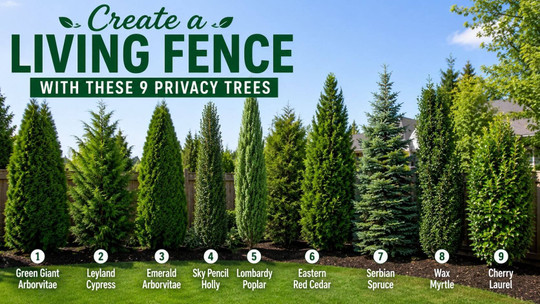
Create a Living Fence with These 9 Privacy Trees
A living fence is one of the most attractive and practical ways to add privacy to your landscape. Unlike traditional wood or vinyl fencing, a row of carefully selected trees creates a natural green wall that blocks unwanted views, reduces noise, provides wildlife habitat, and adds year-round beauty to your property. Whether you're looking to screen a backyard, hide a neighboring property, or create a peaceful outdoor retreat, the right privacy trees can transform your landscape.
Here are nine excellent trees and shrubs that are commonly used to create beautiful living fences.
1. Green Giant Arborvitae (Thuja standishii × plicata 'Green Giant')
Green Giant Arborvitae is one of the fastest-growing privacy trees available. Growing up to 3–5 feet per year under ideal conditions, it quickly forms a dense evergreen screen.
Why you'll love it:
- Extremely fast growth
- Dense evergreen foliage year-round
- Resistant to many common pests and diseases
- Excellent windbreak tree
- Low maintenance once established
Mature Size:
- Height: 40–60 feet
- Width: 12–18 feet
USDA Zones: 5–9
2. Leyland Cypress (Cupressocyparis leylandii)
The Leyland Cypress is famous for creating tall, elegant privacy hedges in a relatively short amount of time. Its feathery evergreen foliage provides excellent year-round coverage.
Benefits:
- Fast-growing
- Soft, attractive foliage
- Excellent for large properties
- Creates an effective sound barrier
Mature Size:
- Height: 50–70 feet
- Width: 15–25 feet
USDA Zones: 6–10
3. Emerald Arborvitae (Thuja occidentalis 'Smaragd')
Emerald Arborvitae remains one of the most popular landscaping trees because of its naturally narrow, pyramidal shape. It requires very little pruning and maintains rich green foliage throughout winter.
Advantages:
- Perfect for smaller yards
- Uniform appearance
- Dense foliage
- Minimal maintenance
Mature Size:
- Height: 12–15 feet
- Width: 3–4 feet
USDA Zones: 3–8
4. Sky Pencil Holly (Ilex crenata 'Sky Pencil')
If space is limited, Sky Pencil Holly is one of the narrowest privacy plants available. Its upright growth habit makes it perfect for narrow side yards, entryways, and property lines.
Highlights:
- Extremely narrow profile
- Evergreen
- Great for formal landscapes
- Easy to maintain
Mature Size:
- Height: 6–10 feet
- Width: 2–3 feet
USDA Zones: 5–9
5. Lombardy Poplar (Populus nigra 'Italica')
Lombardy Poplar is prized for its dramatic vertical shape and incredibly rapid growth. While it has a shorter lifespan than many evergreens, it quickly provides privacy for new landscapes.
Benefits:
- One of the fastest-growing shade trees
- Tall, narrow silhouette
- Ideal for quick screening
- Creates striking landscape accents
Mature Size:
- Height: 40–60 feet
- Width: 10–15 feet
USDA Zones: 3–9
6. Eastern Red Cedar (Juniperus virginiana)
Native to much of North America, Eastern Red Cedar is exceptionally hardy and adaptable. It tolerates drought, poor soils, and harsh weather while providing dense evergreen privacy.
Why plant it:
- Native species
- Excellent wildlife habitat
- Drought tolerant
- Long-lived
- Low maintenance
Mature Size:
- Height: 30–50 feet
- Width: 10–20 feet
USDA Zones: 2–9
7. Serbian Spruce (Picea omorika)
Serbian Spruce combines elegance with durability. Its narrow shape and attractive blue-green needles make it an outstanding ornamental privacy tree.
Features:
- Graceful appearance
- Narrow growth habit
- Cold hardy
- Resistant to urban conditions
Mature Size:
- Height: 40–60 feet
- Width: 15–20 feet
USDA Zones: 4–7
8. Wax Myrtle (Morella cerifera)
Wax Myrtle is a fast-growing evergreen shrub or small tree commonly used in warmer climates. It responds well to pruning and forms dense, attractive privacy hedges.
Advantages:
- Fast-growing
- Fragrant foliage
- Excellent for hedges
- Tolerates coastal conditions
- Attracts birds
Mature Size:
- Height: 10–20 feet
- Width: 8–15 feet
USDA Zones: 7–10
9. Cherry Laurel (Prunus laurocerasus)
Cherry Laurel is a broadleaf evergreen that produces glossy green leaves and fragrant white flowers in spring. It creates an exceptionally dense privacy screen.
Benefits:
- Thick evergreen foliage
- Attractive spring blooms
- Excellent hedge plant
- Responds well to pruning
- Great noise barrier
Mature Size:
- Height: 15–30 feet
- Width: 10–20 feet
USDA Zones: 6–9
Tips for Planting a Living Fence
To get the best results from your privacy planting:
- Space trees according to their mature width rather than their current size.
- Prepare the soil with compost if drainage is poor.
- Water regularly during the first two growing seasons.
- Apply 2–3 inches of mulch around each tree to conserve moisture and suppress weeds.
- Fertilize lightly in spring if needed.
- Prune only as necessary to maintain shape and encourage dense growth.
Which Privacy Tree Is Best?
The best choice depends on your climate, available space, and how quickly you want privacy.
- Fastest Growth: Green Giant Arborvitae, Leyland Cypress, Lombardy Poplar
- Best for Small Yards: Emerald Arborvitae, Sky Pencil Holly
- Best Native Choice: Eastern Red Cedar
- Best Cold-Hardy Evergreen: Serbian Spruce
- Best for Warm Climates: Wax Myrtle, Cherry Laurel
Final Thoughts
A living fence offers far more than privacy—it adds beauty, increases property value, reduces noise, provides shelter for birds and pollinators, and creates a lush, natural backdrop for your landscape. By selecting trees suited to your climate and available space, you can enjoy a green privacy screen that lasts for decades while enhancing the overall appeal of your yard.