
Posted by TJ Hopkins on Aug 24th 2026
Does the Seed Float Test Really Tell You If Seeds Are Viable?
If you have ever saved seeds from your garden or purchased older seeds, you may have wondered whether they are still capable of germinating. One popular method people use to check seeds is the seed float test.
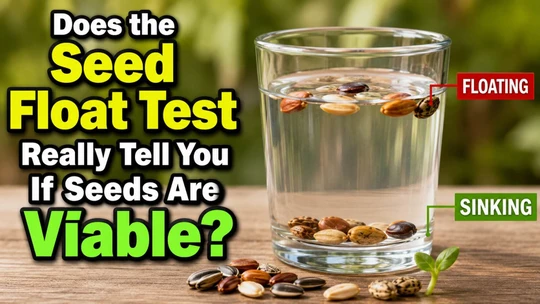
The test sounds simple: place seeds in a container of water, wait a few minutes, and watch what happens. Seeds that sink are often considered viable, while seeds that float are assumed to be bad.
But is the seed float test actually reliable?
The short answer is no—not always. While the float test can provide information about certain types of seeds, floating or sinking alone does not reliably determine whether a seed will germinate.
What Is the Seed Float Test?
The seed float test involves placing seeds in a glass or bowl of water and observing whether they float or sink.
The common interpretation is:
- Seeds that sink are considered healthy and viable.
- Seeds that float are considered empty, damaged, or unlikely to germinate.
The idea behind the test is that healthy seeds are generally filled with developed internal tissue, making them heavier. Empty or poorly developed seeds may contain more air and therefore remain on the surface.
Although this sounds reasonable, seed biology is much more complicated.
Why Do Some Seeds Float?
A seed can float for several reasons, and poor viability is only one possibility.
Some seeds naturally contain air spaces. Others have lightweight seed coats or structures that help them disperse by water. A completely healthy seed may therefore float even though it is perfectly capable of germinating.
Seeds can also remain floating because of surface tension. This is especially common with small or lightweight seeds.
A seed floating on the surface does not automatically mean the embryo inside is dead.
Why Do Some Seeds Sink?
The opposite problem occurs with seeds that sink.
A seed may be heavy enough to sink but still be incapable of germinating. Old seeds, improperly stored seeds, or seeds exposed to excessive heat or moisture may still contain enough material to sink in water even though their embryos are no longer alive.
Some seeds may also be damaged internally without showing obvious signs on the outside.
Therefore, sinking should not be considered proof that a seed is viable.
Can the Float Test Be Useful?
The float test isn't completely useless. With certain large seeds, it can sometimes help identify seeds that are obviously empty or poorly developed.
If you have a batch of large seeds and some are noticeably lightweight, hollow, or damaged, floating may provide another indication that those particular seeds are questionable.
However, the test should be viewed as a rough screening method rather than a true germination test.
Throwing away every seed that floats could result in discarding seeds that would have successfully germinated.
The Biggest Problem With the Float Test
The biggest limitation is simple: the float test measures buoyancy, not viability.
Viability refers to whether the living embryo inside a seed is capable of developing into a seedling.
Whether something floats depends on factors such as density, trapped air, seed coat characteristics, moisture content, and surface tension.
These characteristics can sometimes be related to seed quality, but they do not directly tell you whether the embryo is alive.
Does Soaking Seeds Affect the Results?
Yes. Seeds can absorb water while sitting in the container.
A seed that initially floats may eventually become waterlogged and sink. That doesn't necessarily mean its viability suddenly changed. It simply means the seed absorbed enough water to alter its density.
The amount of time seeds remain in the water can therefore significantly influence the results.
This is another reason the float test should not be treated as a dependable viability test.
Could the Float Test Harm Seeds?
Brief soaking is harmless and sometimes beneficial for many types of seeds. However, not every seed should be soaked for extended periods.
Seeds need oxygen as they begin the germination process. Leaving certain seeds submerged for too long can potentially reduce oxygen availability and encourage fungal or bacterial problems.
If you are unfamiliar with a particular species, check its recommended germination treatment before soaking the seeds.
What Is a Better Way to Test Seed Viability?
For home gardeners, one of the most reliable approaches is a germination test.
Instead of trying to predict whether seeds will germinate based on whether they float, actually give a sample of the seeds the conditions they need to germinate.
A simple method is the damp paper towel test.
How to Perform a Paper Towel Germination Test
- Select 10 seeds from the batch you want to test.
- Moisten a paper towel so it is damp but not dripping wet.
- Spread the seeds across the paper towel.
- Fold the towel over the seeds.
- Place it inside a plastic bag or suitable covered container.
- Keep it at the appropriate germination temperature for the species.
- Check the seeds regularly for germination.
Make sure the paper towel remains moist without becoming excessively wet.
The amount of time required will vary considerably depending on the plant species.
How to Calculate the Germination Rate
Using 10 seeds makes estimating the germination percentage easy.
If 8 out of 10 seeds germinate, the approximate germination rate is 80%.
If only 4 germinate, the germination rate is approximately 40%.
When working with a large quantity of seeds, testing 20, 50, or even 100 seeds can provide a better estimate of the entire batch.
Tree Seeds Can Be More Complicated
Testing tree seed viability can be especially challenging because many tree species have dormancy mechanisms that prevent seeds from germinating immediately.
Some tree seeds require cold stratification, which involves exposing moist seeds to a period of cold temperatures before germination.
Others may require:
- Warm stratification
- Cold followed by warm stratification
- Scarification
- Soaking
- Removal of fleshy fruit material
- Specific temperature cycles
- Several months before germination occurs
A tree seed failing to germinate immediately does not necessarily mean it is dead. It may simply be dormant.
This is particularly important when evaluating tree seeds using quick methods such as the float test.
What About Very Small Seeds?
The float test is generally even less useful for extremely small seeds.
Tiny seeds can remain on the water's surface because of surface tension and their extremely low weight. Some may also clump together or stick to the sides of the container.
For very small seeds, following proper sowing procedures and conducting an actual germination test is usually much more informative.
What If You Have Only a Few Seeds?
If you have only a handful of valuable seeds, there may be little reason to perform a viability test at all.
Instead, sow the seeds using the proper germination method for the species.
For example, if you have only five rare tree seeds, throwing two away simply because they floated could unnecessarily reduce your chances of growing a tree.
Unless a seed is obviously damaged, moldy, crushed, or empty, planting it may be the better choice.
Other Signs of Poor Seed Quality
While appearance cannot guarantee viability either, examine seeds before planting.
Potential warning signs include:
- Visible mold
- Severe discoloration
- Insect holes
- Cracked or crushed seed coats
- Seeds that appear completely hollow
- Significant shriveling
- Unusual softness or decay
Keep in mind that healthy seeds vary tremendously in size, shape, color, and texture depending on the species.
Proper Seed Storage Matters
If you want seeds to remain viable for as long as possible, proper storage is far more important than whether they pass a float test.
In general, many seeds store best when kept cool, dry, and protected from major temperature fluctuations.
Moisture is particularly important because excessive humidity can encourage deterioration and mold.
Storage requirements and longevity vary by species. Some seeds remain viable for years under appropriate conditions, while others naturally lose viability much more quickly.
Should You Throw Away Seeds That Float?
Generally, no.
If a seed floats during a float test, don't automatically assume it is dead. Unless you have reliable species-specific information showing that floating strongly correlates with poor seed quality, consider giving the seed a chance to germinate.
The cost of planting a questionable seed is usually small compared with the possibility of throwing away a perfectly viable one.
The Bottom Line
The seed float test is popular because it is quick, easy, and requires nothing more than seeds and a glass of water. Unfortunately, it is often treated as being far more reliable than it really is.
Floating does not necessarily mean a seed is dead, and sinking does not guarantee that a seed is viable.
The test primarily tells you something about a seed's buoyancy and density—not whether the embryo inside is alive and capable of germination.
If you genuinely want to determine whether a batch of seeds is viable, an actual germination test is usually the better approach. For tree seeds and other species with complicated dormancy requirements, follow the correct pre-treatment and germination procedures before judging the seeds.
So the next time you place seeds in a glass of water and see some floating at the top, don't be too quick to throw them away.
They may still have plenty of life left in them.