
Posted by TJ Hopkins on Jul 20th 2026
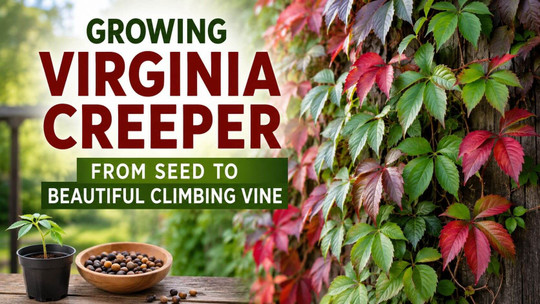
Growing Virginia Creeper from Seed: From Seed to a Beautiful Climbing Vine
Virginia Creeper (Parthenocissus quinquefolia) is one of North America's most attractive native climbing vines. Famous for its vibrant green summer foliage that transforms into brilliant shades of crimson and scarlet in autumn, this vigorous vine is perfect for covering fences, arbors, pergolas, trellises, stone walls, and woodland gardens. While many gardeners purchase established plants, growing Virginia Creeper from seed is rewarding, inexpensive, and surprisingly simple with a little patience.
Why Grow Virginia Creeper?
Virginia Creeper offers beauty throughout the growing season while providing valuable habitat for wildlife.
Benefits include:
- Brilliant red fall foliage
- Fast-growing climbing habit
- Excellent privacy screen
- Attractive berries for birds
- Native to eastern and central North America
- Adaptable to many soil types
- Low maintenance once established
- Helps reduce erosion on slopes
Understanding Virginia Creeper Seeds
Freshly harvested Virginia Creeper seeds naturally experience winter before sprouting in spring. To mimic this natural cycle, gardeners use cold stratification, which greatly improves germination rates.
Without stratification, many seeds may remain dormant for months or even years.
Step 1: Cold Stratify the Seeds
Place the seeds into a zip-top plastic bag filled with moist (not wet) vermiculite.
Store the bag in your refrigerator for approximately 8 weeks.
During this period:
- Check the bag every couple of weeks.
- Mist lightly if the vermiculite begins to dry.
- Avoid excess moisture, which can encourage mold.
Step 2: Scarify the Seed Coat
After refrigeration, gently scarify each seed.
Use:
- A nail file
- Fine sandpaper
- Emery board
Rub only enough to slightly thin the outer seed coat.
Do not sand deeply into the seed.
Step 3: Soak Overnight
Place the scarified seeds in room-temperature water overnight.
This softens the seed coat and prepares the embryo for germination.
Step 4: Plant the Seeds
Fill seed trays or small pots with a well-draining seed-starting mix.
Plant each seed approximately:
- 3/8 inch deep
Cover lightly with soil and water gently.
Using a humidity dome helps maintain consistent moisture during germination.
Step 5: Provide Ideal Growing Conditions
Virginia Creeper seeds germinate best when provided with:
- Temperatures between 60–68°F (16–20°C)
- Bright but indirect light
- Even moisture
- Good air circulation
Avoid placing containers in direct afternoon sun.
Step 6: Wait for Germination
Under proper conditions, germination usually occurs within:
2–3 weeks
Some seeds may sprout slightly earlier or later depending on temperature and individual seed vigor.
Caring for Seedlings
Once seedlings appear:
- Remove the humidity dome.
- Keep soil evenly moist.
- Provide bright filtered light.
- Fertilize lightly after several sets of true leaves develop.
- Transplant carefully into larger containers as roots expand.
Young vines grow steadily during their first season.
Transplanting Outdoors
Plant Virginia Creeper outdoors after all danger of frost has passed.
Choose a location with:
- Full sun to partial shade
- Well-drained soil
- A sturdy fence, arbor, wall, or trellis for climbing
Space plants approximately 8–10 feet apart if creating a living privacy screen.
Long-Term Care
Virginia Creeper requires very little maintenance.
Annual care includes:
- Water during extended droughts
- Apply mulch around the base
- Prune during winter to control size
- Remove unwanted runners if necessary
Because it climbs using adhesive tendrils, avoid allowing it to grow on surfaces that may be damaged over time.
Wildlife Benefits
Virginia Creeper is an outstanding wildlife plant.
Its flowers provide nectar for pollinators, while its berries feed numerous bird species including:
- Bluebirds
- Woodpeckers
- Robins
- Mockingbirds
- Thrushes
The dense foliage also provides nesting cover and shelter.
Common Questions
Is Virginia Creeper invasive?
It spreads aggressively but is native throughout much of the United States. Regular pruning easily keeps it under control.
Can it grow in shade?
Yes. It tolerates partial shade very well, although full sun produces the most spectacular fall color.
How fast does it grow?
Once established, Virginia Creeper can grow 10–20 feet per year under favorable conditions.
Are the berries edible?
No. The berries are toxic to humans but are an excellent food source for birds.
Final Thoughts
Growing Virginia Creeper from seed is an enjoyable project that rewards gardeners with one of the most stunning native vines available. By following the proper cold stratification process, scarifying the seeds, and providing the right growing conditions, you'll soon have vigorous young vines ready to climb fences, pergolas, and trellises. With minimal care, Virginia Creeper will provide decades of lush greenery, brilliant autumn color, and valuable habitat for local wildlife.