
Posted by TJ Hopkins on Sep 21st 2026
How Burlap Protects Trees and Shrubs During Winter
Winter can be difficult for trees and shrubs, especially newly planted evergreens, young trees, and plants growing in exposed locations. Cold temperatures are only part of the problem. Harsh winds, heavy snow, road salt, hungry animals, and rapid temperature changes can also damage vulnerable plants.
Burlap provides a simple and affordable layer of protection without completely sealing plants away from fresh air. When installed correctly, it can help trees and shrubs survive winter and return healthy in the spring.
Why Trees and Shrubs Need Winter Protection
Established trees and shrubs are usually able to tolerate normal winter conditions in their growing zones. However, young or recently transplanted plants may not have large enough root systems to replace moisture lost through their leaves or needles.
Evergreens are particularly vulnerable because they continue losing moisture throughout winter. When the ground is frozen, their roots cannot easily absorb more water. This can cause winter burn, which appears as brown, dry, or scorched foliage.
Plants may also suffer damage from strong winds, heavy snow, freezing rain, road salt, deer, rabbits, and fluctuating winter temperatures.
Burlap Reduces Winter Wind Damage
Cold winter wind can remove moisture from evergreen foliage faster than the roots can replace it. This is especially common on sunny days when the ground remains frozen.
A burlap screen slows the wind before it reaches the plant. It creates a calmer area around the branches while still allowing air to circulate. This protection can reduce moisture loss and help prevent foliage from turning brown.
Burlap windbreaks are especially helpful on the north and west sides of a property, where winter winds are often strongest.
Burlap Helps Prevent Winter Burn
Winter burn frequently affects arborvitae, boxwood, rhododendrons, hollies, junipers, and other evergreen plants. Damage may be most noticeable on the side facing the wind or afternoon sun.
Burlap provides light shade and reduces exposure to drying winds. It does not keep the plant warm like a heated cover. Instead, it creates a more stable environment and slows the loss of moisture from foliage.
Watering trees and shrubs deeply before the ground freezes can provide additional protection. Plants that enter winter well hydrated are better prepared to handle dry and windy conditions.
Burlap Protects Plants From Road Salt
Salt used on roads, sidewalks, and driveways can damage nearby plants. Passing vehicles and snowplows may spray salty water onto branches and foliage. Salt can also collect in the soil as treated snow melts.
A properly positioned burlap screen can block some of this salt spray before it reaches the plant. This is particularly useful for shrubs growing near roads, parking areas, and frequently treated walkways.
The burlap should be placed between the plant and the source of the salt. It may need to be replaced if it becomes heavily coated during the winter.
Burlap Can Reduce Snow and Ice Damage
Heavy snow and freezing rain can bend or break branches. Upright evergreens and multi-stemmed shrubs may spread apart under the weight of accumulated snow.
Loosely wrapping certain shrubs with burlap can help hold their branches together. The material should be secure enough to provide support but not so tight that it crushes the foliage or restricts airflow.
After a snowstorm, gently remove loose snow with an upward brushing motion. Avoid striking frozen branches because they may be brittle and easier to break.
Burlap Discourages Deer and Rabbits
Hungry wildlife may feed on bark, twigs, buds, and evergreen foliage when other food becomes scarce. Deer can severely damage shrubs, while rabbits and rodents may chew bark around the base of young trees.
Burlap can act as a visual and physical barrier around vulnerable plants. However, it is not always strong enough to stop determined animals. Wire fencing or tree guards may be needed where wildlife pressure is severe.
When protecting a young tree trunk, do not wrap burlap tightly against the bark for the entire winter. A separate protective barrier with space around the trunk is usually more effective.
Which Plants Benefit From Burlap?
Burlap protection may be useful for:
- Newly planted trees and shrubs
- Broadleaf evergreens such as boxwood, holly, and rhododendron
- Arborvitae, juniper, and other exposed evergreens
- Plants growing near salted roads or sidewalks
- Shrubs planted in open or windy locations
- Plants that have experienced winter burn in previous years
- Upright shrubs that may separate under heavy snow
- Young plants that are vulnerable to browsing animals
Healthy, established plants in sheltered locations may not need burlap every winter. Protection should be based on the plant, its location, and the conditions it is likely to face.
How to Build a Burlap Windbreak
A windbreak is often safer than wrapping burlap directly around a plant.
Place three or four sturdy stakes in the ground around the tree or shrub before the soil freezes. Leave several inches of space between the stakes and the outer branches.
Attach burlap to the stakes to create a protective barrier around the exposed sides of the plant. In very windy areas, the barrier may surround the plant while leaving the top open for ventilation.
Secure the burlap firmly so it does not tear loose or flap against the branches. Check the screen several times during winter and make repairs when needed.
How to Wrap a Shrub With Burlap
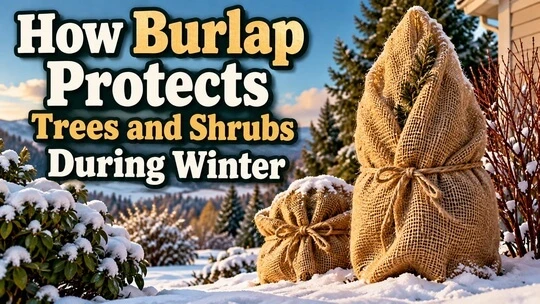
For shrubs that need protection from heavy snow or spreading branches, begin at the bottom and wrap the burlap loosely around the plant. Continue upward while keeping the branches in their natural position.
Fasten the burlap with twine. Avoid pulling it tightly or compressing the plant into an unnatural shape. Leave room for airflow, and do not use plastic underneath the burlap.
Plastic can trap moisture and heat on sunny days. Burlap is breathable, making it a better choice for long-term seasonal protection.
Common Burlap Mistakes to Avoid
Do not wrap plants too early in the fall. Plants should experience cool weather and begin their natural dormancy before they are covered.
Avoid wrapping burlap tightly against foliage for long periods unless the plant requires support. A freestanding screen generally provides better airflow.
Do not cover the top of an evergreen so completely that heat and moisture become trapped inside. Plants still need ventilation during winter.
Never leave wet burlap pressed against a tree trunk. Constant moisture around the bark may encourage decay or disease.
Finally, remember that burlap does not replace proper watering, mulching, planting, or plant selection. It is an additional layer of seasonal protection.
When to Install and Remove Burlap
Install burlap after plants have entered dormancy but before severe winter weather arrives. In cold regions, this is often done in late fall after the first few hard freezes.
Remove the burlap in early spring when the risk of extreme cold and damaging winter wind has passed. Choose a cloudy or mild day if possible. Sudden exposure to intense sunlight may stress foliage that has been shaded for several months.
Do not leave burlap around plants throughout the growing season. Once winter protection is no longer needed, remove it so the plant receives normal sunlight and air circulation.
Give Vulnerable Plants a Better Chance This Winter
Burlap is a practical way to protect young and exposed trees and shrubs from drying winds, road salt, heavy snow, and animal damage. It is breathable, reusable, and easy to install around many landscape plants.
For the best results, combine burlap protection with deep fall watering and a layer of mulch over the root zone. A little preparation before winter can prevent damaged foliage and broken branches while helping trees and shrubs begin spring in healthier condition.