
Posted by TJ Hopkins on Aug 16th 2026
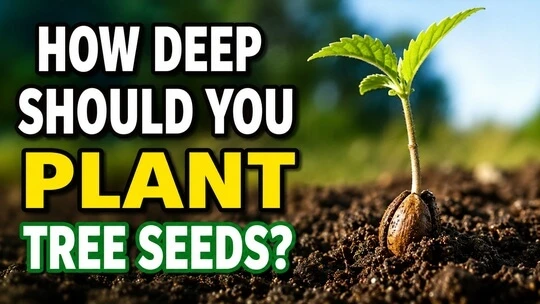
How Deep Should You Plant Tree Seeds?
Growing a tree from seed can be incredibly rewarding, but getting the planting depth right is an important first step. Plant a seed too deeply and it may struggle to reach the surface. Plant it too shallowly and it may dry out, wash away, or fail to develop properly.
The challenge is that there isn't one planting depth that works for every tree species. Tree seeds range from tiny, dust-like seeds to large nuts such as acorns and walnuts. Their size, species, soil conditions, and natural germination habits all influence how deeply they should be planted.
Fortunately, there is a simple rule that works well for many tree seeds.
The General Rule for Planting Tree Seeds
A common guideline is to plant a tree seed at a depth approximately two to three times the thickness or diameter of the seed.
For example:
- A seed that is 1/4 inch thick can generally be planted about 1/2 inch deep.
- A seed that is 1/2 inch thick may be planted approximately 1 inch deep.
- Larger nuts and seeds may require planting depths of 1 to 2 inches or more, depending on the species.
This rule is a useful starting point, but it shouldn't replace species-specific germination instructions. Some tree seeds have very different requirements.
Why Planting Depth Matters
Seeds contain a limited supply of stored energy. Once germination begins, the young seedling uses this energy to develop its first root and push its shoot toward the soil surface.
When a seed is planted too deeply, the seedling may exhaust its stored energy before reaching sunlight.
Planting too shallowly creates different problems. The upper layer of soil dries much more quickly than soil farther below the surface. Shallow seeds can also be exposed by watering, wind, heavy rain, birds, squirrels, and other animals.
The goal is to give the seed enough soil coverage to maintain moisture while still allowing the emerging seedling to reach the surface easily.
Small Tree Seeds Usually Need Shallow Planting
Small seeds generally need to be planted much closer to the surface than large seeds.
Some extremely small tree seeds should barely be covered at all. Depending on the species, they may simply be pressed into the surface of the growing medium and covered with a very thin layer of fine soil, sand, or vermiculite.
Examples of trees with relatively small seeds can include:
- Birch
- Eucalyptus
- Paulownia
- Sourwood
- Some species of eucalyptus and ornamental trees
Certain seeds also benefit from exposure to light during germination. Burying these seeds deeply can reduce their chances of germinating successfully.
Always research the requirements of the particular species before covering very small seeds.
Medium-Sized Tree Seeds
Many common tree seeds fall somewhere between tiny seeds and large nuts. These seeds are often planted approximately 1/4 to 1/2 inch deep, although the ideal depth varies considerably by species.
After planting, gently firm the growing medium over the seed. You want good contact between the seed and moist soil without heavily compacting the soil.
Loose, well-draining growing medium makes it easier for roots to develop and seedlings to emerge.
Large Tree Seeds and Nuts
Large seeds such as acorns, chestnuts, hickory nuts, and walnuts can generally be planted deeper than small seeds.
Depending on the species and size of the seed, planting approximately 1 to 2 inches deep may be appropriate.
Acorns, for example, are commonly planted relatively shallowly compared with their overall size. Walnuts and other large nuts can often tolerate somewhat deeper planting.
Species-specific instructions are especially useful because even large tree seeds can have very different germination requirements.
Should Tree Seeds Be Completely Covered?
Most tree seeds should be covered with growing medium, but there are exceptions.
Tiny seeds and species requiring light for germination may perform better when surface-sown or only lightly covered.
Larger seeds are usually completely covered because this helps maintain consistent moisture and protects the seed.
When you're unsure, check the germination requirements for the particular species rather than automatically burying the seed.
What Happens If You Plant Tree Seeds Too Deep?
Planting too deeply is a common seed-starting mistake.
Possible problems include:
- Seedlings failing to reach the surface
- Slow or uneven emergence
- Increased risk of seed rot
- Reduced oxygen around the seed
- Seedlings exhausting their stored energy
- Poor overall germination
Seeds need both moisture and oxygen. Deep, heavily compacted, or constantly saturated growing medium can create unfavorable conditions.
What Happens If You Plant Tree Seeds Too Shallow?
Shallow planting can also reduce germination success.
Seeds planted too close to the surface may:
- Dry out quickly
- Become exposed after watering
- Wash out of containers
- Be disturbed by animals
- Experience greater temperature fluctuations
- Develop poor contact with the growing medium
For very small seeds that require surface sowing, maintaining humidity becomes especially important.
Choose the Right Growing Medium
Planting depth isn't the only factor affecting germination. The growing medium also matters.
A good seed-starting medium should generally be:
- Loose
- Well-draining
- Moisture-retentive
- Free from heavy compaction
- Capable of allowing air to reach developing roots
Avoid using dense, waterlogged soil that stays saturated for extended periods.
For indoor seed starting, a quality seed-starting mix can make moisture levels easier to control.
Keep the Soil Consistently Moist
After planting your seeds, water gently so you don't uncover or displace them.
The growing medium should generally remain consistently moist during germination but shouldn't stay soaking wet.
A spray bottle, fine mist, or gentle watering method can be useful for very small seeds.
For indoor seed trays and containers, a humidity dome can help maintain moisture while the seeds germinate. Check the growing medium regularly and provide ventilation as needed to prevent excessive moisture and fungal problems.
Planting Depth and Cold Stratification
Many temperate tree seeds require a period of cold, moist conditions before they will germinate. This process is known as cold stratification.
Species that commonly have stratification requirements include many:
- Maples
- Oaks
- Dogwoods
- Cherries
- Apples and crabapples
- Hickories
- Walnuts
Stratification and planting depth are separate requirements. A seed may need weeks or months of cold stratification and still need to be planted at the correct depth afterward.
Always determine whether your particular species requires pre-treatment before sowing.
Planting Tree Seeds Outdoors
If you're planting directly outdoors, conditions are less controlled than they are indoors.
Outdoor seeds may face:
- Heavy rainfall
- Dry weather
- Freezing and thawing
- Birds
- Squirrels
- Mice and other rodents
- Shifting or compacted soil
Plant seeds at the appropriate depth and gently firm the soil afterward. Consider labeling the planting area because tree seedlings can take weeks or even months to appear.
Protective mesh or hardware cloth may help protect larger seeds and nuts from animals when necessary.
Planting Tree Seeds in Containers
Containers provide greater control over moisture, soil composition, and seed placement.
Choose a container with adequate drainage holes and enough depth for early root development.
Some tree species quickly produce long taproots, so deeper pots or tree-growing containers may be preferable to shallow seed trays.
Place the seed at its recommended depth, cover it gently, water thoroughly, and keep the growing medium appropriately moist.
Don't Pack the Soil Too Tightly
After covering the seed, lightly firm the soil rather than pressing it down heavily.
Compacted growing medium can restrict oxygen and make it harder for the emerging shoot and developing roots to grow.
The seed needs contact with moist soil, but it also needs air.
Label Every Tree Seed You Plant
If you're growing several species, label each container immediately.
Include:
- Tree species
- Planting date
- Stratification dates, if applicable
- Number of seeds planted
Tree seeds can germinate at dramatically different rates. Labels prevent confusion when one container sprouts quickly while another remains dormant for several weeks or months.
Does Planting Depth Affect Germination Time?
It can.
Seeds planted deeper than necessary may take longer to emerge because the shoot has farther to travel. Extremely deep planting can prevent emergence entirely.
However, germination time is also affected by temperature, moisture, dormancy, seed freshness, stratification, scarification, and the natural characteristics of the species.
Don't assume a seed has failed simply because it hasn't sprouted quickly. Some tree seeds naturally require considerably more time than typical vegetable or flower seeds.
A Simple Planting Depth Guide
While exact requirements vary by species, this general guide can help:
Tiny seeds: Surface sow or barely cover when appropriate.
Small seeds: Approximately 1/8 to 1/4 inch deep.
Medium seeds: Approximately 1/4 to 1/2 inch deep.
Large seeds and nuts: Approximately 1/2 to 2 inches deep, depending on the species.
Remember that these are general guidelines rather than universal rules.
Final Thoughts
So, how deep should you plant tree seeds?
For many species, planting the seed approximately two to three times as deep as the seed is thick is a useful rule of thumb. Tiny seeds often need little or no covering, while large seeds and nuts can usually be planted deeper.
The best planting depth ultimately depends on the tree species.
Before sowing, check whether your seeds require cold stratification, warm stratification, scarification, soaking, light exposure, or another special treatment. Combine the correct planting depth with consistent moisture, good drainage, suitable temperatures, and patience, and you'll give your tree seeds a much better opportunity to develop into healthy seedlings.
Growing a tree from seed takes time, but watching a tiny seed eventually develop into a young tree makes the wait worthwhile.