
Posted by TJ Hopkins on Jul 19th 2026
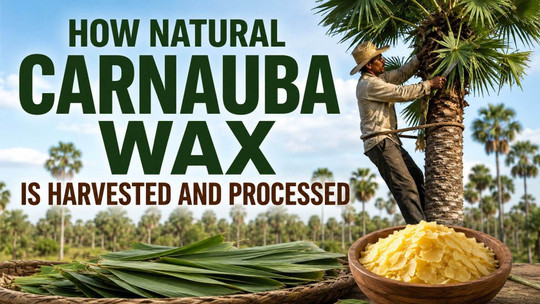
How Natural Carnauba Wax Is Harvested and Processed
Carnauba wax is often called the "Queen of Waxes" because of its exceptional hardness, glossy finish, and natural durability. Harvested from the leaves of the Brazilian carnauba palm (Copernicia prunifera), this renewable plant wax is widely used in car polishes, food coatings, cosmetics, pharmaceuticals, and wood finishes. The harvesting process has been practiced for generations and relies on careful timing and traditional techniques that protect the trees while producing one of nature's most valuable waxes.
What Is Carnauba Wax?
Carnauba wax is a natural wax that forms as a protective coating on the leaves of the carnauba palm. This wax helps the tree survive the intense heat and dry conditions of northeastern Brazil by reducing water loss.
Unlike synthetic waxes, carnauba wax is biodegradable, renewable, and harvested without cutting down the tree.
Where Carnauba Palm Trees Grow
Carnauba palms are native to Brazil and thrive in:
- Tropical climates
- Seasonal floodplains
- Dry savannas
- River valleys
- Hot, sunny environments
These palms can live for decades while producing harvestable leaves every year.
Step 1: Harvesting the Leaves
The harvest usually takes place during the dry season when the wax coating is at its thickest.
Workers:
- Climb mature palms using ropes or climbing belts.
- Cut only mature leaves.
- Leave younger leaves untouched so the tree continues growing.
- Bundle harvested fronds for transport.
Sustainable harvesting ensures the same trees can produce wax year after year.
Step 2: Drying the Leaves
Freshly cut leaves are spread out under the sun to dry.
As moisture evaporates:
- The wax hardens.
- A fine powder develops on the leaf surface.
- The wax becomes easier to remove.
This drying stage is essential for producing high-quality wax.
Step 3: Removing the Wax Powder
Once dry, workers remove the wax coating by:
- Beating the leaves
- Brushing the leaves
- Mechanical shaking
This process separates the yellowish wax powder from the leaf fibers.
The remaining leaves are often used for roofing, baskets, hats, and handicrafts, minimizing waste.
Step 4: Cleaning the Wax
The collected powder contains:
- Plant fibers
- Dust
- Small debris
- Natural impurities
It is sifted and filtered before further processing.
Step 5: Melting and Refining
The cleaned wax powder is heated until it melts.
Manufacturers then:
- Filter impurities
- Separate different wax grades
- Refine the wax depending on its intended use
Higher-quality waxes are lighter in color and purer.
Step 6: Forming Wax Flakes
After refining, the molten wax is cooled into:
- Flakes
- Blocks
- Pellets
- Powder
Flake form is the most common because it melts easily during manufacturing.
Common Uses for Carnauba Wax
Carnauba wax is found in hundreds of products, including:
- Car wax and automotive polish
- Furniture polish
- Floor wax
- Leather conditioners
- Lip balm
- Lipstick
- Mascara
- Lotion bars
- Pharmaceutical tablet coatings
- Candy coatings
- Chocolate finishes
- Fruit coatings
- Chewing gum
- Shoe polish
- Surfboard wax blends
- Candle making
Its high melting point and glossy finish make it especially valuable in protective coatings.
Why Carnauba Wax Is So Popular
Carnauba wax offers several advantages:
- Produces an exceptionally high gloss
- Very hard and durable
- Water resistant
- Heat resistant
- Natural and biodegradable
- Food-safe when properly refined
- Renewable resource
- Long-lasting protective finish
These qualities make it one of the most sought-after natural waxes in the world.
Is Harvesting Sustainable?
When managed responsibly, harvesting carnauba wax is considered sustainable.
Responsible producers:
- Harvest only mature leaves.
- Avoid damaging the growing crown.
- Allow new leaves to develop naturally.
- Protect native palm forests.
- Follow environmentally responsible harvesting practices.
Because the tree remains alive after harvesting, it can continue producing wax for many years.
Final Thoughts
Carnauba wax is a remarkable natural material that combines sustainability with outstanding performance. From carefully harvesting palm leaves to refining the wax into flakes, each step preserves the qualities that make carnauba wax famous around the world. Whether it's protecting a freshly polished vehicle, adding shine to candy, or improving cosmetic products, this renewable wax demonstrates how nature can provide high-performance materials with minimal environmental impact.