
Posted by TJ Hopkins on May 17th 2026
How to Create a Zen Garden
A Zen garden is a peaceful outdoor or indoor space designed to promote relaxation, mindfulness, and simplicity. Originating from traditional Japanese rock gardens, Zen gardens use carefully arranged rocks, sand, gravel, moss, and minimal plants to create a calming environment. Whether you have a large backyard or a small patio, creating a Zen garden can transform your space into a tranquil retreat.
What Is a Zen Garden?
A Zen garden, also known as a Japanese rock garden or “karesansui,” focuses on balance, simplicity, and natural beauty. Traditional Zen gardens often feature raked gravel or sand representing flowing water, along with rocks symbolizing mountains or islands. The design encourages meditation and quiet reflection.
Zen gardens can be large outdoor landscapes or small tabletop displays. No matter the size, the goal is to create a peaceful atmosphere with minimal clutter.
Benefits of a Zen Garden
Creating a Zen garden offers several benefits for both your home and your well-being:
- Reduces stress and promotes relaxation
- Creates a calming outdoor or indoor retreat
- Adds natural beauty to your space
- Requires minimal maintenance compared to traditional gardens
- Encourages mindfulness and creativity
A well-designed Zen garden can become a quiet place to unwind after a busy day.
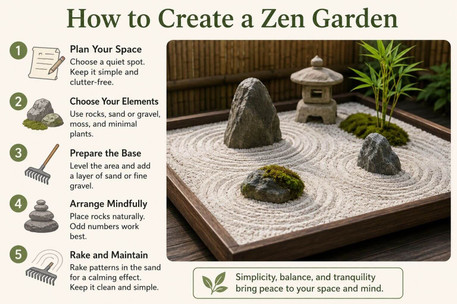
Step 1: Plan Your Space
The first step is choosing the right location. Zen gardens work best in quiet, uncluttered areas where you can relax and focus on the calming elements.
You can create a Zen garden in:
- A backyard corner
- A patio or balcony
- Along a pathway
- Indoors in a decorative tray or container
Keep the design simple. Zen gardens are meant to feel open and balanced rather than crowded.
Step 2: Choose Your Elements
Zen gardens rely on natural materials and minimal design. Common elements include:
Rocks and Stones
Rocks are often the main focal point. Larger stones symbolize mountains or islands, while smaller stones can add texture and balance.
Sand or Gravel
White sand or fine gravel represents water. Raking patterns into the sand creates flowing designs that add a calming visual effect.
Moss and Minimal Plants
Small amounts of moss, bamboo, or low-maintenance greenery can soften the design while maintaining simplicity.
Decorative Features
Optional additions include:
- Stone lanterns
- Wooden bridges
- Bamboo fountains
- Small pathways
Choose only a few features to avoid overcrowding the space.
Step 3: Prepare the Base
Clear and level the area before adding materials. Remove weeds, grass, and debris. Many gardeners use landscape fabric underneath the gravel to reduce weed growth.
Next:
- Add a border using wood, stone, or metal edging
- Spread a layer of sand or fine gravel evenly
- Smooth the surface before arranging rocks
A clean, level base helps create the balanced appearance Zen gardens are known for.
Step 4: Arrange Rocks Mindfully
Rock placement is one of the most important parts of a Zen garden. Arrange rocks naturally rather than symmetrically. Odd-numbered groupings often create a more balanced appearance.
Tips for arranging rocks:
- Use different sizes for visual interest
- Leave open space between elements
- Partially bury rocks for a natural look
- Create focal points without overcrowding
Take your time experimenting with placement until the garden feels balanced and peaceful.
Step 5: Rake and Maintain the Garden
Once everything is in place, use a rake to create patterns in the sand or gravel. Circular patterns around rocks and flowing lines are common designs.
Raking patterns can represent:
- Water ripples
- Ocean waves
- Movement and flow
Maintenance is simple:
- Re-rake gravel as needed
- Remove leaves and debris
- Trim plants occasionally
- Replace gravel over time if necessary
Keeping the garden neat helps preserve its calming effect.
Best Plants for a Zen Garden
If you want to include greenery, choose simple, low-maintenance plants such as:
- Moss
- Bamboo
- Japanese forest grass
- Dwarf conifers
- Ferns
- Small bonsai trees
Minimal planting helps maintain the clean, uncluttered appearance.
Indoor Zen Garden Ideas
Small indoor Zen gardens are perfect for desks, shelves, or meditation spaces. A tabletop Zen garden can include:
- A shallow tray
- Fine sand
- Small stones
- Mini rake
- Tiny plants or figurines
Indoor Zen gardens are easy to maintain and make excellent decorative pieces.
Final Thoughts
Creating a Zen garden is a simple and rewarding way to bring peace and balance into your home or garden. By combining rocks, sand, and minimal plants with thoughtful design, you can create a relaxing retreat that encourages mindfulness and tranquility.
Whether you build a large outdoor Zen garden or a small tabletop version, the key is simplicity. A quiet, balanced space can help calm the mind and create a deeper connection with nature.