
Posted by TJ Hopkins on Aug 20th 2026
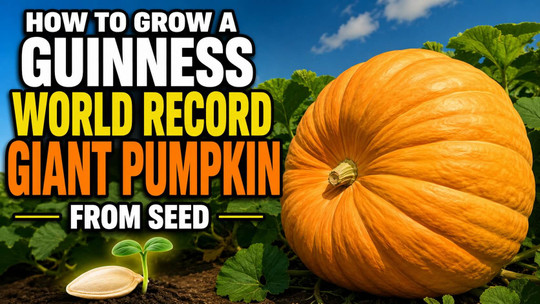
How to Grow a Guinness World Record Giant Pumpkin From Seed
Growing a truly giant pumpkin from seed is one of gardening’s biggest challenges—literally. While most backyard pumpkins weigh anywhere from a few pounds to perhaps 50 pounds, competitive giant pumpkins can grow to more than 2,000 pounds under exceptional conditions.
Reaching Guinness World Record territory requires far more than simply planting a pumpkin seed and giving it plenty of water. Genetics, soil preparation, pollination, vine management, feeding, weather, and daily care all play important roles.
Even if you never break a world record, following the techniques used by competitive growers can help you produce an enormous pumpkin that becomes the centerpiece of your fall garden.
Start With the Right Giant Pumpkin Seeds
Genetics are extremely important when growing giant pumpkins.
Competitive growers typically use seeds from Atlantic Giant-type pumpkins, especially seeds descended from exceptionally large competition pumpkins. Seeds with documented genetics are highly valued because their parent plants have already demonstrated the ability to produce enormous fruit.
If your goal is maximum size, don't start with an ordinary carving pumpkin.
Look for seeds described as:
- Atlantic Giant pumpkin seeds
- Competition giant pumpkin seeds
- Giant pumpkin seeds from proven genetics
- Seeds collected from exceptionally large pumpkins
A seed cannot guarantee a record-breaking pumpkin, but strong genetics give you a much better starting point.
Choose Your Best Seed
Competitive growers often start several seeds rather than relying on only one.
Examine your seeds and select those that appear mature, full, and undamaged. Avoid seeds that are cracked, badly discolored, or unusually thin.
Starting several plants also gives you the opportunity to select the strongest seedling later.
When Should You Start Giant Pumpkin Seeds?
Giant pumpkins require a long growing season.
Many growers start their seeds indoors approximately 3 to 5 weeks before their expected transplanting date. The exact timing depends on your climate and last spring frost.
You don't want to start excessively early because pumpkin seedlings grow rapidly and can quickly become root-bound.
The goal is to have a strong young plant ready for the garden once the soil has warmed and dangerous frost has passed.
How to Germinate Giant Pumpkin Seeds
Giant pumpkin seeds generally germinate readily when provided with warmth and moisture.
Fill a small pot with a high-quality seed-starting mix.
Plant the seed approximately 1 inch deep, positioning it on its side or with the pointed end slightly downward.
Water the soil thoroughly but don't leave it waterlogged.
Keep the growing medium warm—approximately 80°F to 90°F can encourage rapid germination.
A humidity dome can help maintain consistent moisture while the seed germinates.
Once the seedling emerges, immediately provide strong light.
Give Seedlings Plenty of Light
Weak, stretched seedlings are not ideal when you're trying to grow a massive pumpkin.
Place seedlings beneath powerful grow lights or in an exceptionally bright location.
Keep the light relatively close to the plants without allowing the leaves to become overheated.
A small fan can also provide gentle air circulation and encourage stronger stems.
Prepare an Enormous Growing Area
One of the biggest mistakes new giant-pumpkin growers make is underestimating how much space these plants require.
A serious giant pumpkin plant can occupy hundreds of square feet.
If you're aiming for competition-sized fruit, give your plant as much room as possible. Approximately 600 to 1,000 square feet or more may be used for a single competitive plant.
The vines can spread surprisingly quickly during warm summer weather.
Build Exceptional Soil
You cannot expect a world-class pumpkin from poor soil.
Giant pumpkins need fertile, well-drained soil containing plenty of organic matter. Competitive growers frequently spend months preparing their pumpkin patches.
Before planting, incorporate well-aged compost or other suitable organic matter.
A soil test is highly recommended.
Testing allows you to determine your soil's:
- pH
- Nitrogen levels
- Phosphorus levels
- Potassium levels
- Organic matter
- Important micronutrients
Pumpkins generally perform well in slightly acidic to neutral soil, roughly around pH 6.0 to 7.0.
Avoid blindly dumping large quantities of fertilizer into your garden. Excessive nutrients can create imbalances and potentially damage plants.
Warm the Soil Before Planting
Giant pumpkins love warm soil.
Competitive growers sometimes use temporary covers, small hoop houses, or similar structures to warm the planting area during early spring.
Black plastic or other soil-warming techniques may also help increase soil temperatures before transplanting.
Always protect young pumpkin plants if freezing temperatures are possible.
Transplant Carefully
Pumpkins dislike excessive root disturbance.
When transplanting, carefully remove the entire root ball without breaking it apart.
Plant the seedling at approximately the same depth it was growing in its container.
Water thoroughly afterward.
Young plants may need temporary protection from cold temperatures, wind, and intense weather.
Encourage a Powerful Main Vine
Once established, giant pumpkin plants begin producing extremely vigorous vines.
The main vine is especially important.
Train it outward in the direction where you want your future pumpkin to grow.
Secondary vines will develop along the main vine. These secondary vines produce additional leaves, creating an enormous photosynthetic system capable of supplying energy to your pumpkin.
Bury the Vines
Competitive growers frequently bury portions of their pumpkin vines.
At each leaf node, pumpkin vines can develop additional roots when they contact moist soil.
Carefully covering vine nodes with soil encourages these secondary roots.
More roots can help the plant access additional water and nutrients while also anchoring vines against wind.
Do not bury the leaves themselves.
Develop a Large Leaf Canopy
Think of every healthy pumpkin leaf as a miniature solar panel.
The larger and healthier your plant's canopy becomes, the more energy it can potentially produce.
Protect leaves from:
- Powdery mildew
- Insects
- Drought
- Nutrient deficiencies
- Wind damage
- Excessive heat stress
Losing large portions of the canopy during the critical fruit-growing period can reduce your pumpkin's potential.
Select the Right Female Flower
Female pumpkin flowers are easy to identify because they have a miniature pumpkin immediately behind the flower.
For maximum fruit size, many competitive growers prefer a female flower located approximately 10 to 15 feet or farther along the main vine.
This gives the plant time to establish a substantial root system and leaf canopy before supporting the pumpkin.
Several potential pumpkins may initially be pollinated before the best specimen is selected.
Hand-Pollinate Your Pumpkin
Controlled pollination allows you to know exactly which flowers produced your pumpkin.
Female pumpkin flowers typically open early in the morning and remain receptive for a relatively short period.
Select freshly opened male flowers and remove their petals to expose the pollen-covered stamens.
Gently brush the pollen onto the stigma inside the female flower.
Using pollen from multiple male flowers can improve pollination coverage.
Competitive growers may cover the female flower before and after pollination to prevent insects from introducing unknown pollen.
Record the pollination date and parent plants if you're tracking genetics.
Choose One Pumpkin
This is where growing giant pumpkins becomes very different from growing ordinary pumpkins.
If you want the plant to produce the largest pumpkin possible, you generally don't want its resources divided among numerous fruits.
Allow several successfully pollinated pumpkins to begin developing.
Then evaluate them for:
- Growth rate
- Shape
- Position
- Stem quality
- Overall health
Once you've identified your strongest candidate, remove competing pumpkins so the plant can concentrate its resources on the selected fruit.
Position the Pumpkin Carefully
As your pumpkin grows, its position becomes increasingly important.
Ideally, the pumpkin should develop approximately perpendicular to the main vine.
Young pumpkins can sometimes be repositioned gradually.
Never force the fruit into position.
As the pumpkin becomes heavier, repositioning becomes increasingly dangerous because you can crack the stem or damage the vine.
Protect the Bottom of the Pumpkin
A giant pumpkin sitting directly on wet soil can develop problems.
Growers often place the developing fruit on a bed of sand or another smooth, well-drained surface.
Some growers use specialized mats beneath their pumpkins.
The objective is to:
- Keep the fruit relatively dry
- Improve drainage
- Reduce contact with soil
- Allow expansion
- Protect the underside from damage
Remember that a pumpkin weighing hundreds or thousands of pounds eventually becomes impossible to move manually.
Prepare its growing surface while the fruit is still small.
Water Consistently
A massive pumpkin requires an enormous amount of water.
During peak summer growth, a large plant may consume substantial quantities every day.
Consistency is more important than alternating between extremely dry and saturated soil.
Water deeply enough to keep the root zone adequately moist.
Drip irrigation or soaker hoses can be useful because they deliver water near the roots while helping keep foliage dry.
Avoid repeatedly soaking leaves late in the day, which can encourage fungal diseases.
Feed According to Plant Development
Giant pumpkin growers often adjust fertilizer according to the plant's developmental stage.
Early in the season, nutrients support roots, vines, and foliage.
As flowering and fruit development begin, nutritional requirements change.
During rapid pumpkin growth, potassium becomes especially important.
However, more fertilizer does not automatically produce a larger pumpkin.
Excessive fertilizer can burn roots, create nutrient imbalances, encourage excessive foliage, or damage the plant.
Soil testing and, for serious competition growers, tissue testing can help determine what the plant actually needs.
Keep Weeds Under Control
Weeds compete with your giant pumpkin for water, nutrients, sunlight, and growing space.
Remove weeds while they're small.
Be extremely careful when working around established vines because pumpkin plants develop roots at their nodes.
Aggressive cultivation near vines can destroy these valuable secondary roots.
Hand pulling or carefully applied mulch is often safer.
Protect Your Pumpkin From Direct Sunlight
As giant pumpkins expand, their skin can become vulnerable to intense sunlight.
Competitive growers frequently shade the fruit using lightweight fabric or a temporary shelter.
The pumpkin still needs good airflow.
The goal is to protect the fruit—not create a hot, humid enclosure.
Keeping direct sunlight off the pumpkin may also help maintain more flexible skin as the fruit expands rapidly.
Watch for Powdery Mildew
Powdery mildew is one of the most recognizable pumpkin diseases.
It appears as white or gray powdery growth on leaves.
A severe infection can reduce the plant's ability to photosynthesize at exactly the time your giant pumpkin needs maximum energy.
Provide good airflow and regularly inspect foliage.
Remove badly damaged or diseased material when appropriate and use disease-control methods suitable for your garden.
Watch for Squash Vine Borers
Squash vine borers can be devastating.
Their larvae tunnel into pumpkin stems and vines, interfering with the plant's ability to transport water and nutrients.
Inspect vines frequently for:
- Holes
- Wilting
- Sawdust-like material called frass
- Damaged stems
Early detection is extremely important.
Protect Against Squash Bugs
Squash bugs can also weaken giant pumpkin plants.
Check beneath leaves for clusters of eggs and inspect the plant regularly for adults and young insects.
Removing eggs early can prevent populations from becoming difficult to control later.
Measure Your Pumpkin
One of the most exciting parts of growing a giant pumpkin is tracking its growth.
Competitive growers commonly measure:
- Circumference
- Side-to-side measurement
- End-to-end measurement
These measurements can be entered into giant-pumpkin weight-estimation charts.
The estimate won't be exact because pumpkins vary in density, but it provides a useful indication of weight without requiring you to move the fruit.
During peak growth, exceptional pumpkins can gain astonishing amounts of weight in a short period.
Keep a Daily Growing Journal
If you're serious about improving every year, keep detailed records.
Record:
- Seed genetics
- Germination date
- Transplanting date
- Soil test results
- Fertilizer applications
- Watering
- Weather
- Pollination date
- Male and female parent plants
- Pumpkin measurements
- Estimated weight
- Pest problems
- Disease problems
After harvest, these records become extremely valuable.
You'll know what worked—and what needs improvement next season.
Don't Let the Vine Pull Against the Stem
As the pumpkin expands, its shoulders may eventually press against the vine.
This can create tremendous stress at the stem.
Monitor the pumpkin-vine relationship throughout the growing season.
Adjust vine positioning gradually while the pumpkin is young enough to do so safely.
The objective is to leave enough room for the fruit to continue expanding without crushing, twisting, or snapping its own stem.
Protect the Plant From Extreme Weather
A season's worth of work can disappear during one severe storm.
Giant pumpkin vines and leaves are vulnerable to:
- High winds
- Hail
- Flooding
- Extreme heat
- Early frost
Windbreaks can help protect exposed gardens.
During late summer and fall, pay particularly close attention to frost forecasts.
A temporary protective covering may help extend your growing season.
When Should You Harvest a Giant Pumpkin?
Don't harvest simply because your pumpkin looks enormous.
If the vine and fruit remain healthy and growing conditions are favorable, additional time can mean additional pounds.
Eventually growth slows dramatically as the fruit matures and temperatures decline.
Harvest before severe frost or conditions that could damage the pumpkin.
Competition growers must also schedule harvest around weigh-off dates.
Moving a Giant Pumpkin
Moving a 50-pound pumpkin is easy.
Moving a 500-, 1,000-, or 2,000-pound pumpkin requires serious planning.
Large competition pumpkins are commonly moved using lifting tarps, specialized harnesses, tripods, loaders, or other mechanical equipment.
Never stand beneath a suspended giant pumpkin.
Plan your removal route long before harvest day.
Make sure equipment can actually reach your pumpkin patch.
Can You Really Grow a Guinness World Record Pumpkin?
Potentially—but the odds are extraordinarily small.
A world-record pumpkin requires an exceptional combination of genetics, skill, soil, weather, plant health, and luck.
Experienced competitive growers may spend years refining their techniques before reaching elite weights.
Instead of making the world record your only definition of success, establish progressive goals.
Try growing:
100 pounds.
Then 300 pounds.
Then 500 pounds.
Then perhaps 1,000 pounds or more.
Every season teaches you something that can improve your next attempt.
Save Seeds From Your Giant Pumpkin
If your pumpkin produces exceptional results, its seeds may be worth saving.
Allow the pumpkin to mature fully.
After opening the fruit, remove the seeds and separate them from the pulp.
Wash them thoroughly and allow them to dry completely before storage.
Label your seeds with the year, pumpkin weight, and known parent genetics.
For serious giant-pumpkin breeding, accurate records are extremely important.
The Secret to Growing a Truly Giant Pumpkin
There isn't one magical fertilizer, watering trick, or secret ingredient that creates a record pumpkin.
Success comes from combining dozens of small advantages:
Elite genetics + excellent soil + enormous roots + healthy leaves + controlled pollination + one exceptional fruit + consistent water + balanced nutrition + meticulous daily care.
Most importantly, start with excellent seed and learn from every growing season.
You might not grow a Guinness World Record pumpkin on your first attempt, but watching a pumpkin grow from a single seed into a fruit weighing hundreds—or potentially thousands—of pounds is an impressive gardening achievement all by itself.
And once you've grown your first truly giant pumpkin, there's always next year to grow an even bigger one.