
Posted by TJ Hopkins on Apr 18th 2026
How to Grow Black Eyed Susan Flower Seeds
Black-Eyed Susan (Rudbeckia hirta) is a classic North American wildflower known for its bright yellow petals and dark brown centers. These hardy, low-maintenance flowers are perfect for beginners and thrive in a wide range of conditions, making them a popular choice for gardens, borders, and pollinator habitats.
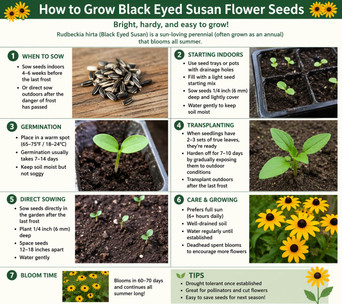
When to Plant Black-Eyed Susan Seeds
- Outdoors: Sow seeds directly after the last frost in spring
- Indoors: Start seeds 6–8 weeks before your last frost date
- Fall planting: Can also be sown in fall for early spring germination
In Vermont and similar climates, late May to early June is ideal for direct sowing.
Choosing the Right Location
Black-Eyed Susans love the sun and are very adaptable.
- Sunlight: Full sun (6–8 hours daily)
- Soil: Well-draining soil (tolerates poor soils)
- pH: Neutral to slightly acidic
They’re great for wildflower gardens, borders, and naturalized areas.
How to Plant Black-Eyed Susan Seeds
1. Prepare the Soil
Loosen the top 2–3 inches of soil and remove weeds. These plants do well in average soil and do not require rich amendments.
2. Sow the Seeds
- Scatter seeds evenly over the soil
- Lightly press them into the surface (do not bury deeply)
- Cover very lightly with soil (about 1/8 inch or less)
3. Water Gently
Keep the soil consistently moist until germination, which usually takes 7–21 days.
Watering and Care
- Watering: Moderate; once established, they are drought-tolerant
- Fertilizer: Not necessary; too much fertilizer can reduce blooms
- Mulch: Helps retain moisture and suppress weeds
Growth and Blooming
- Blooms appear mid-summer through fall
- First-year blooms are possible, but many plants fully flower in the second year
- Deadheading can encourage additional blooms, but leaving some flowers allows for reseeding
Pollinators and Wildlife
Black-Eyed Susans attract bees, butterflies, and birds. They are a great addition to pollinator-friendly gardens.
Maintenance Tips
- Cut back plants in late fall or early spring
- Divide clumps every 3–4 years to prevent overcrowding
- Allow some flowers to go to seed for natural spreading
Common Problems
- Powdery mildew: Improve air circulation and avoid overhead watering
- Aphids: Usually minor and can be rinsed off with water
- Overwatering: Can lead to root rot, so ensure proper drainage
Final Tips for Success
Black-Eyed Susans are one of the easiest flowers to grow. Once established, they return year after year and often self-seed, creating a natural, low-maintenance display.
If you want a bright, hardy flower that thrives with minimal care, Rudbeckia hirta is an excellent choice for your garden.