
Posted by TJ Hopkins on May 17th 2026
How to Grow Buffalo Grass Seeds
Buffalo grass (Bouteloua dactyloides) is a warm-season grass known for its drought tolerance, low maintenance needs, and soft green appearance. Native to North America, buffalo grass is an excellent choice for homeowners looking to create a hardy lawn that requires less water and mowing than traditional turf grasses. With the right preparation and care, buffalo grass seeds can establish into a thick, attractive lawn that thrives in hot, sunny conditions.
Why Choose Buffalo Grass?
Buffalo grass is popular because it naturally adapts to dry climates and poor soils. Once established, it requires significantly less watering than Kentucky bluegrass or fescue lawns. It also grows more slowly, meaning less mowing and maintenance throughout the season.
Benefits of buffalo grass include:
- Excellent drought tolerance
- Low fertilizer requirements
- Reduced mowing needs
- Soft texture and attractive green color
- Good heat resistance
- Native grass species beneficial for sustainable landscaping
Best Time to Plant Buffalo Grass Seeds
Buffalo grass seeds should be planted in late spring to early summer when soil temperatures consistently reach at least 60°F. Warm soil encourages faster germination and strong root development.
In most regions, the ideal planting window is:
- Late April through July in warmer climates
- May through early June in cooler regions
Buffalo grass performs best in USDA growing zones 3 through 9.
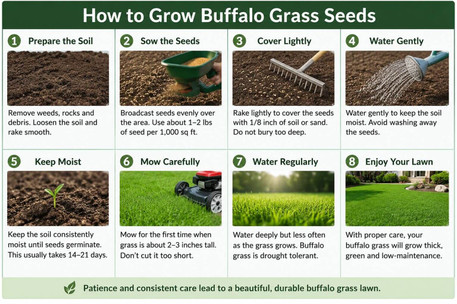
Step 1: Prepare the Soil
Before planting, clear the area of weeds, rocks, sticks, and debris. Buffalo grass grows best in loose, well-drained soil with full sun exposure.
Loosen the top few inches of soil using a rake or garden tiller. Smooth the surface so seeds can make good contact with the soil.
If the soil is compacted, mixing in compost can improve drainage and help seedlings establish more quickly.
Step 2: Sow the Seeds
Broadcast buffalo grass seeds evenly across the prepared area. Most lawns require approximately 1–2 pounds of seed per 1,000 square feet.
You can spread seeds by hand or use a lawn spreader for more even coverage.
For best results:
- Avoid overcrowding the seeds
- Sow during calm weather to prevent wind movement
- Lightly press seeds into the soil after spreading
Step 3: Cover the Seeds Lightly
Buffalo grass seeds should not be buried deeply. Lightly rake the area to cover the seeds with about 1/8 inch of soil or sand.
Seeds planted too deeply may struggle to germinate properly.
A thin layer of clean straw mulch can help retain moisture and protect seeds from birds.
Step 4: Water Gently
After planting, water the area carefully using a gentle spray. Heavy watering can wash seeds away or create uneven growth.
Keep the soil lightly moist but not soggy during the germination period.
Frequent light watering is usually best during the first few weeks.
Step 5: Keep the Soil Moist During Germination
Buffalo grass seeds typically germinate within 14–21 days under warm conditions.
During this time:
- Keep the soil consistently moist
- Avoid allowing the surface to dry out completely
- Reduce foot traffic over newly seeded areas
Once seedlings begin growing actively, watering frequency can gradually decrease.
Step 6: Mow Carefully
Wait until the grass reaches about 2–3 inches tall before mowing for the first time.
When mowing:
- Never remove more than one-third of the blade height
- Keep mower blades sharp
- Avoid mowing during extreme heat or drought
Many homeowners prefer allowing buffalo grass to grow naturally for a meadow-like appearance.
Step 7: Water Deeply but Less Often
After establishment, buffalo grass becomes highly drought tolerant.
Instead of frequent shallow watering, water deeply once the grass is established. Deep watering encourages stronger root systems and healthier turf.
In many climates, established buffalo grass lawns need very little supplemental irrigation.
Fertilizing Buffalo Grass
Buffalo grass requires minimal fertilizer compared to other lawn grasses.
Applying a light nitrogen fertilizer once or twice during the growing season is usually sufficient. Over-fertilizing can lead to excessive growth and weaken the lawn’s drought tolerance.
Common Buffalo Grass Growing Problems
Poor Germination
This is often caused by cold soil temperatures, planting seeds too deeply, or inconsistent moisture.
Weed Competition
Young buffalo grass lawns establish slowly at first, allowing weeds to appear. Keeping the area weed-free during establishment is important.
Thin Growth
Buffalo grass needs full sunlight. Shaded areas may produce sparse or weak growth.
How Long Does Buffalo Grass Take to Establish?
Buffalo grass usually begins germinating within 2–3 weeks, but a fully established lawn may take one full growing season depending on weather conditions and maintenance.
Patience and consistent care are important during the establishment period.
Final Thoughts
Buffalo grass is an outstanding low-maintenance lawn option for homeowners seeking a drought-tolerant, environmentally friendly turf grass. By preparing the soil properly, planting during warm weather, and maintaining consistent moisture during germination, you can successfully grow a durable and attractive buffalo grass lawn from seed.
With time, buffalo grass develops into a thick, resilient lawn that requires less mowing, watering, and fertilizer than many traditional grass species.