
Posted by TJ Hopkins on Apr 16th 2026
How to Grow Catnip Seeds
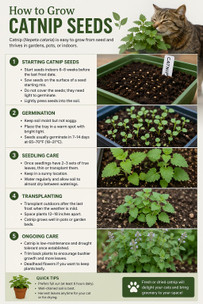
Catnip (Nepeta cataria) is a hardy perennial herb in the mint family that is loved by cats and gardeners alike. Known for its fragrant gray-green leaves and small white flowers, catnip is extremely easy to grow from seed and thrives in many climates. Whether you are planting it for your cat, for herbal tea, or to attract pollinators, growing catnip from seed is simple and rewarding.
Below is a step-by-step guide to successfully growing catnip seeds in your garden.
What Is Catnip?
Nepeta cataria (commonly called catnip or catmint) is a perennial herb native to Europe and Asia but now widely grown throughout North America.
The plant contains a compound called nepetalactone, which triggers the playful reaction many cats experience when they smell the leaves. Besides entertaining cats, catnip is also used in herbal teas and can help attract beneficial insects like bees and butterflies.
When to Plant Catnip Seeds
Catnip seeds can be planted either indoors or outdoors, depending on your climate.
Outdoor planting
- Plant after the last frost in spring
- Soil temperature: about 60–70°F
Indoor starting
- Start seeds 6–8 weeks before the last frost
- Transplant seedlings outdoors once temperatures warm
Because catnip is hardy, it often reseeds itself and can return year after year.
How to Plant Catnip Seeds
1. Prepare the Seeds
Catnip seeds benefit from cold stratification, which helps improve germination.
Steps:
- Place seeds in the refrigerator for 1–2 weeks before planting.
- Remove and allow them to reach room temperature before sowing.
2. Choose the Right Soil
Catnip grows best in well-draining soil.
Ideal conditions:
- pH: 6.0 – 7.5
- Sandy or loamy soil works well
- Avoid heavy, water-logged soils
Adding compost can improve soil quality.
3. Sow the Seeds
Plant catnip seeds shallowly.
Steps:
- Scatter seeds on soil surface
- Cover lightly with about 1/8 inch of soil
- Gently water the area
Seeds usually germinate in 7–14 days.
Light Requirements
Catnip thrives in full sun but tolerates partial shade.
Best growth conditions:
- 6–8 hours of sunlight daily
- Good air circulation
Plants grown in full sun typically produce stronger fragrance and healthier leaves.
Watering Catnip Plants
Catnip is drought tolerant once established, but young plants need consistent moisture.
Watering tips:
- Keep soil lightly moist during germination
- Water when the top inch of soil becomes dry
- Avoid overwatering
Too much moisture can lead to root rot.
Spacing and Growth
Catnip plants grow quickly and can spread if not managed.
Typical growth size:
- Height: 2–3 feet
- Width: 1–2 feet
Space plants 18–24 inches apart to allow proper airflow.
Harvesting Catnip
You can begin harvesting catnip once plants are 6–8 inches tall.
Harvest tips:
- Cut stems just above a leaf node
- Harvest before flowering for strongest aroma
- Dry leaves in a warm, ventilated space
Dried catnip can be stored for:
- Cat toys
- Herbal tea
- Sachets
Preventing Catnip From Taking Over
Catnip is easy to grow — sometimes too easy.
To control spreading:
- Trim flowers before they go to seed
- Grow in containers if space is limited
- Regularly prune plants
This keeps your garden tidy while still producing plenty of leaves.
Pests and Problems
Catnip is relatively pest resistant.
Possible issues:
- Aphids
- Spider mites
- Overwatering
Good airflow and proper watering usually prevent most problems.
Benefits of Growing Catnip
Growing catnip offers several benefits:
- Natural entertainment for cats
- Attracts bees and pollinators
- Useful herbal tea plant
- Extremely easy for beginner gardeners
- Perennial that returns each year
Because of its resilience and usefulness, catnip is a great herb to include in any home garden.
Final Tip: If you want continuous harvests, cut catnip plants back regularly. This encourages new growth and keeps the plants bushy and productive throughout the growing season.