
Posted by TJ Hopkins on Apr 11th 2026
How to Grow Eastern Red Cedar Tree Seeds
The Eastern Red Cedar is a hardy native North American evergreen tree valued for its dense foliage, aromatic wood, and ability to thrive in poor soils. Commonly used for windbreaks, wildlife habitat, privacy screens, and ornamental landscapes, Eastern Red Cedar is one of the easiest conifer trees to grow once established.
Growing this tree from seed requires a little patience because the seeds naturally take time to germinate, but with proper preparation you can successfully grow healthy seedlings at home.
About Eastern Red Cedar
Eastern Red Cedar is native to much of the eastern and central United States. Despite its name, it is actually a juniper species rather than a true cedar.
Key characteristics:
- Botanical name: Juniperus virginiana
- Tree type: Evergreen conifer
- Mature height: 30–65 feet
- Growth rate: Moderate
- Sun requirements: Full sun
- Soil tolerance: Adaptable to poor, rocky, or sandy soils
- USDA Hardiness Zones: 2–9
The tree produces small blue-purple berry-like cones that provide food for birds and wildlife.
When to Plant Eastern Red Cedar Seeds
Eastern Red Cedar seeds require cold stratification to break dormancy. In nature, seeds overwinter in the soil before germinating in spring.
Best planting times:
- Fall (recommended): Sow outdoors so winter naturally stratifies the seeds.
- Early spring: After artificial cold stratification indoors.
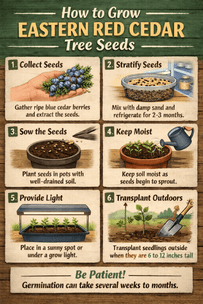
Step-by-Step: How to Grow Eastern Red Cedar from Seed
1. Collect or Purchase Seeds
Seeds come from the small blue berries produced by mature trees. Each berry typically contains 1–3 seeds.
If harvesting yourself:
- Pick ripe berries in late fall
- Crush berries in water to separate seeds
- Rinse and dry seeds
2. Cold Stratify the Seeds
Eastern Red Cedar seeds germinate better after exposure to cold.
Cold stratification method:
- Mix seeds with slightly damp sand or peat moss.
- Place mixture in a sealed plastic bag.
- Refrigerate at 34–41°F for 60–90 days.
This simulates winter conditions and improves germination rates.
3. Prepare Seed Starting Soil
Use a well-draining soil mix such as:
- Potting soil
- Sand
- Perlite or vermiculite
Good drainage is important because cedar seedlings dislike soggy soil.
4. Plant the Seeds
- Fill pots or seed trays with soil mix.
- Plant seeds ¼ inch deep.
- Lightly cover with soil.
- Water gently.
Keep soil slightly moist but not soaked.
5. Provide Warm Germination Conditions
Place containers in a warm, bright location.
Ideal conditions:
- Temperature: 65–75°F
- Light: Bright indirect sunlight
Seeds may take 3–6 weeks or longer to germinate.
6. Transplant Seedlings
Once seedlings grow several inches tall, they can be moved into larger containers.
Transplant seedlings outside when they are 6 to 12 inches tall.
Choose a planting location with full sun and well-drained soil.
Caring for Young Eastern Red Cedar Trees
Young trees are relatively low maintenance.
Watering
- Water regularly during the first growing season
- Once established, trees are drought tolerant
Sunlight
- Requires full sun for best growth
Spacing
- Space trees 15–25 feet apart depending on intended use
Fertilizer
- Usually unnecessary in normal soils
Common Uses for Eastern Red Cedar
Eastern Red Cedar is widely planted for many practical and ornamental uses:
- Privacy screens
- Windbreaks for farms and rural properties
- Wildlife habitat trees
- Erosion control
- Natural fencing rows
- Aromatic cedar wood for closets and chests
The dense foliage also provides excellent winter shelter for birds.
Germination Tips for Better Success
Growing cedar from seed can be slow, but these tips improve results:
- Always cold stratify seeds
- Use well-draining soil
- Keep soil lightly moist, not wet
- Be patient — germination can be irregular
- Start multiple seeds to increase success
Final Thoughts
Growing Eastern Red Cedar from seed is a rewarding way to produce hardy native trees for landscapes, windbreaks, or wildlife habitat. With proper cold stratification and a sunny planting location, these resilient evergreens can thrive for decades and grow into beautiful, low-maintenance trees.
Whether you are planting a few trees for your yard or starting seedlings for a larger project, Eastern Red Cedar is one of the most dependable native conifers you can grow from seed.