
Posted by TJ Hopkins on Apr 6th 2026
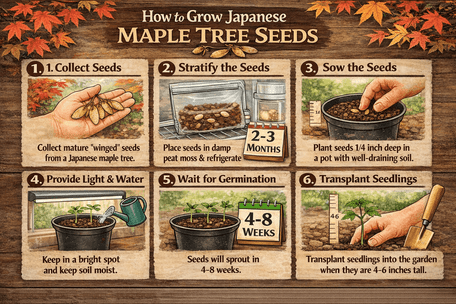
How to Grow Japanese Maple Tree Seeds
Growing Japanese maple trees from seed is a rewarding way to produce beautiful ornamental trees for your garden or landscape. The species Acer palmatum is prized for its delicate leaves, graceful branching, and stunning fall colors. While growing Japanese maples from seed requires patience, the process is straightforward with the right preparation.
Understanding Japanese Maple Seeds
Japanese maple seeds are known as samaras, which are small winged seeds that spin as they fall from the tree. These seeds usually mature in late summer to early fall and can be collected once they turn brown and dry.
Each samara contains a single seed capable of growing into a new tree. However, Japanese maple seeds require cold stratification to break dormancy before they will germinate.
Step 1: Collect or Purchase Seeds
If collecting seeds from a tree, gather them in the fall when the samaras have dried and turned brown. Choose seeds from healthy, mature trees for the best results.
If purchasing seeds, make sure they are fresh and properly stored, as older seeds may have lower germination rates.
Step 2: Soak the Seeds
Place the seeds in a container of warm water and allow them to soak for 24 hours. This helps soften the outer seed coat and improves the chances of successful germination.
Discard any seeds that float, as they may not be viable.
Step 3: Cold Stratify the Seeds
Japanese maple seeds need a cold period that mimics winter conditions.
Mix the seeds with slightly moist peat moss, sand, or vermiculite and place them in a sealed plastic bag. Store the bag in the refrigerator for 60 to 120 days.
Keep the temperature between 33°F and 41°F (1°C to 5°C). This cold stratification period helps break seed dormancy and prepares the seeds for germination.
Step 4: Prepare Planting Containers
Fill small pots or seed trays with a well-draining soil mix. A good mixture may include potting soil combined with sand or perlite to improve drainage.
Make sure the containers have drainage holes so excess water can escape.
Step 5: Plant the Seeds
After stratification is complete, plant the seeds about 1/4 inch deep in the soil.
Lightly cover them with soil and water gently so the soil becomes moist but not saturated.
Place the containers in a bright location with indirect sunlight.
Step 6: Germination
Japanese maple seeds usually germinate within 2 to 6 weeks after planting if conditions are right.
Ideal conditions include:
- Temperatures between 65°F and 75°F
- Consistently moist soil
- Good air circulation
- Bright but indirect sunlight
Not every seed will germinate, so planting multiple seeds increases your chances of success.
Step 7: Caring for Seedlings
Once the seedlings emerge, keep the soil slightly moist and provide partial sunlight. Avoid exposing young plants to harsh afternoon sun or strong winds.
Seedlings grow slowly during their first year while developing a strong root system.
Step 8: Transplanting Young Trees
When seedlings reach about 6 to 12 inches tall, they can be transplanted into larger pots or planted outdoors.
Japanese maple trees grow best in:
- Well-drained soil
- Partial shade
- Areas protected from strong afternoon sunlight
Proper spacing will allow the trees to develop their natural shape as they mature.
Final Thoughts
Growing Acer palmatum from seed requires patience, but it can be a very satisfying process. With proper stratification, good soil, and consistent care, you can successfully grow Japanese maple seedlings that will eventually become beautiful landscape trees.
Seed-grown Japanese maples may vary slightly from the parent tree, making each one unique and adding character to your garden.