
Posted by TJ Hopkins on Jun 5th 2026
How to Grow Mini Cactus Succulents Indoors
Mini cactus succulents are some of the easiest houseplants to grow, making them perfect for beginners and experienced plant enthusiasts alike. Their compact size, unique shapes, and low-maintenance nature make them ideal for windowsills, desks, shelves, and small indoor spaces. With the right balance of sunlight, water, and care, mini cacti can thrive indoors for many years while adding natural beauty to your home.
Why Choose Mini Cactus Succulents?
Mini cacti are drought-tolerant plants that store water in their stems, allowing them to survive with minimal attention. Unlike many houseplants that require frequent watering and humidity, cacti prefer dry conditions and bright light. Their slow growth and compact size make them excellent choices for apartments, offices, and small living spaces.
Benefits of growing mini cactus succulents indoors include:
- Low maintenance requirements
- Attractive and unique appearance
- Excellent for sunny windowsills
- Long lifespan with proper care
- Minimal watering needs
- Suitable for beginner gardeners
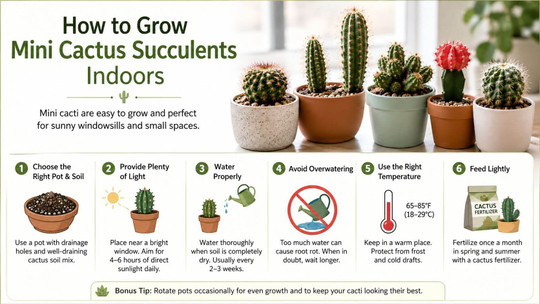
1. Choose the Right Pot and Soil
The foundation of healthy cactus growth begins with proper drainage. Select a pot with drainage holes to prevent excess water from collecting around the roots. Standing water can quickly lead to root rot, one of the most common causes of cactus failure.
Use a well-draining cactus or succulent potting mix. These specialized soils contain materials such as sand, perlite, or pumice that allow water to flow through quickly while still providing support for the roots.
Potting Tips
- Use terracotta pots for improved airflow.
- Ensure drainage holes remain unobstructed.
- Avoid heavy garden soil indoors.
- Repot only when necessary, typically every 2–3 years.
2. Provide Plenty of Light
Light is one of the most important factors in growing healthy indoor cacti. Most mini cactus varieties thrive when placed near a bright, sunny window.
Aim for:
- 4–6 hours of direct sunlight daily
- South-facing windows for maximum light
- Bright indirect light if direct sun is limited
If natural sunlight is insufficient, consider using a grow light to supplement indoor conditions. Signs that a cactus needs more light include stretching, leaning, or pale growth.
3. Water Properly
One of the biggest mistakes cactus owners make is watering too often. Unlike traditional houseplants, cacti prefer to dry out completely between waterings.
When watering:
- Allow the soil to become completely dry.
- Water thoroughly until moisture drains from the bottom.
- Empty any excess water from trays or saucers.
During active growth periods, most mini cacti need water approximately every 2–3 weeks, though frequency can vary depending on temperature, sunlight, and humidity levels.
4. Avoid Overwatering
Overwatering is far more dangerous than underwatering for cacti. Excess moisture can cause roots to rot, leading to yellowing, soft stems, and eventual plant death.
Warning signs of overwatering include:
- Soft or mushy stems
- Yellow discoloration
- Foul-smelling soil
- Black or brown spots near the base
If you're unsure whether your cactus needs water, it's usually best to wait a few more days.
5. Maintain the Right Temperature
Most mini cactus succulents thrive in average indoor temperatures ranging from 65°F to 85°F (18°C to 29°C).
To keep your cactus healthy:
- Protect it from freezing temperatures.
- Avoid placing it near cold drafts.
- Keep away from heating vents that cause rapid drying.
- Maintain stable indoor conditions year-round.
Many cactus varieties appreciate slightly cooler temperatures during winter, which can encourage healthier growth cycles.
6. Feed Lightly
Mini cacti do not require heavy fertilization. During spring and summer, feed your plants once a month using a fertilizer specifically formulated for cacti and succulents.
Avoid fertilizing during the winter months when growth naturally slows. Too much fertilizer can lead to weak, unnatural growth and reduced plant health.
Bonus Tip: Rotate Your Plants
To encourage even growth, rotate your cactus pot every few weeks. Since cacti naturally grow toward light sources, regular rotation helps prevent leaning and keeps plants symmetrical and attractive.
Common Indoor Cactus Problems
Stretching or Leaning
Usually caused by insufficient light. Move the plant closer to a bright window or add supplemental lighting.
Soft or Mushy Stems
A sign of overwatering or poor drainage. Allow the soil to dry completely and evaluate drainage conditions.
Brown or White Spots
Can result from sunburn, pests, or fungal issues. Inspect the plant carefully and adjust growing conditions as needed.
Slow Growth
Many cacti naturally grow slowly. As long as the plant remains firm and healthy-looking, slow growth is normal.
Final Thoughts
Mini cactus succulents are excellent indoor plants for anyone looking to add greenery without extensive maintenance. By providing well-draining soil, bright sunlight, occasional watering, comfortable temperatures, and light feeding, you can enjoy healthy, thriving cacti for years to come. Whether displayed individually or grouped together in decorative arrangements, mini cacti bring character, texture, and natural beauty to any indoor space.