
Posted by TJ Hopkins on Apr 4th 2026
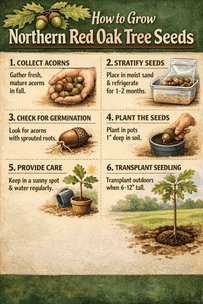
How to Grow Northern Red Oak Tree Seeds
The Northern Red Oak (Quercus borealis) is a fast-growing hardwood tree native to North America. Known for its strong wood, beautiful fall foliage, and ability to grow into a large shade tree, Northern Red Oak is a popular choice for landscaping, reforestation, and wildlife habitats.
Growing Northern Red Oak trees from seeds (acorns) is simple if you follow a few important steps. With proper planting and care, these seeds can develop into strong oak seedlings that eventually become impressive mature trees.
Cold Stratification (Required for Red Oaks)
Unlike white oak acorns, Northern Red Oak acorns need cold stratification to break dormancy.
How to stratify acorns
- Place acorns in a plastic bag with slightly moist peat moss, sand, or vermiculite.
- Seal the bag loosely so air can circulate.
- Store the bag in a refrigerator at 34–40°F (1–4°C).
- Keep them refrigerated for 60–90 days.
Check periodically to ensure the medium stays slightly moist but not wet.
Planting Northern Red Oak Seeds
After stratification, the acorns are ready to plant.
Planting steps
- Fill pots or containers with well-draining potting soil.
- Plant the acorn about 1–2 inches deep.
- Position the acorn on its side rather than upright.
- Water the soil until evenly moist.
Containers that are deep (tree pots) work best because oak trees develop long taproots.
Light and Growing Conditions
Northern Red Oak seedlings grow best under the following conditions:
- Sunlight: Full sun or partial sun
- Soil: Well-drained loamy or sandy soil
- Water: Keep soil lightly moist but not soggy
- Temperature: Cool to moderate temperatures during early growth
Seedlings typically appear within a few weeks to a couple of months after planting.
Transplanting Oak Seedlings
Once seedlings reach 6–12 inches tall, they can be transplanted outdoors.
Tips for transplanting:
- Choose a location with plenty of space since red oaks can grow 60–75 feet tall.
- Plant in deep, well-drained soil.
- Water regularly during the first growing season to help establish strong roots.
Avoid disturbing the taproot when transplanting.
Growth and Maturity
Northern Red Oak trees are considered moderately fast-growing for an oak species.
Typical growth timeline:
- First year: Small seedling establishes roots
- 5–10 years: Young tree begins strong vertical growth
- 20–30 years: Mature shade tree begins producing acorns
- 50+ years: Large, fully developed oak tree
These trees can live over 200 years under good conditions.
Benefits of Northern Red Oak Trees
Growing Northern Red Oak trees offers several advantages:
- Excellent shade tree for landscapes
- Valuable hardwood timber
- Supports wildlife such as deer, squirrels, and birds
- Produces beautiful red fall foliage
- Long-lived and durable tree species
Growing Northern Red Oak Tree Seeds (Quercus borealis) is a rewarding process for gardeners, landowners, and conservationists. By collecting healthy acorns, providing proper cold stratification, and planting them in well-draining soil, you can successfully grow strong oak seedlings.
With patience and care, these seeds can develop into majestic oak trees that provide shade, beauty, and wildlife habitat for generations.