
Posted by TJ Hopkins on Apr 3rd 2026
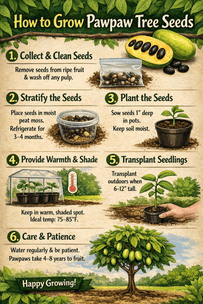
How to Grow PawPaw Tree Seeds
The Asimina triloba, commonly called the pawpaw tree, is the largest native fruit tree in North America. Pawpaws produce a tropical-tasting fruit often described as a blend of banana, mango, and custard.
Growing pawpaw trees from seed is very rewarding, but the seeds require special preparation and patience. Unlike many garden plants, pawpaw seeds must go through a cold stratification period before they will germinate.
This guide will walk you through exactly how to grow pawpaw trees from seed.
1. Collect or Buy Fresh Pawpaw Seeds
Pawpaw seeds are large, flat, and dark brown. If harvesting them from fruit:
- Scoop seeds out of ripe pawpaw fruit.
- Rinse off the pulp.
- Keep the seeds moist—do not allow them to dry out.
Dry seeds often lose viability, so it is best to plant them soon or prepare them for stratification.
2. Cold Stratify the Seeds (Very Important)
Pawpaw seeds need a cold dormancy period to germinate.
How to stratify pawpaw seeds:
- Place seeds in a zip-lock bag with moist peat moss, sand, or paper towel.
- Store the bag in the refrigerator.
- Keep at 34–40°F (1–4°C) for 90–120 days.
This simulates winter conditions and signals the seed that spring is coming.
3. Plant the Seeds
After stratification, plant the seeds in deep containers.
Planting instructions:
- Plant seeds 1 inch deep
- Use well-draining potting soil
- Use deep pots (pawpaws grow long taproots)
- Water thoroughly after planting
Seedlings may take 3–8 weeks to appear.
4. Provide the Right Growing Conditions
Pawpaw seedlings need specific conditions to grow well.
Best conditions:
- Temperature: 70–85°F
- Light: Partial shade
- Soil: Rich, moist, well-draining soil
- Water: Keep soil consistently moist
Young pawpaw trees naturally grow under forest canopies, so too much sun early on can stress seedlings.
5. Transplanting Pawpaw Seedlings
Pawpaw trees develop delicate taproots that do not like disturbance.
When transplanting:
- Wait until plants are 6–12 inches tall
- Plant carefully without disturbing roots
- Space trees 10–15 feet apart
For fruit production, plant at least two trees for cross-pollination.
6. Caring for Pawpaw Trees
Once established, pawpaw trees are surprisingly hardy.
Care tips:
- Water regularly during dry periods
- Add compost yearly
- Mulch around the base of the tree
- Protect young trees from deer and rabbits
Pawpaw trees grow best in USDA Zones 5–9.
7. When Pawpaw Trees Start Producing Fruit
Pawpaw trees grown from seed typically begin producing fruit in:
4–8 years
Mature trees can produce large clusters of delicious custard-like fruit in late summer or early fall.
Why Grow Pawpaw Trees?
Benefits of growing pawpaw trees include:
- Native North American fruit tree
- Unique tropical-flavored fruit
- Low maintenance once established
- Attractive shade tree with large leaves
- Great for wildlife and pollinators
Pawpaw trees are becoming increasingly popular with home gardeners, permaculture growers, and small orchards.
Final Thoughts
Growing pawpaw trees from seed takes patience, but it is one of the most rewarding fruit trees you can plant. With proper cold stratification, deep containers, and gentle transplanting, you can successfully grow your own pawpaw trees and enjoy one of North America's most unique native fruits.