
Posted by TJ Hopkins on Apr 3rd 2026
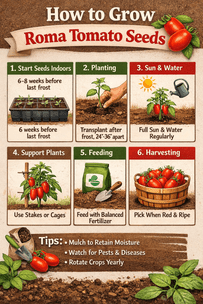
How to Grow Roma Tomato Seeds
Roma tomatoes are one of the most popular tomato varieties for home gardeners. Known for their firm texture, rich flavor, and low moisture content, Roma tomatoes are ideal for sauces, canning, and cooking. Growing Roma tomatoes from seed is simple and rewarding, and with the right care you can enjoy a large harvest throughout the growing season.
Start Seeds Indoors
Roma tomato seeds grow best when started indoors before the outdoor growing season begins.
Start seeds about 6–8 weeks before your last expected frost date. In cooler regions, starting indoors gives seedlings a strong head start before transplanting them into the garden.
Steps for starting seeds:
- Fill seed trays or small pots with seed-starting mix.
- Plant seeds about ¼ inch deep in the soil.
- Water lightly so the soil is moist but not soggy.
- Place trays in a warm location (70–80°F) or use a seed heat mat.
- Seeds usually germinate in 5–10 days.
Once seedlings appear, place them under bright light or grow lights to prevent them from becoming leggy.
Transplant Seedlings Outdoors
After seedlings develop 2–3 sets of true leaves, they are ready to be transplanted into larger containers or eventually into the garden.
Before planting outside, harden off the seedlings for about 7–10 days by gradually exposing them to outdoor conditions.
When planting outdoors:
- Choose a location with full sun (6–8 hours daily)
- Space plants 18–24 inches apart
- Space rows about 3 feet apart
- Plant deeply so part of the stem is buried, encouraging strong roots
Soil and Growing Conditions
Roma tomatoes grow best in rich, well-drained soil.
Ideal conditions:
- Soil pH: 6.0 – 6.8
- Soil type: Loamy soil with organic matter
- Sunlight: Full sun
- Temperature: 65–85°F
Mix compost or aged manure into the soil before planting to improve fertility and drainage.
Watering and Fertilizing
Consistent watering is important for healthy tomato plants.
- Water deeply 1–2 times per week
- Keep soil evenly moist
- Avoid watering leaves to reduce disease
Feed plants with a balanced vegetable fertilizer every 2–3 weeks once they begin actively growing.
Mulching around plants helps retain moisture and prevent weeds.
Support Your Tomato Plants
Roma tomato plants benefit from support to keep fruit off the ground and improve air circulation.
Common supports include:
- Tomato cages
- Garden stakes
- Trellises
Tie plants loosely as they grow to prevent stems from breaking under the weight of fruit.
Pest and Disease Prevention
Common pests that may affect tomato plants include aphids, hornworms, and whiteflies.
To keep plants healthy:
- Inspect plants regularly
- Remove pests by hand if necessary
- Use organic insecticidal soap if infestations appear
- Ensure proper spacing for good air circulation
Crop rotation and healthy soil can also help prevent disease.
Harvesting Roma Tomatoes
Roma tomatoes are usually ready to harvest 70–80 days after transplanting.
Signs they are ready:
- Bright red color
- Firm but slightly soft to the touch
- Easy to twist off the vine
Harvest regularly to encourage continued fruit production.
Final Tips for Growing Roma Tomatoes
Growing Roma tomatoes from seed is a great way to produce fresh tomatoes for cooking, sauces, and preserving. With good sunlight, consistent watering, and proper care, Roma tomato plants can produce an abundant harvest throughout the season.
Whether you grow them in a backyard garden, raised beds, or large containers, Roma tomatoes are a reliable and productive choice for gardeners of all experience levels.