
Posted by TJ Hopkins on Apr 14th 2026
How to Grow Strawberry Clover Seeds
Strawberry clover (Trifolium fragiferum) is a hardy perennial clover often used as a ground cover, pasture plant, or lawn alternative. It produces small pink flowers and unique seed heads that resemble tiny strawberries, which is how it gets its name. This clover spreads by creeping stems, tolerates wet soils, and improves soil quality by fixing nitrogen.
Below is a simple step-by-step guide to growing strawberry clover from seed.
1. Choose the Right Planting Location
Strawberry clover grows best in areas with:
- Full sun to partial shade
- Moist to moderately wet soil
- Well-drained but fertile soil
Unlike many other clovers, strawberry clover tolerates heavy soils and can even handle occasional flooding, making it suitable for low or poorly drained areas.
2. When to Plant Strawberry Clover Seeds
The best times to plant strawberry clover seeds are:
- Early spring after the last frost
- Late summer to early fall
Planting during these cooler seasons helps seeds germinate and establish more easily.
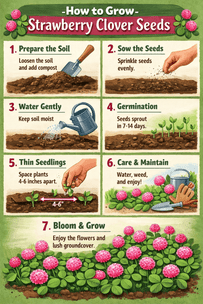
3. Prepare the Soil
Before planting:
- Remove weeds, grass, and debris from the planting area.
- Loosen the top 2–4 inches of soil with a rake or garden hoe.
- Level the soil lightly so seeds can make good contact with the ground.
Clover typically does not require fertilizer because it naturally adds nitrogen to the soil.
4. Plant the Seeds
Strawberry clover seeds are very small, so they should be planted shallowly.
- Seed depth: about 1/8 inch or surface-sown
- Spacing: broadcast evenly across the soil
- Seeding rate: about 1–2 pounds per 1,000 square feet
After spreading the seeds:
- Lightly rake the soil so seeds are barely covered.
- Press the soil gently or walk over the area to improve seed-to-soil contact.
5. Watering After Planting
Keep the soil consistently moist until seeds germinate.
- Germination usually occurs in 7–14 days.
- Avoid allowing the soil to dry out during this stage.
Once plants are established, strawberry clover becomes more drought tolerant.
6. Care and Maintenance
Strawberry clover requires minimal maintenance.
Helpful care tips:
- Mow occasionally if used as a lawn alternative.
- Water during extended dry periods.
- Avoid heavy nitrogen fertilizers.
Because it spreads through creeping stems, strawberry clover will gradually form a dense green ground cover.
7. Benefits of Strawberry Clover
Growing strawberry clover offers several benefits:
- Improves soil by fixing nitrogen
- Supports pollinators such as bees
- Works well as a low-maintenance lawn alternative
- Helps reduce soil erosion
- Tolerates wet soil conditions better than many other clovers
Final Tips
Strawberry clover is easy to grow and requires little care once established. By planting seeds in well-prepared soil and keeping them moist during germination, you can grow a lush clover patch that improves soil health and creates attractive ground cover for years to come.