
Posted by TJ Hopkins on Apr 15th 2026
How to Grow Timothy Grass Seeds
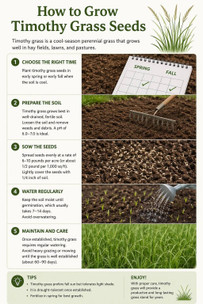
Timothy grass (Phleum pratense) is a cool-season perennial grass widely grown for livestock forage, hay production, and pasture. Known for its tall seed heads and soft, leafy growth, Timothy grass thrives in cooler climates and produces highly nutritious hay for horses, cattle, and other grazing animals. With proper planting and care, Timothy grass can establish a productive stand that lasts for several years.
When to Plant Timothy Grass Seeds
Timothy grass grows best in cool weather, so planting time is important.
Best planting seasons:
- Early spring: As soon as soil can be worked
- Late summer to early fall: 6–8 weeks before first frost
Fall planting often produces stronger stands because weeds are less competitive and soil moisture is more consistent.
Choosing the Right Location
Timothy grass performs best under the following conditions:
- Full sun for maximum growth
- Cool climates with moderate rainfall
- Well-drained loamy or clay soils
- Soil pH between 6.0 and 7.5
Avoid sandy or extremely dry soils, as Timothy grass prefers consistent moisture.
Soil Preparation
Proper soil preparation helps ensure successful germination and strong root development.
Steps to prepare the soil:
- Remove weeds and debris from the planting area.
- Loosen the soil 2–4 inches deep using a rake or tiller.
- Level the soil surface for even seed distribution.
- If needed, add compost or organic matter to improve soil fertility.
Timothy grass seeds are very small, so a fine, firm seedbed helps achieve better seed-to-soil contact.
How to Plant Timothy Grass Seeds
- Broadcast the seeds evenly across the prepared soil.
- Use about 5–10 pounds of seed per acre for pure stands (or less when mixed with other grasses).
- Lightly rake the soil so seeds are covered with about ¼ inch of soil.
- Gently firm the soil by rolling or pressing it down to improve contact.
Because the seeds are tiny, planting them too deep can prevent germination.
Watering and Germination
After planting, keep the soil consistently moist but not waterlogged.
- Germination usually occurs in 7–14 days.
- Water lightly and frequently during early growth.
- Once established, Timothy grass becomes more tolerant of short dry periods.
Fertilizing Timothy Grass
Timothy grass responds well to balanced fertilization.
Helpful tips:
- Apply nitrogen fertilizer in early spring to boost growth.
- A balanced fertilizer (10-10-10) can improve establishment.
- Avoid excessive nitrogen late in the season, which may weaken plants before winter.
Soil testing can help determine the exact nutrients your soil needs.
Maintenance and Care
To maintain a healthy stand of Timothy grass:
- Control weeds during the first growing season.
- Mow or harvest before seed heads fully mature for the highest hay quality.
- Avoid cutting the grass too short; leave 3–4 inches of growth to allow regrowth.
Timothy grass typically reaches 2–4 feet tall when mature.
Harvesting Timothy Grass for Hay
Timothy grass is most commonly grown for hay.
Best harvest timing:
- Early bloom stage provides the best balance of nutrition and yield.
- Cutting too late reduces protein and digestibility.
Under good conditions, Timothy grass can produce one to two hay cuttings per year.
Benefits of Growing Timothy Grass
Timothy grass is popular for several reasons:
- Excellent horse hay with soft stems
- Highly palatable for cattle, sheep, and rabbits
- Good winter hardiness in northern climates
- Works well in pasture mixes with clover or alfalfa
Its dependable growth and nutritional value make it one of the most widely grown forage grasses in temperate regions.
Final Tips for Success
- Plant during cool seasons for best establishment.
- Use a firm seedbed and shallow planting depth.
- Maintain consistent moisture during germination.
- Harvest at the early bloom stage for premium hay quality.
With the right care, Timothy grass can provide productive forage and hay for many years.