
Posted by TJ Hopkins on May 14th 2026
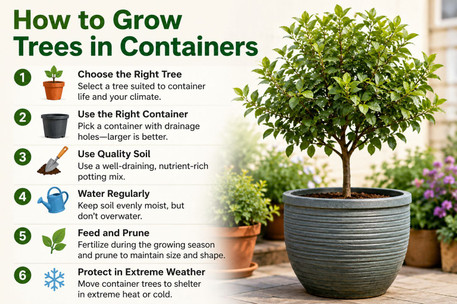
How to Grow Trees in Containers
Growing trees in containers is a great way to enjoy beautiful foliage, flowers, fruit, or shade trees even if you have limited space. Container-grown trees work well on patios, decks, balconies, and small gardens. With the right care and proper planting methods, many trees can thrive in pots for years.
Whether you want to grow ornamental trees, dwarf fruit trees, or evergreen trees, learning how to grow trees in containers can help you create a productive and attractive outdoor space.
Choose the Right Tree
Not every tree is ideal for container growing. Smaller varieties and slow-growing trees typically perform best in pots. Dwarf fruit trees, Japanese maples, olive trees, citrus trees, and many ornamental shrubs are excellent choices for containers.
When selecting a tree, consider your USDA growing zone, sunlight conditions, and the mature size of the plant. Trees that naturally stay compact are easier to maintain and less likely to become root-bound quickly.
Select the Proper Container
The container you choose plays a major role in the health of your tree. Larger pots help retain moisture and provide room for root development. Always select a container with drainage holes to prevent waterlogged roots.
Materials such as plastic, ceramic, wood, and fabric pots all work well. Lightweight containers are easier to move, while heavier pots offer better stability for taller trees.
As the tree grows, you may need to transplant it into a larger container every few years to avoid overcrowded roots.
Use High-Quality Potting Soil
Container trees require loose, well-draining soil that holds moisture without becoming compacted. Standard garden soil is usually too dense for containers and may restrict root growth.
A quality potting mix combined with compost or organic matter works best. Some gardeners also add perlite or bark to improve drainage and aeration.
Healthy soil helps support strong root systems and encourages vigorous growth throughout the growing season.
Water Consistently
Trees grown in containers dry out faster than trees planted in the ground. During warm weather, container trees may require watering every day, especially in smaller pots.
Water deeply until excess moisture drains from the bottom of the container. Avoid shallow watering, which can encourage weak roots near the soil surface.
Check soil moisture regularly by placing your finger a few inches into the potting mix. If the soil feels dry, it is time to water.
Fertilize During the Growing Season
Container-grown trees benefit from regular feeding because nutrients wash out of pots more quickly. Use a balanced slow-release fertilizer or liquid plant food during spring and summer.
Avoid over-fertilizing, which may cause excessive growth or damage roots. Follow fertilizer instructions carefully for best results.
Organic fertilizers such as compost tea, fish emulsion, or worm castings can also help maintain healthy growth naturally.
Prune to Maintain Shape and Size
Pruning helps container trees stay manageable and encourages healthy branching. Remove dead, damaged, or crowded branches as needed.
For fruit trees, pruning can improve air circulation and increase fruit production. Ornamental trees benefit from light shaping to maintain an attractive appearance.
Regular trimming also prevents container trees from becoming top-heavy or difficult to move.
Protect Trees From Extreme Weather
Container trees are more vulnerable to temperature swings than trees planted in the ground. During hot summer weather, containers may dry out quickly, while winter cold can damage exposed roots.
Move potted trees to sheltered areas during severe weather when possible. In colder climates, insulating containers with mulch or burlap can help protect roots from freezing temperatures.
Some tropical trees may need to be brought indoors before frost arrives.
Repot When Necessary
Over time, roots can fill the container and become root-bound. Signs of overcrowded roots include slowed growth, wilting, or roots circling inside the pot.
Repotting every two to four years helps refresh soil and gives roots additional space to grow. When repotting, gently loosen the root ball and trim damaged roots before placing the tree into fresh potting mix.
Best Trees for Containers
Many tree varieties perform well in containers, including:
- Dwarf lemon trees
- Olive trees
- Japanese maple trees
- Fig trees
- Bay laurel trees
- Dwarf apple trees
- Arborvitae
- Boxwood trees
- Magnolia trees
- Camellias
Choosing the right tree for your climate and available space will improve long-term success.
Final Thoughts
Learning how to grow trees in containers is an excellent way to enjoy trees in small spaces while adding beauty and greenery to patios, balconies, and gardens. With proper watering, quality soil, regular pruning, and seasonal care, container-grown trees can thrive for many years.
Whether you are growing ornamental trees or edible fruit trees, container gardening offers flexibility and convenience for gardeners of all skill levels.