
Posted by TJ Hopkins on Jun 20th 2026
How to Harvest and Process Cacao Beans
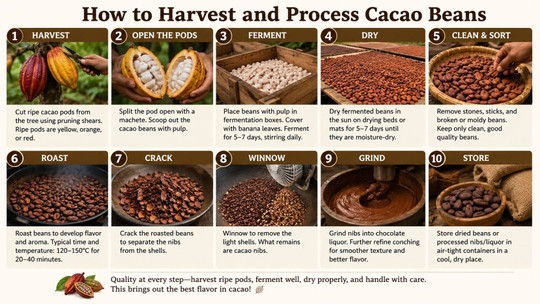
Chocolate begins long before it reaches a candy bar or cup of hot cocoa. Cacao beans, the seeds of the cacao tree, go through several important stages after harvest to develop the rich flavors that chocolate lovers enjoy. From picking ripe pods to grinding roasted nibs, every step plays a role in creating high-quality cacao.
1. Harvest Ripe Cacao Pods
Cacao pods grow directly on the trunk and branches of the tree. When they ripen, the pods change color, often turning yellow, orange, or red depending on the variety.
Harvesting is typically done using pruning shears or a sharp knife to carefully cut the pods from the tree without damaging the trunk or flower cushions that produce future pods.
Signs of ripe cacao pods include:
- Bright yellow, orange, or red coloration
- A hollow sound when tapped
- Slight softness compared to immature pods
Harvesting at the proper stage ensures the beans have reached full maturity.
2. Open the Pods
After harvesting, the pods are opened to remove the beans. Farmers often use a machete or wooden club to split the pods carefully.
Inside each pod are rows of cacao beans surrounded by a sweet, white pulp. The beans and pulp are scooped out together and collected for fermentation.
The pulp is extremely important because it provides the sugars and moisture necessary for the fermentation process.
3. Ferment the Beans
Fermentation is one of the most important steps in cacao processing. Fresh beans are placed into wooden boxes, baskets, or piles covered with banana leaves.
During fermentation:
- Natural yeasts and bacteria break down the sugary pulp.
- Heat develops inside the bean mass.
- Chemical changes begin creating chocolate flavor compounds.
Fermentation usually lasts 5 to 7 days, and the beans are often stirred or turned to ensure even processing.
Proper fermentation removes bitterness and helps develop the complex flavors associated with fine chocolate.
4. Dry the Beans
Once fermentation is complete, the beans contain too much moisture for safe storage. They are spread out on drying tables, mats, or raised beds in the sun.
Drying generally takes 5 to 7 days depending on weather conditions.
The beans are regularly turned to ensure:
- Even drying
- Prevention of mold growth
- Improved bean quality
Properly dried beans typically contain about 6–8% moisture and can be safely stored or shipped.
5. Clean and Sort
Before further processing, the dried beans are cleaned and sorted.
Processors remove:
- Stones and debris
- Sticks and leaves
- Broken beans
- Moldy or damaged beans
Only healthy, high-quality beans move on to roasting. Careful sorting improves both flavor and consistency.
6. Roast the Beans
Roasting develops the characteristic aroma and flavor of chocolate.
Typical roasting temperatures range from 250°F to 300°F (120°C to 150°C), with roasting times of approximately 20 to 40 minutes depending on the bean type and desired flavor profile.
Roasting helps:
- Reduce bitterness
- Enhance chocolate aromas
- Sterilize the beans
- Loosen the shells
Different roasting conditions can create unique flavor characteristics.
7. Crack the Beans
After roasting, the beans become brittle and easy to crack. The outer shells are broken away from the inner portion of the bean.
The valuable pieces that remain are called cacao nibs.
Cacao nibs contain the cocoa solids and cocoa butter that eventually become chocolate.
8. Winnow the Shells
Winnowing separates the lightweight shells from the heavier nibs.
This can be done using:
- Air blowers
- Fans
- Mechanical winnowers
Removing the shells produces clean cacao nibs that are ready for grinding.
9. Grind the Nibs
Grinding the nibs releases cocoa butter naturally present inside the beans. As the fat melts, the nibs transform into a thick liquid known as chocolate liquor.
Additional refining and conching can further improve:
- Smoothness
- Flavor development
- Texture
- Mouthfeel
This stage serves as the foundation for making chocolate bars, cocoa powder, and many other chocolate products.
10. Store Properly
Finished cacao beans, nibs, or chocolate liquor should be stored in airtight containers in a cool, dry environment.
Proper storage helps:
- Prevent moisture absorption
- Protect flavor quality
- Reduce the risk of mold
- Extend shelf life
Stored correctly, dried cacao beans can remain viable for many months.
Final Thoughts
Producing high-quality cacao requires attention at every stage, from harvesting ripe pods to careful fermentation, drying, roasting, and grinding. Each step contributes to the final flavor and quality of the chocolate we enjoy.
Whether you are growing cacao at home or simply interested in how chocolate is made, understanding the cacao processing journey provides a deeper appreciation for one of the world's most beloved foods.