
Posted by TJ Hopkins on Apr 22nd 2026
How to Keep Plants Alive
Keeping plants alive isn’t about luck—it’s about understanding a few simple principles and being consistent. Whether you’re caring for houseplants, herbs, or starting seeds, the basics are the same. Here’s a complete, practical guide to help your plants not just survive—but thrive.
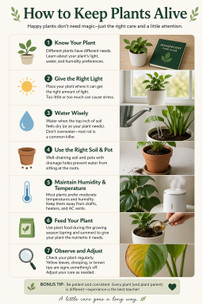
1. Know Your Plant
Not all plants are created equal. Some love bright sunlight, while others prefer shade. Some need frequent watering, while others thrive on neglect.
Before doing anything else, identify your plant and learn:
- Light requirements (full sun, partial, low light)
- Water needs (dry soil vs. consistently moist)
- Preferred temperature and humidity
A cactus and a fern won’t survive under the same care routine—so knowing your plant is step one.
2. Give the Right Light
Light is one of the biggest factors in plant health.
- Bright, direct light: South-facing windows (great for succulents and fruiting plants)
- Indirect light: Near windows but not in direct sun (perfect for most houseplants)
- Low light: Rooms with minimal sunlight (snake plants, pothos)
Too much light can scorch leaves. Too little light causes slow growth and weak stems. If your plant is leaning or stretching, it’s asking for more light.
3. Water Wisely
Overwatering kills more plants than anything else.
A simple rule:
? Stick your finger about 1 inch into the soil. If it’s dry, water. If it’s still moist, wait.
Tips:
- Always use pots with drainage holes
- Water thoroughly, but don’t let plants sit in standing water
- Adjust watering based on season (less in winter, more in growing season)
Root rot from overwatering is one of the most common mistakes—so when in doubt, wait.
4. Use the Right Soil & Pot
Good drainage is critical.
- Use well-draining soil suited to your plant (cactus mix, potting mix, etc.)
- Make sure pots have drainage holes
- Avoid compacted or soggy soil
Healthy roots need oxygen. If water sits too long, roots suffocate and rot.
5. Maintain Proper Temperature & Humidity
Most houseplants prefer:
- Temperatures between 65–75°F
- Moderate humidity
Avoid placing plants:
- Near heating vents
- In cold drafts
- Directly under AC units
If your home is dry (especially in winter), consider:
- A humidifier
- Grouping plants together
- Light misting (for humidity-loving plants)
6. Feed Your Plants
Plants need nutrients to grow, especially during spring and summer.
- Use a balanced fertilizer every 2–4 weeks during the growing season
- Reduce or stop feeding in fall and winter
- Don’t over-fertilize—too much can burn roots
Think of fertilizer as food—it helps your plant grow stronger and healthier.
7. Observe and Adjust
Your plant will tell you what it needs—you just have to pay attention.
Common signs:
- Yellow leaves: Overwatering or poor drainage
- Drooping: Underwatering or root stress
- Brown tips: Low humidity or inconsistent watering
- Slow growth: Not enough light or nutrients
Check your plants regularly and adjust your care routine as needed.
Bonus Tip: Be Patient and Consistent
Plants don’t change overnight. Growth takes time, and mistakes happen.
The key is consistency:
- Stick to a routine
- Learn from what works (and what doesn’t)
- Don’t give up after one bad leaf
Even experienced plant owners lose plants sometimes—it’s part of the process.
Final Thoughts
Keeping plants alive isn’t complicated—it just requires attention and a little learning. Once you understand your plant’s needs and stay consistent, you’ll find plant care becomes second nature.
A little care truly goes a long way.