
Posted by TJ Hopkins on Aug 21st 2026
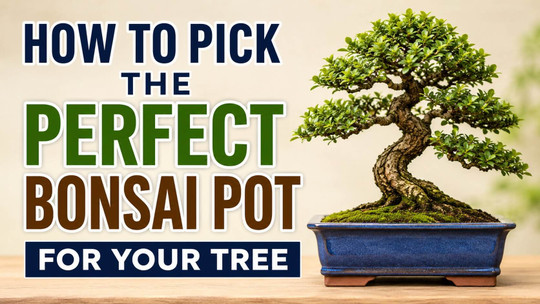
How to Pick the Perfect Bonsai Pot for Your Tree
Choosing the right bonsai pot is about much more than finding a container that looks attractive. The pot plays an important role in the health of your bonsai while also helping create the balanced, miniature landscape that makes bonsai so beautiful.
A well-chosen pot should complement the tree rather than compete with it. Size, shape, depth, color, drainage, and even the tree's stage of development should all be considered before making your choice.
Whether you're potting your first bonsai or looking for a better container for an established tree, here's how to pick the perfect bonsai pot.
Why the Right Bonsai Pot Matters
Bonsai trees grow in a very limited amount of soil. Unlike ordinary container plants, their roots are intentionally kept within a relatively small space.
The pot must provide enough room for healthy roots while maintaining the compact proportions associated with bonsai. It also needs excellent drainage because constantly wet soil can cause serious root problems.
From a design perspective, the tree and pot should appear as one composition. Ideally, your eye should be drawn to the tree first, with the pot quietly enhancing its appearance.
1. Consider the Size of Your Bonsai Tree
Start by looking at the overall dimensions of your tree.
A pot that is too large can make a mature bonsai appear undersized, while an extremely small pot may restrict the root system too severely.
A commonly used guideline is to choose a pot whose length is approximately two-thirds the height of an upright tree. For trees that are wider than they are tall, the width of the canopy can be used as a reference instead.
These are guidelines rather than strict rules. The tree's trunk, root system, species, style, and growing conditions should also influence your decision.
2. Choose the Proper Pot Depth
Pot depth is especially important for root health.
One traditional guideline is to select a pot with a depth roughly similar to the diameter of the trunk near the soil line. However, different species and bonsai styles may require deeper or shallower containers.
Trees with thick, powerful trunks often look natural in somewhat deeper pots. Delicate trees with slender trunks may look more balanced in shallow containers.
Young trees still undergoing substantial development usually benefit from more root space than mature display bonsai.
3. Match the Pot Shape to the Tree
Bonsai pots are available in numerous shapes, including:
- Rectangular
- Oval
- Round
- Square
- Hexagonal
- Free-form
- Cascade pots
Rectangular pots often work particularly well with strong, rugged trees and prominent trunks.
Oval and round pots can soften the overall composition and frequently complement graceful or flowing trees.
Tall, narrow pots are commonly used for cascade and semi-cascade bonsai because they provide visual balance while allowing branches to extend downward.
4. Consider the Bonsai Style
The training style of your tree can help determine which pot will look most natural.
Formal upright and informal upright bonsai often pair well with rectangular or oval pots. Slanting trees can also work beautifully in these shapes when positioned correctly.
Cascade bonsai usually require deeper containers because much of the tree extends below the top of the pot.
Forest and group plantings frequently look best in very shallow, wide containers that provide enough horizontal room to create the appearance of a miniature landscape.
5. Choose a Color That Complements the Tree
The pot should support the visual character of your bonsai rather than overpower it.
Earthy colors such as brown, tan, gray, reddish brown, and muted green are versatile choices for many trees.
Glazed pots offer considerably more color possibilities, including blue, green, cream, turquoise, and other shades.
Think about the tree throughout the seasons. A flowering bonsai may look especially attractive when the pot color complements its blossoms. Deciduous trees may need a pot that works with green summer foliage as well as colorful fall leaves or bare winter branches.
6. Glazed vs. Unglazed Bonsai Pots
Both glazed and unglazed pots can be excellent choices.
Unglazed pots are traditionally popular for many conifers and evergreen bonsai. Their natural earth tones tend to complement rugged bark and evergreen foliage without distracting from the tree.
Glazed pots are frequently used for flowering, fruiting, and deciduous bonsai. Their additional colors can complement blossoms, fruit, foliage, or seasonal changes.
These aren't absolute rules. The overall harmony between the tree and container is ultimately more important.
7. Make Sure the Pot Has Drainage Holes
Never overlook drainage when selecting a bonsai pot.
Bonsai soil is designed to drain efficiently, but that doesn't help if excess water has nowhere to escape.
A quality bonsai container should have adequate drainage holes in the bottom. Many bonsai pots also have smaller holes that can be used for anchoring wire.
Drainage mesh is commonly placed over the larger holes to help keep the bonsai soil in the pot while allowing water to drain freely.
8. Think About the Tree's Root System
Don't choose a container based entirely on appearance.
When repotting, examine the size and structure of the root system. The roots need to fit comfortably into the container after appropriate pruning and preparation.
Trying to force a tree with a large root mass into an extremely shallow pot can put unnecessary stress on the tree.
It may take several repotting cycles to gradually develop a root system suitable for a particularly shallow bonsai container.
9. Development Pots and Display Pots Are Different
A young bonsai doesn't necessarily need a beautiful, shallow ceramic pot.
If you're still trying to thicken the trunk, develop branches, or establish a strong root system, a larger training container may be the better choice.
Training pots provide additional room for roots and can encourage stronger growth.
Once the tree reaches a more advanced stage, it can gradually transition into a smaller and more decorative bonsai pot.
Tree health should always come before appearance.
10. Look at the Visual Weight of the Tree
Two bonsai trees of exactly the same height may require completely different pots.
A tree with a massive trunk, rugged bark, and heavy branches has much greater visual weight than a slender tree with delicate foliage.
A visually powerful tree generally needs a pot with enough substance to balance it.
Likewise, a delicate bonsai can appear overwhelmed by a heavy or bulky container.
The goal is visual harmony.
11. Consider Where the Tree Will Sit in the Pot
Bonsai trees aren't always planted directly in the center.
Depending on the style and direction of the trunk and branches, the tree may be positioned slightly to one side.
For example, if the tree visually moves strongly toward the right, positioning it somewhat toward the left side of the pot can create open space in the direction of that movement.
This use of negative space is an important part of bonsai composition.
12. Don't Let the Pot Steal the Show
An elaborate bonsai pot can be beautiful on its own, but the tree should normally remain the focal point.
Very bright colors, complicated patterns, oversized decorative feet, or elaborate ornamentation can sometimes compete with the bonsai.
When you're uncertain, a relatively simple pot is often the safest choice.
Think of the container as the frame around a painting. It should improve the presentation without becoming more noticeable than the artwork itself.
Common Bonsai Pot Mistakes to Avoid
One of the easiest mistakes is choosing a pot simply because you like its appearance.
Avoid selecting a container without considering drainage, root space, proportions, and the style of the tree.
Other common mistakes include:
- Choosing a pot that is far too large
- Moving a developing tree into a shallow display pot too soon
- Using containers without adequate drainage
- Choosing colors that overpower the tree
- Ignoring the size of the root system
- Using a pot that's too visually heavy for a delicate bonsai
- Selecting a shallow pot solely for appearance
- Forgetting that the tree will change as it grows
A Simple Bonsai Pot Checklist
Before purchasing or using a pot, ask yourself:
- Is it appropriately sized for the tree?
- Is it deep enough for the root system?
- Does it have adequate drainage?
- Does the shape complement the bonsai style?
- Does the color enhance rather than overpower the tree?
- Is the tree mature enough for a display pot?
- Does the visual weight of the pot balance the trunk and canopy?
- Will the container still complement the tree during different seasons?
If you can answer yes to these questions, you're probably on the right track.
The Perfect Pot Is About Balance
There isn't one universal bonsai pot that works for every tree. Selecting the right container involves balancing horticultural needs with artistic design.
Start with the health of the tree. Make sure its roots have adequate room, the soil can drain freely, and the container is suitable for the tree's current stage of development.
Then consider appearance. Look at the tree's height, trunk thickness, canopy, movement, style, foliage, flowers, and overall character.
When the combination works, the bonsai and its pot won't look like two separate objects. They'll appear to belong together—and that's what makes a beautifully matched bonsai pot so effective.