
Posted by TJ Hopkins on Jun 9th 2026
How to Plant a Sunflower Fence
If you're looking for an affordable, eye-catching way to add privacy to your yard, a sunflower fence is a fantastic option. Sunflowers grow quickly, produce stunning blooms, attract pollinators, and can create a natural screen that adds beauty and function to your landscape. With the right planning and care, you can enjoy a towering wall of sunflowers in just a few months.
Why Plant a Sunflower Fence?
A sunflower fence offers several benefits:
- Creates a natural privacy barrier
- Attracts bees, butterflies, and birds
- Adds vibrant color to your garden
- Provides seeds for wildlife and harvesting
- Grows quickly during the summer season
- Costs less than traditional fencing options
Many tall sunflower varieties can reach 6 to 12 feet or more, making them ideal for creating a living fence along property lines, garden borders, or patios.
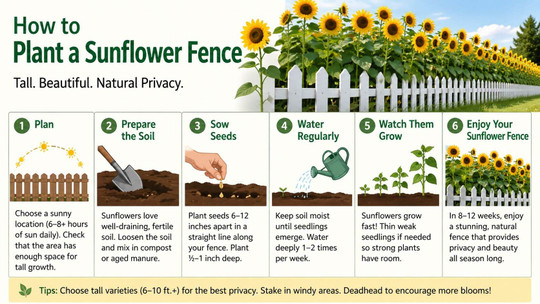
Step 1: Plan Your Location
Choose a location that receives at least 6 to 8 hours of direct sunlight each day. Sunflowers thrive in full sun and will produce stronger stems and larger blooms when given plenty of light.
Before planting, consider:
- Available growing space
- Nearby structures that may cast shade
- Wind exposure
- Desired fence length
Measure your planting area and determine how many sunflower plants you'll need to create a continuous screen.
Step 2: Prepare the Soil
Sunflowers perform best in fertile, well-draining soil. Before planting:
- Remove weeds and grass from the area.
- Loosen the soil to a depth of 8–12 inches.
- Mix in compost or well-aged manure.
- Rake the area smooth.
Improving soil quality before planting encourages stronger roots and healthier plants throughout the growing season.
Step 3: Sow the Seeds
Plant sunflower seeds directly into the garden after the danger of frost has passed.
Planting Guidelines
- Plant seeds ½ to 1 inch deep.
- Space seeds 6–12 inches apart.
- Sow in a straight row along your desired fence line.
- Cover lightly with soil and gently firm the surface.
For a thicker privacy screen, consider planting two staggered rows.
Step 4: Water Regularly
Keep the soil consistently moist while seeds germinate and young seedlings establish themselves.
Watering Tips
- Water deeply 1–2 times per week.
- Avoid overwatering soggy soil.
- Increase watering during hot, dry weather.
- Apply mulch to help retain moisture.
Most sunflower seeds germinate within 7–14 days under favorable conditions.
Step 5: Watch Them Grow
Sunflowers are fast-growing plants and can gain several inches of height each week during peak growth.
As your plants mature:
- Thin overcrowded seedlings if necessary.
- Remove weak plants.
- Stake tall varieties in windy areas.
- Monitor for pests and diseases.
With proper care, you'll soon have a dense row of towering sunflowers forming a natural fence.
Step 6: Enjoy Your Sunflower Fence
Within approximately 8–12 weeks, your sunflower fence should be in full bloom. The bright yellow flowers create an impressive display while providing privacy and visual interest throughout the season.
As the flowers mature, birds will visit to feed on the seeds, adding even more life and activity to your garden.
Best Sunflower Varieties for Privacy
Consider planting these tall varieties for maximum screening:
- Mammoth Sunflower
- Russian Mammoth
- American Giant
- Kong Hybrid
- Titan Sunflower
- Skyscraper Sunflower
These varieties are known for their impressive height and large flower heads.
Additional Tips for Success
- Plant after the last spring frost.
- Choose tall varieties reaching 6–10 feet or more.
- Stake plants in windy locations.
- Fertilize lightly if soil is poor.
- Deadhead spent blooms to encourage continued flowering on branching varieties.
- Save seeds at the end of the season for next year's fence.
Final Thoughts
A sunflower fence is one of the easiest and most rewarding garden projects for homeowners. In just a few months, you can transform an ordinary yard into a colorful, living privacy screen that supports pollinators, attracts wildlife, and creates a stunning summer landscape. With a little planning, regular watering, and plenty of sunshine, your sunflower fence will become a standout feature in your garden year after year.