
Posted by TJ Hopkins on Jul 2nd 2026
How to Plant Tree Seeds with a Broadcast Seed Spreader
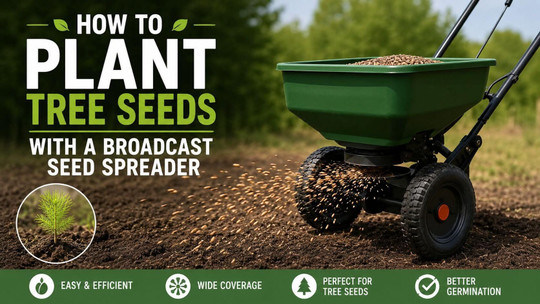
Reforesting land, restoring wildlife habitat, or planting large areas of trees doesn't have to be a slow, labor-intensive process. A broadcast seed spreader makes it possible to distribute thousands of tree seeds quickly and evenly across prepared ground. Whether you're planting pines, oaks, maples, or native hardwoods, using the right techniques can improve seed coverage and increase your chances of successful germination.
Why Use a Broadcast Seed Spreader?
Broadcast seed spreaders are designed to distribute seeds over a wide area, making them an excellent tool for large-scale tree planting projects.
Benefits include:
- Covers large areas much faster than hand sowing.
- Provides more even seed distribution.
- Reduces labor and planting time.
- Ideal for reforestation, wildlife habitat restoration, erosion control, and conservation projects.
- Works well with many medium and large-sized tree seeds.
Best Types of Tree Seeds for Broadcast Planting
Many tree species can be successfully planted using a broadcast spreader, including:
- Pine
- Spruce
- Fir
- Cedar
- Cypress
- Oak
- Walnut
- Chestnut
- Maple
- Birch
- Ash
- Native hardwood species
Very tiny seeds may require mixing with a carrier such as dry sand or pelletized lime to improve distribution.
Step 1: Prepare the Planting Area
Proper site preparation greatly improves germination.
Before spreading seed:
- Remove heavy weeds and invasive vegetation.
- Mow tall grass if necessary.
- Loosen compacted soil.
- Lightly rake or scarify the soil surface.
- Ensure good seed-to-soil contact.
For reforestation projects after wildfires or logging, remove loose debris while preserving as much topsoil as possible.
Step 2: Choose the Right Seed
Different tree species have different germination requirements.
Some seeds require:
- Cold moist stratification
- Warm stratification
- Scarification
- Soaking before planting
Always prepare seeds according to the recommendations for the species you are planting.
Step 3: Calibrate Your Broadcast Spreader
Every spreader distributes seed differently.
Before planting:
- Fill the hopper with a small test amount.
- Set the spreader opening to a low setting.
- Test on a measured area.
- Adjust until you achieve the desired coverage.
Using too large of an opening can empty the hopper too quickly and lead to uneven distribution.
Step 4: Spread the Seed Evenly
For the best coverage:
- Walk at a steady pace.
- Overlap each pass by about 25–50%.
- Spread half the seed while walking north and south.
- Spread the remaining half while walking east and west.
This crisscross pattern helps eliminate thin spots.
Step 5: Improve Seed-to-Soil Contact
After broadcasting:
- Lightly rake the soil.
- Drag a section of chain-link fence over the area.
- Roll the soil with a lawn roller if practical.
Most tree seeds should not be buried deeply. Many species germinate best when covered with only a thin layer of soil.
Step 6: Water When Possible
If rainfall is not expected soon, irrigate the area after planting.
Keep the soil:
- Evenly moist
- Not waterlogged
- Moist during the early germination period
Natural rainfall is often sufficient for large outdoor planting projects.
Step 7: Protect Newly Planted Areas
Young tree seedlings are vulnerable to:
- Birds
- Rodents
- Deer
- Heavy foot traffic
Depending on the project size, consider:
- Temporary fencing
- Tree shelters
- Mulch for moisture retention
- Wildlife deterrents
Best Time to Broadcast Tree Seeds
Timing depends on the species.
Generally:
- Fall: Ideal for species requiring natural cold stratification.
- Early Spring: Excellent for seeds that have already been stratified.
- Late Winter: Works well in regions with consistent snow cover for natural seed incorporation.
Avoid planting during extremely hot or dry weather.
Tips for Better Germination
Follow these practices for the highest success rates:
- Use fresh, high-quality seed.
- Match tree species to your climate and soil.
- Prepare the ground before planting.
- Follow species-specific pretreatment requirements.
- Avoid planting seeds too deeply.
- Maintain consistent soil moisture.
- Be patient—some tree species germinate over several weeks or even months.
Common Mistakes to Avoid
Avoid these frequent planting errors:
- Using untreated seeds that require stratification.
- Broadcasting onto thick grass without soil preparation.
- Planting too deeply.
- Using an incorrect spreader setting.
- Planting during drought conditions.
- Expecting every seed to germinate.
Final Thoughts
A broadcast seed spreader is one of the fastest and most efficient tools for planting tree seeds across large areas. When combined with proper site preparation, high-quality seeds, and the correct planting techniques, it can help establish healthy forests, restore damaged landscapes, and create valuable wildlife habitat.
Whether you're planting a few acres or undertaking a large-scale reforestation project, careful planning and proper seed handling will significantly improve your chances of growing a thriving new generation of trees.