
Posted by TJ Hopkins on Aug 30th 2026
How to Prepare and Roast Fresh Chestnuts
Freshly roasted chestnuts are a warm and delicious fall treat. Their soft texture and mildly sweet, nutty flavor make them perfect for enjoying by the fire, adding to holiday recipes, or serving as a seasonal snack.
Roasting chestnuts at home is simple, but proper preparation is important. Chestnuts must be scored before cooking so steam can escape. Scoring also makes them much easier to peel while they are still warm.
Make Sure You Have Edible Chestnuts
Before preparing wild or freshly collected chestnuts, make sure they come from an edible chestnut tree. American, Chinese, European, and Japanese chestnuts are edible.
Do not eat horse chestnuts or buckeyes. They are toxic and are not the same as edible chestnuts. If you cannot confidently identify collected nuts, do not eat them.
Edible chestnuts usually have a pointed tip and grow inside an extremely spiny burr covered with many thin, sharp spines. Horse chestnuts generally have a rounder shape and grow inside a husk with fewer, thicker bumps or spines.
What You Will Need
- Fresh edible chestnuts
- A sharp paring knife or chestnut knife
- Cutting board
- Baking sheet
- Clean kitchen towel
- Bowl of warm water, optional
- Salt, butter, or seasonings, optional
How to Select Fresh Chestnuts
Choose chestnuts that feel firm, heavy, and solid for their size. Their shells should be smooth and glossy without large cracks, mold, or soft spots.
Avoid chestnuts that rattle when shaken. Rattling usually means the nut inside has dried out and pulled away from its shell.
Fresh chestnuts are more perishable than most other nuts because they contain considerable moisture. Keep them refrigerated until you are ready to use them.
Wash and Inspect the Chestnuts
Rinse the chestnuts under cool running water to remove dirt and debris. Dry them with a clean towel.
Examine each chestnut carefully. Discard any that have mold, unusual discoloration, unpleasant odors, insect holes, or soft areas.
Score Every Chestnut
Place one chestnut flat-side down on a sturdy cutting board. Carefully cut a large “X” through the shell on its rounded side. The cut should go through both the hard outer shell and the thin inner skin without slicing deeply into the nut.
You can also make one long cut across the rounded side. The important thing is to give steam a clear place to escape.
Never roast chestnuts without scoring them first. Unscored chestnuts can burst as pressure builds inside their shells.
Should You Soak Chestnuts Before Roasting?
Soaking is optional, but it can help keep the chestnuts moist and make them easier to peel.
Place the scored chestnuts in a bowl of warm water for approximately 15 to 30 minutes. Drain and dry them before roasting.
Chestnuts that float may be dried out or damaged. Inspect them carefully before deciding whether to roast them.
How to Roast Chestnuts in the Oven
Preheat your oven to 425°F.
Arrange the scored chestnuts on a baking sheet with the cut sides facing upward. Keep them in a single layer so they roast evenly.
Roast the chestnuts for approximately 20 to 30 minutes. Large chestnuts may require slightly more time. Shake or rotate the baking sheet once during roasting to encourage even cooking.
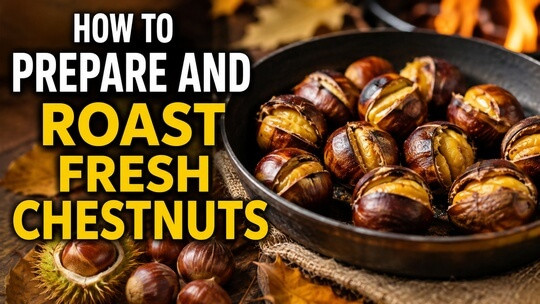
The chestnuts are ready when their shells curl back around the scored areas and the exposed nutmeat appears golden. The centers should be tender when pierced with a knife.
How to Roast Chestnuts Over a Fire
Chestnuts can also be roasted over a fireplace, campfire, or outdoor fire pit.
Place the scored chestnuts in a chestnut-roasting pan, cast-iron skillet, or another fire-safe pan. Hold or position the pan over hot coals rather than directly inside large flames.
Shake or stir the chestnuts frequently so they cook evenly and do not burn. They will usually take approximately 15 to 25 minutes, depending on the heat and the size of the chestnuts.
Use heat-resistant gloves and long-handled tools when working near an open fire. Never leave the roasting chestnuts unattended.
How to Peel Roasted Chestnuts
Chestnuts are easiest to peel while they are still hot. Once removed from the oven or fire, wrap them in a clean kitchen towel and let them steam for approximately five to ten minutes.
Work with only a few chestnuts at a time, keeping the remaining ones wrapped and warm. Remove both the hard outer shell and the thin, papery skin surrounding the nut.
If the inner skin becomes difficult to remove, warm the chestnuts again for a few minutes. Chestnuts that cool completely are much harder to peel.
How to Tell When Chestnuts Are Fully Cooked
A properly roasted chestnut should be tender, slightly sweet, and easy to bite. Its texture will be softer and starchier than that of an almond, pecan, or walnut.
If the center remains firm or crunchy, return the chestnuts to the oven for another five minutes and check them again.
Avoid roasting them far beyond tenderness. Overcooked chestnuts can become dry, hard, or scorched.
Ways to Enjoy Roasted Chestnuts
Warm roasted chestnuts are delicious on their own, but you can also serve them with:
- Melted butter and salt
- Cinnamon and a small amount of sugar
- Maple syrup
- Honey
- Rosemary and sea salt
- Holiday stuffing
- Roasted vegetables
- Soups and stews
- Salads
- Cakes, breads, and desserts
Roasted chestnuts can also be chopped, mashed, or puréed for use in savory and sweet recipes.
How to Store Fresh Chestnuts
Store unroasted chestnuts in a breathable bag or loosely closed container in the refrigerator. For the best flavor and texture, use them as soon as possible.
Do not leave fresh chestnuts at room temperature for extended periods. Their moisture content makes them vulnerable to mold and spoilage.
For longer storage, chestnuts can be frozen. They may be frozen in their shells or after roasting and peeling. Place them in a freezer-safe container or bag and remove as much air as possible.
How to Store Roasted Chestnuts
Allow leftover roasted chestnuts to cool, and then place them in an airtight container. Refrigerate them and use them within three to four days.
Reheat them briefly in the oven or a covered skillet. A small amount of moisture can help prevent them from drying out.
Peeled roasted chestnuts can also be frozen for several months. Thaw them in the refrigerator before reheating or adding them to a recipe.
Common Chestnut-Roasting Mistakes
Forgetting to Score the Shells
Every chestnut must be scored before roasting. This prevents pressure from building inside the shell and makes peeling easier.
Waiting Too Long to Peel Them
Peel roasted chestnuts while they are hot enough to release their shells and inner skins. Keep the batch wrapped in a towel while you work.
Using Chestnuts That Have Dried Out
Chestnuts that feel unusually light or rattle inside their shells may be dry and difficult to roast successfully.
Cooking Them at Too Low a Temperature
High heat helps the shells open and gives the chestnuts a pleasantly roasted flavor. An oven temperature of approximately 425°F works well for most batches.
Overcooking the Chestnuts
Check them regularly near the end of the roasting time. Remove them when the shells have opened and the centers are tender.
Final Thoughts
Preparing and roasting fresh chestnuts is a wonderful way to enjoy the flavors of fall. Start with fresh, properly identified edible chestnuts, score every shell, and roast them until tender. Peel them while they are still warm for the best results.
Whether served with a little butter and salt or added to a favorite holiday recipe, freshly roasted chestnuts bring comforting flavor and old-fashioned seasonal charm to the table.