
Posted by TJ Hopkins on May 31st 2026
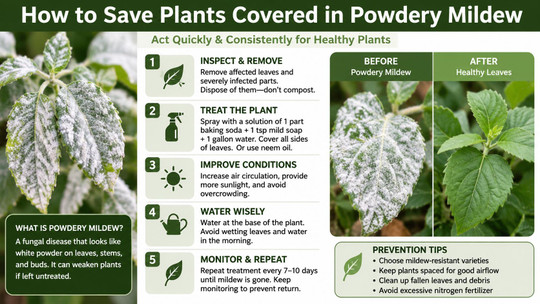
How to Save Plants Covered in Powdery Mildew
Powdery mildew is one of the most common fungal diseases gardeners face. It appears as a white, powder-like coating on leaves, stems, and buds. While it can make plants look severely damaged, many plants can recover if treatment begins early and growing conditions are improved.
What Is Powdery Mildew?
Powdery mildew is caused by several species of fungi that thrive in warm days, cool nights, and humid conditions. Unlike many fungal diseases, powdery mildew does not require standing water to spread. It often develops when plants are crowded together and air circulation is poor.
Commonly affected plants include:
- Cucumbers
- Squash and pumpkins
- Zucchini
- Tomatoes
- Roses
- Bee balm
- Phlox
- Peas
- Fruit trees
Signs of Powdery Mildew
Look for these symptoms:
- White or gray powdery spots on leaves
- Yellowing foliage
- Distorted or curled leaves
- Reduced plant growth
- Premature leaf drop
- Lower fruit or flower production
If left untreated, powdery mildew can weaken plants and make them more susceptible to other diseases and environmental stress.
Step 1: Remove Infected Plant Material
Start by carefully inspecting the plant.
Remove:
- Heavily infected leaves
- Diseased stems
- Dead plant material around the base
Place infected material in the trash rather than composting it. Compost piles often do not reach temperatures high enough to kill fungal spores.
Step 2: Treat the Plant
Several effective treatments can help control powdery mildew.
Baking Soda Spray
Mix:
- 1 tablespoon baking soda
- 1 teaspoon mild liquid soap
- 1 gallon of water
Spray both the tops and undersides of leaves every 7 to 10 days.
Neem Oil
Neem oil is a natural fungicide that can help stop the spread of powdery mildew. Follow label directions and apply during cooler parts of the day to avoid leaf burn.
Potassium Bicarbonate
This organic treatment can kill powdery mildew spores on contact and is often more effective than baking soda.
Step 3: Improve Growing Conditions
Powdery mildew thrives in crowded, humid environments.
Help your plants recover by:
- Pruning dense growth
- Spacing plants properly
- Increasing airflow
- Removing weeds around plants
- Growing in full sun whenever possible
Better air circulation helps leaves dry quickly and discourages fungal growth.
Step 4: Water Properly
Avoid overhead watering whenever possible.
Instead:
- Water at the base of plants
- Water early in the morning
- Keep foliage as dry as possible
- Use drip irrigation or soaker hoses
Proper watering practices reduce conditions that encourage disease development.
Step 5: Continue Monitoring
Powdery mildew can return if conditions remain favorable.
Check plants weekly for:
- New white patches
- Yellowing leaves
- Reduced vigor
Repeat treatments every 7 to 10 days until symptoms stop spreading.
Prevention Tips
Preventing powdery mildew is easier than treating a severe outbreak.
Follow these simple practices:
- Choose disease-resistant varieties
- Provide adequate plant spacing
- Clean up fallen leaves and debris
- Avoid excessive nitrogen fertilizer
- Rotate garden crops annually
- Maintain good airflow throughout the garden
Can Plants Recover?
Yes. Many plants recover completely when powdery mildew is caught early and treated consistently. While severely infected leaves may not return to normal, new growth can emerge healthy and productive once the disease is under control.
The key is to act quickly, remove infected material, improve growing conditions, and continue treatment until the fungus is eliminated. With patience and consistent care, most garden plants can bounce back and continue producing flowers, fruits, or vegetables throughout the growing season.