
Jun 12th 2026
How to Stake Tomatoes Like a Pro
Tomatoes are one of the most rewarding crops to grow in a home garden, but without proper support, plants can quickly become tangled, damaged, and more susceptible to disease. Staking tomatoes helps keep plants upright, improves airflow, reduces pest problems, and makes harvesting easier. Whether you're growing a few plants in raised beds or an entire garden row, learning how to stake tomatoes correctly can lead to healthier plants and bigger harvests.
Why Stake Tomato Plants?
Staking offers several benefits for tomato growers:
- Keeps fruit off the ground, reducing rot and pest damage
- Improves air circulation, helping prevent fungal diseases
- Makes watering and fertilizing more efficient
- Allows sunlight to reach more of the plant
- Makes harvesting easier and cleaner
- Saves garden space by encouraging vertical growth
Indeterminate tomato varieties, which continue growing throughout the season, especially benefit from staking.
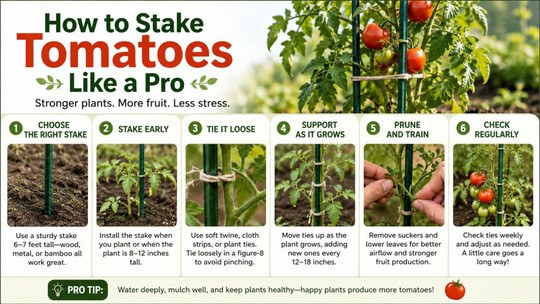
1. Choose the Right Stake
Start with a sturdy stake that can support a mature tomato plant. Stakes should be approximately 6–7 feet tall and made from durable materials such as:
- Wooden stakes
- Metal garden stakes
- Bamboo poles
Drive the stake 12–18 inches into the soil to ensure stability before the plant becomes large and heavy.
2. Stake Early
The best time to install stakes is when you transplant your tomatoes or when young plants reach 8–12 inches tall.
Installing supports early helps avoid damaging roots later in the season and allows plants to grow naturally alongside the stake.
3. Tie Plants Loosely
As the tomato grows, gently secure the main stem to the stake using:
- Soft garden twine
- Cloth strips
- Velcro plant ties
- Flexible plant clips
Create a loose figure-eight tie between the stem and stake. This prevents rubbing and allows room for stem expansion as the plant grows.
4. Support as the Plant Grows
Tomatoes grow quickly during warm weather. Check plants regularly and add new ties every 12–18 inches of growth.
Move ties upward as needed while keeping stems supported. Consistent support prevents branches from bending or breaking under the weight of developing fruit.
5. Prune and Train
Pruning can improve airflow and focus plant energy on fruit production.
For indeterminate varieties:
- Remove suckers that form between the main stem and branches
- Trim lower leaves that touch the soil
- Train one or two main stems up the stake
Avoid excessive pruning on determinate varieties, as it may reduce yields.
6. Check Regularly
Inspect stakes and ties at least once a week.
Look for:
- Tight ties cutting into stems
- Broken branches
- Loose stakes
- Heavy fruit clusters needing additional support
Small adjustments throughout the season help prevent major problems later.
Additional Tomato Care Tips
For the healthiest tomato plants:
- Water deeply and consistently
- Apply mulch around plants to retain moisture
- Fertilize according to soil needs
- Monitor for pests and diseases
- Harvest ripe fruit regularly to encourage continued production
Final Thoughts
Staking tomatoes is a simple gardening practice that can dramatically improve plant health and productivity. By installing sturdy stakes early, tying plants properly, and providing ongoing support throughout the growing season, you'll enjoy cleaner fruit, fewer disease issues, and larger harvests. With just a little maintenance, your tomato plants can thrive and produce delicious homegrown tomatoes all season long.