
Posted by TJ Hopkins on Aug 20th 2026
How to Store Tree Seeds Until You're Ready to Plant
Collecting or buying tree seeds is an exciting first step toward growing your own trees, but sometimes you're not ready to plant them right away. Maybe you collected seeds in the fall and plan to start them later in winter, or perhaps you purchased several varieties and need to keep them viable until planting time.
Proper storage can make a major difference in whether your tree seeds eventually germinate. Seeds are living organisms, and exposure to excessive moisture, heat, sunlight, or poor storage conditions can reduce their viability.
The good news is that many tree seeds can be stored successfully for months—and some for years—when handled correctly.
Why Proper Tree Seed Storage Matters
A mature tree may produce hundreds or even thousands of seeds, but those seeds aren't designed to remain viable forever. Once seeds are collected, environmental conditions begin affecting their ability to germinate.
The biggest threats during storage include:
- Excessive heat
- High humidity
- Mold and fungal growth
- Insects
- Direct sunlight
- Extreme temperature fluctuations
- Seeds drying out when the species requires moist storage
The ideal storage method depends heavily on the tree species. Some seeds tolerate drying extremely well, while others quickly lose viability if allowed to become completely dry.
Know What Type of Tree Seed You Have
Before storing tree seeds, identify the species whenever possible.
Different species can have dramatically different storage requirements. Many pine, spruce, maple, birch, and similar seeds can tolerate relatively dry storage. Other tree seeds—particularly certain acorns and nuts—may require completely different handling.
Research the requirements of your particular species before choosing a long-term storage method.
Make Sure Seeds Are Mature
Seeds should generally be fully mature before being placed into storage.
Immature seeds may have poorly developed embryos and are less likely to germinate regardless of how carefully they're stored.
Depending on the species, maturity may be indicated by:
- Cones turning brown and beginning to open
- Seed pods drying naturally
- Fruits reaching their mature color
- Nuts or acorns falling naturally from the tree
- Seeds developing their characteristic mature color and hardness
Whenever possible, collect seeds directly from healthy trees or shortly after they've naturally fallen.
Clean Tree Seeds Before Storage
Remove unnecessary plant material before putting seeds away.
Depending on the species, this could include removing:
- Fruit pulp
- Wings
- Husks
- Empty seed coats
- Broken seeds
- Leaves
- Twigs
- Dirt and debris
Fruit pulp is particularly important to remove because leftover organic material can encourage mold.
After cleaning, inspect the seeds and discard any that are obviously damaged, moldy, shriveled, or insect-infested.
Let Appropriate Seeds Dry
For species that tolerate dry storage, allow the seeds to surface-dry before sealing them inside containers.
Never package damp seeds in an airtight container unless the species specifically requires moist storage. Trapped moisture can create ideal conditions for mold.
Spread seeds in a thin layer in a dry, shaded location with good air circulation.
Avoid leaving them in intense sunlight or placing them near heaters. Gentle drying is usually preferable to excessive heat.
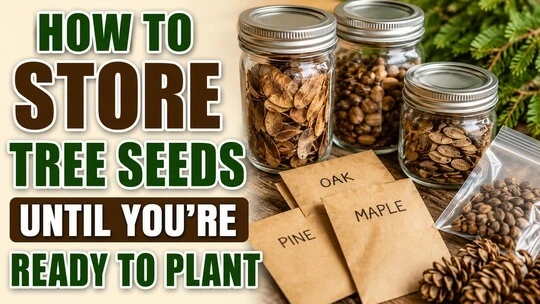
Use Paper Envelopes for Short-Term Storage
Paper seed envelopes can work well when seeds only need to be held for a relatively short period.
Paper allows some airflow and makes labeling easy.
Write important information directly on each envelope, including:
Tree species: Oak, Maple, Pine, Spruce, etc.
Collection date: When the seeds were collected.
Collection location: Helpful when saving locally adapted or native tree seeds.
Additional notes: Tree characteristics, source, color, or anything else you may want to remember.
Don't rely on memory when storing several species. Many tree seeds can look surprisingly similar months later.
Use Airtight Containers for Longer Storage
Many properly dried seeds can be placed inside airtight containers for longer-term storage.
Possible containers include:
- Glass canning jars
- Small airtight plastic containers
- Resealable seed-storage bags
- Sealed moisture-resistant packets
Make sure both the seeds and container are dry before sealing them.
For very small seeds, consider placing individual varieties inside labeled paper envelopes before putting those envelopes into a larger airtight container.
This keeps everything organized while providing another layer of protection.
Store Many Tree Seeds in the Refrigerator
For many species, refrigeration can significantly improve storage conditions compared with keeping seeds somewhere warm inside your home.
A refrigerator generally provides the cool, relatively stable temperatures that help slow seed deterioration.
However, refrigeration and cold stratification aren't necessarily the same thing.
Storage is intended to preserve seeds until you're ready to use them.
Cold stratification intentionally exposes seeds to cold, usually moist conditions, to help overcome dormancy and prepare them for germination.
Some tree seeds eventually need cold stratification, but that doesn't necessarily mean they should immediately be placed into moist stratification when collected.
Follow the germination requirements for your particular species.
Don't Automatically Freeze Every Tree Seed
Freezing can preserve certain properly dried seeds for extended periods, but it isn't appropriate for every tree species.
Seeds containing too much moisture can potentially suffer damage when frozen. Some species naturally tolerate freezing better than others.
Unless you know the storage requirements for your particular species, refrigeration is generally a more conservative option than automatically placing seeds in a household freezer.
Acorns Need Special Attention
Acorns are an excellent example of why one storage method doesn't work for every tree seed.
Many oak species produce acorns that don't tolerate being dried as extensively as typical dry-stored seeds. Allowing them to become excessively dry can dramatically reduce viability.
Acorns are often stored under cool conditions while retaining appropriate moisture.
Oak species also differ.
White oak group acorns commonly germinate relatively soon after falling and may begin developing roots during the fall. Red oak group acorns generally experience dormancy and typically require a cold period before germinating.
If you're storing acorns, identify the oak species first rather than treating them like ordinary dry seeds.
Keep Stored Seeds Cool and Dark
If refrigeration isn't required and you're only storing seeds temporarily, choose the coolest, driest, darkest appropriate location available.
Avoid areas such as:
- Sunny windowsills
- Hot garages
- Attics
- Vehicles
- Areas beside furnaces
- Damp basements
- Locations with major temperature swings
Heat accelerates seed aging. A stable environment is generally much better than repeatedly exposing seeds to warm and cold conditions.
Protect Seeds From Moisture
Moisture management is one of the most important parts of successful seed storage.
For seeds that require dry storage, excess moisture can encourage:
- Mold
- Fungal growth
- Premature germination
- Seed deterioration
Check containers periodically for condensation.
If you see moisture collecting inside a container holding seeds that should remain dry, investigate immediately rather than leaving them sealed under damp conditions.
Remember, however, that seeds such as certain acorns have different moisture requirements. "Keep seeds dry" isn't a universal rule for every tree species.
Keep Seeds Away From Pests
Nuts and larger tree seeds can attract insects and rodents.
Store seeds somewhere protected from mice, squirrels, chipmunks, and other animals.
A sturdy sealed container provides considerably more protection than a thin paper envelope when rodents are a concern.
Inspect collected seeds carefully for small holes or other signs of insect activity before storing them.
Label Everything
Good labeling may seem unnecessary when you're putting seeds away, but it becomes extremely important several months later.
At minimum, record:
- Common name
- Botanical name, if known
- Collection or purchase date
- Collection location or seed source
- Storage date
You can also write down any required germination treatment.
For example:
Sugar Maple — Collected October 2026 — Cold Stratification Required
Keeping these details with the seeds makes planting much easier later.
Check Stored Seeds Periodically
Don't put your seeds away and completely forget about them.
Every few weeks or months, depending on the storage method and species, inspect them for problems.
Look for:
- Mold
- Condensation
- Insects
- Unusual odors
- Premature germination
- Damaged containers
Catching a problem early could save an entire batch of seeds.
How Long Can Tree Seeds Be Stored?
There's no single answer because longevity varies enormously among tree species and depends on storage conditions.
Some seeds remain viable for relatively short periods, while others can maintain good viability for several years under appropriate controlled conditions.
Seed quality at the beginning of storage also matters.
Fresh, mature, properly handled seeds usually have a much better chance of surviving storage than seeds that were immature, damaged, overheated, or improperly dried.
As a general rule, if you have fresh tree seeds and suitable planting conditions are approaching, planting them sooner rather than unnecessarily storing them for years is usually the safest approach.
What About Seeds That Need Cold Stratification?
Many temperate tree species have natural dormancy mechanisms that prevent them from germinating immediately after falling from the tree.
These seeds may require cold stratification before they'll germinate.
Cold stratification typically involves exposing seeds to cool, moist conditions for a species-specific period.
Depending on the tree, seeds may be mixed with slightly moist materials such as:
- Peat moss
- Sand
- Vermiculite
- Paper towel
They are then kept refrigerated for the required period.
The material should generally be moist rather than soaking wet.
Check seeds periodically during stratification because some may begin germinating before the expected treatment period has finished.
Don't Confuse Storage Time With Stratification Time
This is an important distinction.
Suppose you purchase tree seeds in September but don't want to start germination until January. Simply keeping the seeds refrigerated doesn't necessarily mean you're performing proper cold stratification.
If the species requires moist cold stratification, dry refrigerated storage may preserve the seeds without satisfying their dormancy requirement.
Once you're ready to begin germination preparation, follow the specific pre-treatment instructions for that species.
Test Older Seeds Before Planting Large Quantities
If you've stored seeds for an extended period, consider testing a small sample before planting the entire batch.
Depending on the species, you may be able to conduct a simple germination test by placing several appropriately pre-treated seeds in suitable germination conditions.
If most germinate, your stored seeds are probably still in good condition.
If germination is poor, sowing additional seeds may compensate for reduced viability.
Common Tree Seed Storage Mistakes
Even experienced gardeners occasionally lose seeds because of simple storage mistakes.
Some of the most common problems include:
Storing damp seeds in sealed containers: This can quickly encourage mold.
Leaving seeds somewhere hot: Heat can significantly shorten storage life.
Failing to label varieties: Months later, unidentified seeds can be difficult or impossible to distinguish.
Assuming every tree seed should be dried: Acorns and certain other seeds may lose viability when excessively dried.
Freezing seeds without researching the species: Not every seed responds well to household freezer storage.
Starting stratification too early: Seeds may begin germinating long before you're ready to plant them.
Ignoring stored seeds: Periodic inspection can catch mold, moisture, or premature germination before the entire batch is affected.
A Simple Tree Seed Storage Routine
For tree seeds that tolerate conventional dry storage, a basic routine can be surprisingly simple:
- Collect mature seeds.
- Identify the tree species.
- Remove fruit, debris, and damaged seeds.
- Allow appropriate seeds to surface-dry.
- Place each species in a clearly labeled envelope.
- Put envelopes inside a suitable sealed container when appropriate.
- Store them somewhere cool, dark, and dry—or refrigerate them if recommended.
- Check them periodically.
- Research required pre-treatment before planting.
- Begin stratification at the appropriate time rather than automatically starting it during storage.
Always adjust this routine for species with specialized storage requirements.
Final Thoughts
Successful tree growing begins long before the first seedling emerges.
How you handle seeds between collection and planting can have a major effect on their eventual germination. Keeping appropriate seeds cool, properly dry, protected from pests, and clearly labeled can help preserve their viability until you're ready to plant.
Most importantly, don't assume every tree seed should be stored the same way. A tiny pine seed and a large oak acorn can have very different moisture, temperature, dormancy, and storage requirements.
Identify your species, learn its specific needs, and give your seeds the conditions they need during storage. When planting time finally arrives, you'll have a much better chance of turning those carefully stored seeds into healthy young trees.