
Posted by TJ Hopkins on May 13th 2026
How to Stratify Tree Seeds
Many tree seeds require a natural dormancy period before they will sprout. In nature, seeds fall to the ground in autumn and spend the cold winter months buried in moist soil before germinating in spring. To successfully grow many species from seed at home, gardeners often need to mimic this natural process through cold moist stratification.
Learning how to stratify tree seeds can greatly improve germination rates and help produce healthier seedlings for your garden, orchard, or landscape.
What Is Cold Stratification?
Cold stratification is the process of exposing seeds to cool, moist conditions for a specific amount of time. This helps soften seed coats and triggers the internal changes needed for germination.
Many tree species need stratification, including:
- Maple trees
- Oak trees
- Apple trees
- Cherry trees
- Persimmon trees
- Dogwoods
- Pawpaw trees
- Walnut trees
Without stratification, some seeds may remain dormant for months or even years.
Supplies Needed for Stratifying Tree Seeds
Before starting the process, gather the following materials:
- Tree seeds
- Seed starting mix, peat moss, sand, or vermiculite
- Plastic zip bags or containers
- Water spray bottle
- Labels and marker
- Refrigerator
Using a clean, sterile medium helps prevent mold and fungal growth during storage.
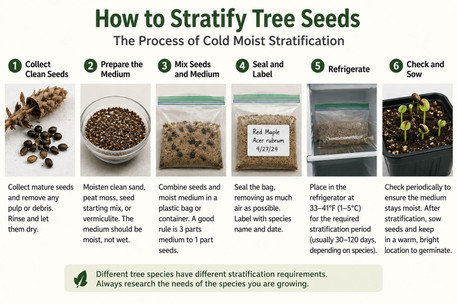
Step 1: Collect and Clean Seeds
Start with mature seeds collected from healthy trees. Remove any pulp, fruit material, or debris attached to the seeds.
Rinse seeds thoroughly and allow them to air dry briefly before moving to the next step.
Fresh seeds often germinate better than older stored seeds.
Step 2: Prepare the Stratification Medium
Moisten a seed starting mix, peat moss, vermiculite, or clean sand until it feels damp but not soaking wet.
The medium should hold moisture without dripping water when squeezed.
Too much moisture can cause seeds to rot during refrigeration.
Step 3: Mix Seeds With the Medium
Combine the seeds with the moist medium inside a plastic bag or sealed container.
A common ratio is approximately:
- 3 parts moist medium
- 1 part seeds
Make sure seeds are evenly surrounded by the medium so they remain consistently moist throughout the stratification period.
Step 4: Seal and Label
Seal the bag while removing as much air as possible.
Clearly label each bag with:
- Tree species
- Date started
- Expected stratification length
Proper labeling is especially important when stratifying multiple seed varieties at once.
Step 5: Refrigerate the Seeds
Place the sealed container in the refrigerator at temperatures between 33°F and 41°F (1°C to 5°C).
Different tree species require different chilling times. Common stratification periods include:
| Tree Type | Stratification Time |
|---|---|
| Red Maple | 30–60 days |
| Apple | 60–90 days |
| Black Cherry | 60–120 days |
| Oak | 30–90 days |
| Persimmon | 60–90 days |
| Pawpaw | 90–120 days |
Check the medium occasionally to ensure it remains moist.
Step 6: Check and Sow
After the required chilling period, remove the seeds from refrigeration.
Some seeds may already begin sprouting inside the bag. Plant stratified seeds immediately into pots, seed trays, or prepared garden soil.
Keep seedlings warm, bright, and consistently moist during germination.
Tips for Successful Tree Seed Stratification
- Do not freeze most tree seeds during stratification.
- Check bags regularly for mold or excess moisture.
- Use fresh seeds whenever possible for higher germination rates.
- Research the specific needs of each tree species.
- Some seeds require scarification in addition to stratification.
Common Trees That Benefit From Stratification
Many popular landscape and fruit trees respond well to cold moist stratification, including:
- Sugar Maple
- Red Maple
- Black Walnut
- American Persimmon
- Eastern Redbud
- Crabapple
- Peach
- Pear
- Serviceberry
- Dogwood
Understanding the natural dormancy cycle of each species helps improve success when growing trees from seed.
Buy Tree Seeds Online
If you are looking for a wide selection of tree seeds for planting, visit BestPlantSeeds.com/tree-seeds for a large collection of tree and shrub seeds suitable for home gardens, food forests, landscaping projects, and wildlife plantings.
Final Thoughts
Cold moist stratification is one of the most important steps when growing many tree species from seed. By recreating natural winter conditions, gardeners can dramatically improve germination success and grow strong, healthy seedlings.
With patience, moisture control, and proper chilling times, you can successfully grow a wide variety of beautiful trees from seed right at home.