
Posted by TJ Hopkins on Sep 13th 2026
How to Turn a Bare Yard Into a Wildflower Garden
A bare yard can feel empty and unfinished, but it also gives you the perfect opportunity to create something beautiful. With the right preparation and a good mixture of wildflower seeds, an unused patch of ground can become a colorful garden filled with flowers, butterflies, bees, and hummingbirds.
Wildflower gardens are often easier to maintain than traditional flower beds. Once established, many wildflowers return each year and require less watering, fertilizing, and mowing. The key is to prepare the ground correctly and choose flowers suited to your growing conditions.
Choose the Best Location
Most wildflowers grow best in a location that receives at least six hours of direct sunlight each day. Watch your yard throughout the day to determine which areas receive the most sun.
Some wildflowers tolerate partial shade, but a sunny location will usually produce more flowers and stronger plants. Avoid low areas where water remains after heavy rain unless you plan to grow moisture-loving species.
The site should also be easy to reach with a garden hose during the first few weeks after planting.
Measure the Planting Area
Measure the length and width of your planned wildflower garden. This will help you determine how many seeds you need.
Using too few seeds can leave open spaces where weeds may grow. Spreading too many seeds can cause seedlings to become crowded and compete for sunlight, water, and nutrients.
Follow the coverage recommendation provided with your wildflower seed mixture. Different mixtures may contain seeds of different sizes, so the required amount can vary.
Choose the Right Wildflower Seeds
Select a wildflower seed mixture that matches your region, sunlight, soil, and desired appearance. Native wildflowers are an excellent choice because they are adapted to local growing conditions and provide valuable food and habitat for native pollinators.
You may choose a mixture designed for:
- Bees and butterflies
- Hummingbirds
- Partial shade
- Dry soil
- Moist areas
- Short-growing flowers
- Native wildflowers
- Annual and perennial flowers
- Long-lasting seasonal color
A mixture containing both annuals and perennials can provide fast color and long-term growth. Annual wildflowers may bloom during the first season, while many perennials need additional time to become established.
Decide When to Plant
Wildflower seeds can usually be planted in spring or fall. The best season depends on your location and the types of seeds you are growing.
Spring Planting
Plant in spring after the danger of a hard frost has passed. The soil should be workable but not soaking wet.
Spring planting gives you an opportunity to remove early weeds before sowing. It also allows you to water and monitor the seedlings throughout their first growing season.
Fall Planting
In regions with cold winters, wildflower seeds may be planted after several hard frosts, when temperatures are cold enough to prevent germination until spring.
Fall planting allows winter moisture and changing temperatures to naturally prepare certain seeds for germination. However, seeds should not be planted too early because warm weather may cause them to sprout before winter.
Remove Existing Grass and Weeds
Wildflower seeds need direct contact with the soil. Scattering them over thick grass usually produces disappointing results because the seeds cannot reach the ground.
Remove existing grass, weeds, roots, and heavy plant debris from the planting area. You can clear the site by hand, use a sod cutter, or cover the area in advance to weaken unwanted growth.
Take extra care to remove aggressive perennial weeds. Wildflower seedlings are small and may struggle to compete with established weeds during their first season.
Avoid deeply tilling the soil unless necessary. Deep cultivation can bring buried weed seeds to the surface, where they may germinate.
Prepare the Soil
Wildflowers generally do not require rich, heavily fertilized soil. In fact, excessive fertilizer may encourage grasses and weeds to grow faster than the flowers.
Rake the surface to create loose, crumbly soil. Remove large stones, sticks, roots, and remaining clumps of vegetation. The goal is to create a clean seedbed with enough loose soil for good seed contact.
If the soil is extremely hard or compacted, loosen the top few inches before smoothing the surface with a rake.
Mix the Seeds With a Carrier
Many wildflower seeds are tiny and can be difficult to spread evenly. Mixing the seeds with slightly damp sand, vermiculite, or another lightweight carrier makes them easier to see and distribute.
Divide the seed mixture into two equal portions. Spread the first portion while walking in one direction across the area. Spread the second portion while walking in the opposite direction.
This crisscross method reduces bare spots and helps create more even coverage.
Do not bury the seeds deeply. Most wildflower seeds need light or a very shallow planting depth to germinate successfully.
Press the Seeds Into the Ground
After spreading the seeds, gently press them into the soil. You can use a lawn roller, walk carefully over the area, or place a board on the ground and step on it.
Good seed-to-soil contact helps the seeds absorb moisture and prevents them from blowing away. The seeds should be firmly pressed against the soil without being deeply covered.
A very light layer of clean straw may help retain moisture on sloped or exposed ground. Do not apply a thick layer that blocks sunlight or prevents small seedlings from emerging.
Water the Newly Planted Area
Water the area gently immediately after planting. Use a fine spray so the seeds are not washed into piles or carried away.
Keep the top layer of soil consistently moist while the seeds germinate. Depending on the weather and seed mixture, this may require light watering once or twice a day.
The soil should remain damp but not waterlogged. Once the seedlings are established and several inches tall, gradually reduce the watering frequency. Deeper, less frequent watering encourages stronger root development.
Watch for Germination
Some wildflowers may sprout within one or two weeks, while others can take several weeks or even months. Weather, soil temperature, moisture, and seed type all affect germination.
Do not assume the planting has failed if the entire garden does not appear at once. Wildflower mixtures contain many species, and each one follows its own schedule.
During the first season, learn to distinguish young wildflower seedlings from weeds before removing unwanted plants.
Control Weeds Carefully
Weed control is especially important during the first year. Pull obvious weeds by hand before they flower and produce seeds.
If fast-growing weeds begin shading the wildflower seedlings, trim the weeds above the height of the young flowers. Avoid cutting the wildflowers themselves.
Do not use a broad weed killer in the planting area because it may also damage or kill the wildflowers.
A well-prepared seedbed and proper planting density will help the wildflowers gradually occupy the space and reduce future weed problems.
Be Patient During the First Year
A new wildflower garden may not look full and mature during its first growing season. Annual flowers often provide the earliest color, while perennial plants spend much of their first year developing roots and leaves.
Many perennial wildflowers produce more flowers during their second and third seasons. As the garden matures, it should begin to look fuller and more natural.
A wildflower garden changes from year to year. Some species may become more abundant, while others may appear only under certain weather conditions.
Maintain the Garden After Blooming
Leave some finished flower heads standing after the growing season. They contain seeds that may fall to the ground and produce new plants. They can also provide food for birds during fall and winter.
The dried stems offer shelter for insects and give the garden structure during the colder months.
Cut the planting area back in late winter or early spring before new growth begins. Remove heavy plant material so sunlight can reach the soil and emerging plants.
If bare spaces develop, lightly rake those areas and add more wildflower seeds at the proper planting time.
Create a Finished Border
A defined edge can make a wildflower garden look intentional instead of neglected. Consider surrounding the planting area with:
- Natural stones
- Landscape edging
- A short wooden border
- A mowed grass path
- A garden fence
- Stepping-stones
Curved edges often create a soft, natural appearance. Paths and small seating areas can also make the garden more inviting and easier to enjoy.
Add Features for Wildlife
You can make your wildflower garden even more useful by adding simple wildlife-friendly features. A shallow water dish, birdbath, flat stones, or a small patch of bare soil may support different pollinators.
Avoid pesticides whenever possible. These products can harm the bees, butterflies, and other beneficial insects that wildflowers are meant to attract.
Growing flowers with different shapes, colors, and blooming periods will provide food for wildlife across a longer season.
Enjoy Your New Wildflower Garden
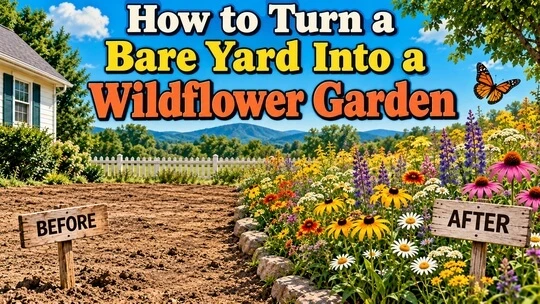
Turning a bare yard into a wildflower garden does not happen overnight, but the transformation can be remarkable. Careful soil preparation, proper seed selection, consistent early watering, and patience will give the flowers the best chance to succeed.
Over time, the empty ground can become a lively landscape filled with changing colors and visiting wildlife. Instead of mowing and maintaining a plain patch of lawn, you will have a natural garden that becomes more interesting with every season.