
Posted by TJ Hopkins on Jul 11th 2026
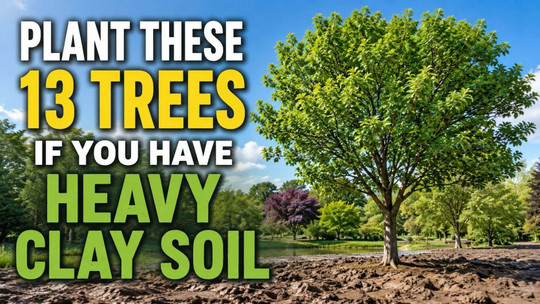
Plant These 13 Trees If You Have Heavy Clay Soil
Heavy clay soil can be challenging for gardeners and homeowners. Its dense texture often drains slowly, becomes sticky when wet, and can harden into a compact surface during dry weather. These conditions make it difficult for the roots of many trees to receive enough oxygen or spread freely through the soil.
Fortunately, heavy clay soil does not mean you have to give up on growing beautiful shade, flowering, or ornamental trees. Many tree species naturally tolerate dense soils and can develop strong root systems in clay when planted correctly.
The key is choosing trees suited to your growing conditions rather than trying to completely replace or dramatically alter the existing soil. Once established, the right trees can provide shade, seasonal color, wildlife habitat, privacy, and long-lasting beauty.
Here are 13 dependable trees to consider if your property has heavy clay soil.
1. Bur Oak
Bur Oak is one of the toughest native oak trees and an excellent choice for large properties with heavy clay soil. Its extensive root system allows it to tolerate compacted ground, occasional drought, and challenging growing conditions once established.
This long-lived shade tree develops a broad, rounded crown and can eventually become an impressive landscape centerpiece. Its deeply lobed green leaves turn yellowish-brown in fall, while its large acorns provide food for squirrels, deer, wild turkeys, and other wildlife.
Bur Oaks grow slowly when young but become extremely durable trees with age. Because they can reach a substantial mature size, plant them well away from buildings, driveways, sidewalks, and utility lines.
Growing Conditions:
- USDA Hardiness Zones: 3–8
- Mature Height: 70–100 feet
- Sun Exposure: Full sun
- Water Needs: Low to moderate once established
- Clay Tolerance: Excellent
2. River Birch
River Birch is naturally found near streams, riverbanks, floodplains, and other areas with moist soil. Its ability to tolerate wet, dense ground makes it a useful choice for clay soils that remain damp after rainfall.
One of its most attractive features is its peeling bark. Younger trees often display cinnamon, salmon, or creamy-colored bark that curls away in thin layers. The foliage creates light, filtered shade and typically turns yellow during fall.
River Birch performs best in moist soil but is more heat tolerant than many other birch species. It can be grown as either a single-trunk tree or a multi-trunk specimen.
Growing Conditions:
- USDA Hardiness Zones: 4–9
- Mature Height: 40–70 feet
- Sun Exposure: Full sun to partial shade
- Water Needs: Moderate to high
- Clay Tolerance: Very good, especially in moist locations
3. Bald Cypress
Although Bald Cypress is commonly associated with swamps and wetlands, it is surprisingly adaptable. It can grow in standing water, poorly drained clay, or moderately dry soil after becoming established.
Unlike most conifers, Bald Cypress is deciduous and drops its soft, feathery needles each fall. The foliage changes from green to warm shades of copper, bronze, and reddish-brown before falling.
Young trees generally develop a narrow, pyramidal form and become broader with age. Bald Cypress is a strong choice for low areas where water collects, but it can also grow successfully in ordinary residential landscapes.
Growing Conditions:
- USDA Hardiness Zones: 4–10
- Mature Height: 50–70 feet
- Sun Exposure: Full sun
- Water Needs: Moderate to high
- Clay Tolerance: Excellent
4. Red Maple
Red Maple is a versatile native shade tree capable of growing in many soil types, including moist clay. It is especially valued for its brilliant fall foliage, which may develop shades of red, orange, yellow, or a combination of colors.
The tree grows relatively quickly and develops an attractive rounded canopy. Small reddish flowers appear in late winter or early spring before the leaves emerge, providing some of the earliest seasonal color in the landscape.
Red Maple performs particularly well in clay soils that retain moisture. Avoid planting it in locations where the soil becomes severely dry for extended periods.
Growing Conditions:
- USDA Hardiness Zones: 3–9
- Mature Height: 40–70 feet
- Sun Exposure: Full sun to partial shade
- Water Needs: Moderate
- Clay Tolerance: Very good
5. American Hornbeam
American Hornbeam is a smaller native understory tree that performs well in moist, heavy soils. It is sometimes called Musclewood because its smooth, gray trunk develops a distinctive fluted appearance resembling flexed muscles.
Its dense green foliage provides attractive texture throughout the growing season. During fall, the leaves may turn yellow, orange, or reddish-purple. Small nutlets provide food for birds and other wildlife.
Because American Hornbeam tolerates partial shade, it is useful beneath taller trees or along woodland edges. Its moderate mature size also makes it suitable for smaller yards.
Growing Conditions:
- USDA Hardiness Zones: 3–9
- Mature Height: 20–35 feet
- Sun Exposure: Partial shade to full sun
- Water Needs: Moderate
- Clay Tolerance: Excellent
6. American Sycamore
American Sycamore is a large, fast-growing native tree that naturally occurs along rivers, streams, and floodplains. It adapts well to moist clay and can tolerate periodic flooding.
The tree is easily recognized by its striking mottled bark. As the outer bark flakes away, patches of cream, white, tan, gray, and green become visible. Mature trees develop massive trunks and broad canopies that provide substantial shade.
Because of its enormous mature size, American Sycamore is best suited to large yards, parks, rural properties, and open spaces. Avoid planting it close to buildings or paved surfaces.
Growing Conditions:
- USDA Hardiness Zones: 4–9
- Mature Height: 75–100 feet or taller
- Sun Exposure: Full sun
- Water Needs: Moderate to high
- Clay Tolerance: Excellent
7. Sweetgum
Sweetgum is an attractive shade tree known for its star-shaped leaves and colorful fall display. Depending on climate and growing conditions, its foliage may turn yellow, orange, red, burgundy, or purple.
The tree adapts to clay soil and generally performs best where the ground remains moderately moist. Young Sweetgum trees often have a narrow, pyramidal shape that becomes broader and more rounded with age.
One consideration is the production of hard, spiny seed balls. These can create litter beneath mature trees, so Sweetgum may be better suited to open lawn areas than locations beside sidewalks or patios.
Growing Conditions:
- USDA Hardiness Zones: 5–9
- Mature Height: 60–80 feet
- Sun Exposure: Full sun
- Water Needs: Moderate
- Clay Tolerance: Very good
8. Eastern Redbud
Eastern Redbud is a popular small flowering tree that produces clusters of pink to purple flowers along its bare branches in early spring. The blossoms appear before the heart-shaped leaves emerge, creating a colorful display when much of the landscape is still dormant.
Redbuds can tolerate clay soil when it drains reasonably well. They do not perform well in locations where water remains around the roots for extended periods.
Their manageable size makes them useful near patios, along woodland borders, or as ornamental focal points. Eastern Redbuds also provide early-season nectar for bees and other pollinators.
Growing Conditions:
- USDA Hardiness Zones: 4–9
- Mature Height: 20–30 feet
- Sun Exposure: Full sun to partial shade
- Water Needs: Moderate
- Clay Tolerance: Good when drainage is adequate
9. Serviceberry
Serviceberry is a versatile native tree that provides interest during several seasons. White flowers appear in early spring, followed by edible purple-blue berries that attract songbirds. During fall, the foliage often turns yellow, orange, or red.
Depending on the variety and pruning style, Serviceberry may grow as a large shrub or a small multi-stemmed tree. It performs well in moist clay but benefits from a location where excess water can gradually drain away.
Serviceberries are useful in wildlife gardens, woodland borders, naturalized landscapes, and smaller residential yards.
Growing Conditions:
- USDA Hardiness Zones: 3–8
- Mature Height: 15–30 feet
- Sun Exposure: Full sun to partial shade
- Water Needs: Moderate
- Clay Tolerance: Good
10. Black Gum
Black Gum, also known as Black Tupelo, is a beautiful native shade tree valued for its exceptional fall color. Its glossy green leaves may change to brilliant shades of scarlet, orange, red, purple, and yellow.
The tree tolerates moist, acidic clay and can grow in areas with occasional poor drainage. Small flowers provide nectar for pollinators, while the dark fruits are eaten by birds.
Black Gum develops a strong central trunk and an attractive branching structure. Although its growth rate is generally slow to moderate, mature trees can become long-lived landscape specimens.
Growing Conditions:
- USDA Hardiness Zones: 4–9
- Mature Height: 30–60 feet
- Sun Exposure: Full sun to partial shade
- Water Needs: Moderate
- Clay Tolerance: Very good
11. Swamp White Oak
Swamp White Oak is an excellent native tree for moist, heavy clay. Despite its name, it does not need to grow in a swamp. It performs well in ordinary landscapes and can tolerate both occasional flooding and periods of moderate dryness after establishment.
The tree develops a broad, rounded crown that provides abundant shade. Its leaves are dark green above with pale, silvery undersides that become visible when moved by the wind.
Swamp White Oak is also valuable to wildlife. Its acorns provide food for deer, squirrels, birds, and other animals.
Growing Conditions:
- USDA Hardiness Zones: 4–8
- Mature Height: 50–70 feet
- Sun Exposure: Full sun
- Water Needs: Moderate
- Clay Tolerance: Excellent
12. Northern Catalpa
Northern Catalpa is a fast-growing shade tree known for its enormous heart-shaped leaves and clusters of white, orchid-like flowers. Long, narrow seedpods develop later in the season and may remain attached through winter.
This adaptable tree tolerates heavy clay, urban conditions, seasonal drought, and a wide range of soil types. Its large leaves create dense shade and give the tree a bold, tropical appearance.
Northern Catalpa can develop irregular branching and may drop leaves, flowers, twigs, and seedpods. It is best planted where its natural character and occasional litter will not create problems.
Growing Conditions:
- USDA Hardiness Zones: 4–8
- Mature Height: 40–70 feet
- Sun Exposure: Full sun to partial shade
- Water Needs: Low to moderate
- Clay Tolerance: Very good
13. Hackberry
Hackberry is one of the most adaptable native shade trees. It tolerates heavy clay, compacted soil, drought, wind, urban pollution, and temperature extremes.
The tree develops a broad, spreading canopy and distinctive gray bark with raised, cork-like ridges. Small fruits ripen to orange, red, or dark purple and provide food for many species of birds.
Hackberry may not receive as much attention as maples or oaks, but its toughness makes it an excellent option for difficult planting sites where less adaptable trees may struggle.
Growing Conditions:
- USDA Hardiness Zones: 2–9
- Mature Height: 40–70 feet
- Sun Exposure: Full sun to partial shade
- Water Needs: Low to moderate
- Clay Tolerance: Excellent
Tips for Planting Trees in Heavy Clay Soil
Choosing a clay-tolerant tree is important, but proper planting can make an equally significant difference. Heavy clay is easily compacted and may hold excess water around newly planted roots.
Use these planting practices to help your tree establish successfully:
- Dig a planting hole approximately two to three times wider than the root ball but no deeper than the root ball itself.
- Keep the root flare visible and slightly above the surrounding soil level.
- Avoid planting too deeply, especially in poorly drained clay.
- Backfill primarily with the original native soil rather than filling the hole with rich compost or potting soil.
- Avoid adding sand directly to heavy clay because an improper mixture may create a dense, concrete-like texture.
- Apply two to three inches of organic mulch around the tree.
- Keep mulch several inches away from the trunk to prevent excess moisture and decay.
- Water deeply during the first growing season, but check the soil before watering again because clay retains moisture longer than sandy soil.
- Avoid walking or operating heavy equipment over wet clay because this can cause severe compaction.
Should You Amend Clay Soil Before Planting a Tree?
In most situations, heavily amending only the planting hole is not recommended. Filling the hole with loose, rich soil can encourage roots to remain inside the amended area instead of spreading into the surrounding native clay.
A better approach is to select a tree naturally adapted to clay and plant it in mostly native soil. Organic matter can be added gradually across the soil surface through compost and mulch. Over time, earthworms, microorganisms, and natural decomposition will help improve soil structure.
If drainage is extremely poor and water remains in the planting area for several days after rainfall, consider planting the tree slightly above the existing grade or choosing a species with strong wet-soil tolerance, such as Bald Cypress, River Birch, or Swamp White Oak.
Final Thoughts
Heavy clay soil may be difficult to work with, but it can also be fertile and capable of supporting large, healthy trees. The most important step is selecting species that can tolerate dense soil, slow drainage, and changing moisture levels.
Bur Oak, Bald Cypress, Swamp White Oak, Hackberry, River Birch, and American Hornbeam are especially dependable choices for challenging clay conditions. Smaller ornamental trees, including Eastern Redbud and Serviceberry, can also perform well where drainage is adequate.
With the right tree, proper planting depth, and consistent care during establishment, heavy clay soil can support a beautiful and resilient landscape for generations.