
Posted by TJ Hopkins on Jun 27th 2026
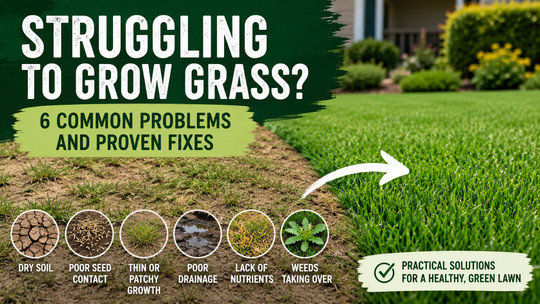
Struggling to Grow Grass? 6 Common Problems and Proven Fixes
A lush, green lawn doesn't happen by accident. If you've planted grass seed only to end up with bare patches, weak growth, or stubborn weeds, you're not alone. Growing a healthy lawn can be challenging, but identifying the problem is the first step toward fixing it.
In this guide, we'll cover six of the most common reasons grass struggles to grow and the proven solutions that will help you achieve a thicker, healthier lawn.
1. Dry Soil
One of the biggest reasons grass seed fails is a lack of consistent moisture. Grass seed needs to stay damp throughout the germination process. If the soil dries out even for a short period, young seedlings can die before they become established.
Signs
- Cracked or dusty soil
- Seed never sprouts
- New seedlings quickly turn brown
How to Fix It
- Water lightly 2-4 times per day after seeding.
- Keep the top 1/2 inch of soil consistently moist.
- Apply a thin layer of straw or mulch to reduce evaporation.
- Water early in the morning for best results.
2. Poor Seed-to-Soil Contact
Simply scattering seed across hard ground often leads to poor germination. Grass seed must touch the soil to absorb moisture and begin growing.
Signs
- Seed remains visible on top of the soil
- Birds eat large amounts of seed
- Uneven germination
How to Fix It
- Loosen the top 1-2 inches of soil before seeding.
- Use a lawn roller after spreading seed.
- Lightly rake seed into the surface.
- Cover with a very thin layer of compost or peat moss.
3. Thin or Patchy Growth
Even if your grass sprouts, it may not fill in evenly. Thin lawns often result from uneven seed distribution, poor soil conditions, or heavy foot traffic.
Signs
- Bare spots
- Uneven grass height
- Weak-looking lawn
How to Fix It
- Overseed thin areas.
- Improve soil with compost.
- Keep people and pets off newly seeded areas.
- Fertilize with a quality starter fertilizer.
4. Poor Drainage
Too much water can be just as damaging as too little. Waterlogged soil prevents oxygen from reaching developing roots, leading to weak growth and disease.
Signs
- Standing water
- Muddy areas after rain
- Yellow or dying grass
How to Fix It
- Aerate compacted soil.
- Add compost to improve soil structure.
- Install drainage solutions if necessary.
- Avoid overwatering.
5. Lack of Nutrients
Grass needs essential nutrients to develop strong roots and healthy green blades. Poor soil often lacks the nitrogen, phosphorus, and potassium needed for vigorous growth.
Signs
- Pale green or yellow grass
- Slow growth
- Weak root development
How to Fix It
- Perform a soil test.
- Apply a balanced lawn fertilizer.
- Add organic matter such as compost.
- Fertilize according to the season and grass type.
6. Weeds Taking Over
Weeds compete directly with young grass for sunlight, nutrients, and water. If left unchecked, they can quickly dominate a newly seeded lawn.
Signs
- Dandelions
- Crabgrass
- Broadleaf weeds spreading through bare areas
How to Fix It
- Remove weeds before planting.
- Mow regularly once grass is established.
- Apply pre-emergent herbicides only when appropriate for your lawn type and seeding schedule.
- Maintain a thick lawn to naturally crowd out weeds.
Bonus Tips for Better Grass Growth
For the best results, follow these lawn care practices:
- Choose a grass variety suited to your climate.
- Test and adjust your soil pH if necessary.
- Seed during the ideal season (spring or fall, depending on your region).
- Keep mower blades sharp.
- Avoid cutting more than one-third of the grass height at a time.
- Water deeply once the lawn becomes established to encourage deeper roots.
Final Thoughts
Growing a beautiful lawn starts with understanding what your grass needs. Whether you're dealing with dry soil, poor drainage, nutrient deficiencies, or weed pressure, addressing the underlying issue will dramatically improve your results.
With proper soil preparation, consistent watering, and regular maintenance, even struggling lawns can transform into thick, healthy, green landscapes that you'll enjoy for years to come.