
Posted by TJ Hopkins on Jul 17th 2026
The Amazing Process of Harvesting Rubber from Trees
Natural rubber is one of the world's most valuable renewable materials, used in everything from vehicle tires and medical gloves to footwear and industrial equipment. Unlike synthetic rubber, natural rubber comes from the milky sap, known as latex, found inside rubber trees. Harvesting this remarkable resource is a fascinating process that has been refined over centuries while allowing the trees to continue producing latex for decades.
What Tree Produces Natural Rubber?
The primary source of natural rubber is the Hevea brasiliensis, commonly known as the rubber tree. Native to the Amazon rainforest, it is now grown extensively in tropical regions such as:
- Thailand
- Indonesia
- Vietnam
- Malaysia
- India
- Sri Lanka
- Parts of Africa
- Central and South America
Rubber trees thrive in warm, humid climates with abundant rainfall and well-drained soil.
How Long Before a Rubber Tree Can Be Harvested?
Rubber trees are not tapped immediately after planting. Growers typically wait until the trees are:
- 6–7 years old
- Around 18–20 inches (45–50 cm) in trunk circumference
- Healthy and mature enough to withstand regular tapping
Once mature, a single tree can produce latex for 25–30 years.
Step 1: Preparing the Tree
Harvesting begins by carefully inspecting each tree for health and maturity. Workers ensure the bark is thick enough to safely tap without damaging the tree.
Healthy trees provide higher latex yields and remain productive much longer.
Step 2: Making the Tapping Cut
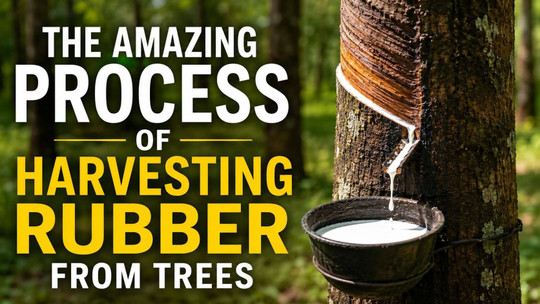
The harvesting process starts with a carefully angled cut through the outer bark using a specialized tapping knife.
The cut is:
- Shallow
- Usually angled downward
- Carefully controlled to avoid damaging the wood beneath
Only the bark containing latex vessels is cut. This allows latex to flow while protecting the tree.
Step 3: Collecting the Latex
A small metal spout or guide is inserted into the cut.
The white latex slowly drips into a collection cup attached to the trunk.
Harvesting is often done:
- Early in the morning
- Before temperatures become too warm
- Every few days rather than daily
A single tapping session may continue for several hours.
Step 4: Transporting the Latex
Once collection cups are full, workers empty them into larger containers.
The fresh latex is transported to nearby processing facilities as quickly as possible because untreated latex begins to coagulate naturally.
Sometimes a small amount of ammonia is added to keep the latex liquid during transport.
Step 5: Processing the Latex
At the processing plant, the latex is cleaned and filtered.
Depending on its final use, it may be processed into:
- Rubber sheets
- Rubber blocks
- Concentrated liquid latex
- Industrial raw rubber
The latex is often mixed with acid to encourage coagulation before being pressed into sheets and dried.
Sustainable Harvesting
One of the greatest advantages of natural rubber is that harvesting does not require cutting down the tree.
With proper management:
- Trees remain productive for decades.
- Forest plantations continue producing renewable materials.
- Carbon remains stored in living trees.
- Farmers can harvest latex for many years before replanting becomes necessary.
This makes natural rubber one of the world's most sustainable industrial crops.
Common Uses for Natural Rubber
Natural rubber is found in thousands of products, including:
- Vehicle tires
- Medical gloves
- Rubber bands
- Shoe soles
- Garden hoses
- Conveyor belts
- Gaskets and seals
- Balloons
- Sporting goods
- Adhesives
Its exceptional flexibility, durability, and elasticity make it difficult to replace in many applications.
Interesting Facts About Rubber Trees
- A mature rubber tree may produce latex for up to 30 years.
- Latex is about 30–40% rubber particles, with the remainder consisting mostly of water and natural compounds.
- Thailand is among the world's largest producers of natural rubber.
- Trees are typically tapped every 2–3 days rather than daily to allow the bark to recover.
- Sustainable rubber plantations help provide income for millions of farmers worldwide.
Final Thoughts
Harvesting natural rubber is a remarkable blend of skilled craftsmanship and sustainable forestry. By carefully tapping mature rubber trees, workers can collect valuable latex without harming the trees themselves. This renewable process supports industries around the world while allowing rubber plantations to remain productive for decades. Whether it's in the tires on your car or the gloves used in hospitals, natural rubber begins its journey with a simple cut in the bark of a living tree.