
Posted by TJ Hopkins on Aug 15th 2026
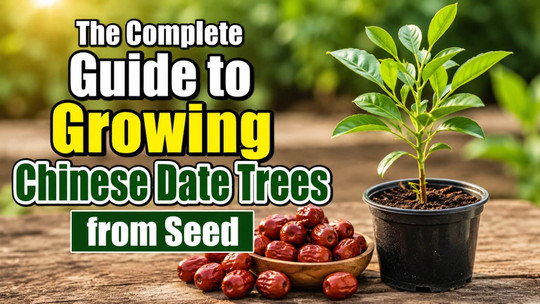
The Complete Guide to Growing Chinese Date Trees from Seed
The Chinese date tree, also known as the jujube tree (Ziziphus jujuba), is a fascinating fruit tree valued for its sweet, nutritious fruits and ability to tolerate hot, dry growing conditions. Native to parts of Asia and cultivated for thousands of years, jujube trees have become increasingly popular with gardeners who want an unusual and productive fruit tree.
While established jujube trees are often purchased as grafted plants, growing Chinese date trees from seed can be an enjoyable project. Seed-grown trees may not produce fruit identical to the parent tree, but they can still develop into attractive, hardy trees and may eventually produce their own unique fruit.
Here is a complete guide to preparing, germinating, planting, and caring for Chinese date tree seeds.
About the Chinese Date Tree
Chinese date trees are deciduous fruit trees that typically develop a rounded or somewhat irregular canopy. Their small, glossy green leaves provide attractive summer foliage, while mature trees produce small yellow-green flowers followed by oval fruits.
The fruits begin green and gradually ripen to reddish-brown or deep brown. Fresh jujubes can have a crisp texture somewhat similar to an apple. As they mature and dry, the fruits become sweeter and develop a wrinkled appearance similar to dates.
Depending on the variety and growing conditions, mature jujube trees can reach approximately 15 to 30 feet tall.
Why Grow Chinese Date Trees from Seed?
Growing jujube trees from seed requires more patience than purchasing an established tree, but there are several reasons gardeners may want to try it.
Seed propagation is inexpensive and provides the experience of watching a tree develop from its earliest stage. Seedlings can also be used as potential rootstock for grafting desirable jujube varieties later.
Keep in mind that jujube trees grown from seed are genetically different from their parent trees. Fruit quality, size, flavor, and productivity can vary considerably.
Preparing Chinese Date Seeds
The hard stone found inside a jujube fruit contains the actual seeds. If you're starting with whole dried fruits, remove all remaining fruit material and clean the stones thoroughly.
Some jujube stones contain more than one seed. The extremely hard outer shell can make germination difficult because moisture must reach the seed inside.
Carefully cracking or opening the stone can sometimes improve germination, but this must be done without damaging the seed. If you're uncomfortable opening the hard shell, the stones can instead be subjected to moisture and temperature treatments that help encourage germination.
Do Chinese Date Seeds Need Stratification?
Jujube seeds can exhibit dormancy, so stratification is commonly used to encourage more consistent germination.
Place the seeds or prepared stones in a slightly moist growing medium such as peat moss, coco coir, or a seed-starting mixture. The material should be damp but never soaking wet.
Place the mixture in a sealed plastic bag or covered container and refrigerate it for approximately 8 to 12 weeks.
Check the seeds occasionally. The medium should remain slightly moist throughout the stratification period. Remove any seeds showing signs of serious mold or decay.
Planting Chinese Date Seeds
After stratification, prepare individual pots or seed-starting containers with a loose, well-draining growing medium.
Plant each seed approximately 1/2 to 1 inch deep and gently cover it with soil.
Water thoroughly enough to evenly moisten the growing medium, then allow excess water to drain from the container.
Place the pots in a warm location.
Best Temperature for Germination
Warm temperatures generally encourage jujube seed germination.
Aim for approximately 70°F to 85°F during the germination period. A seedling heat mat can be helpful when indoor temperatures are cool.
Avoid excessively wet soil while providing warmth. Warm, waterlogged growing conditions can encourage fungal problems and seed rot.
Keep the Soil Moist, Not Wet
One of the most common seed-starting mistakes is excessive watering.
The growing medium should remain consistently moist while the seeds germinate, but it should never remain saturated.
Containers must have drainage holes so excess water can escape.
You can place a humidity dome over seed-starting containers to help maintain moisture and humidity. Once seedlings emerge, gradually increase ventilation and remove the dome.
How Long Do Chinese Date Seeds Take to Germinate?
Jujube seed germination can be unpredictable.
Properly prepared seeds growing under favorable conditions may begin germinating within several weeks, while others can take considerably longer. Differences in seed freshness, dormancy, temperature, moisture, and seed preparation can all influence germination time.
Don't immediately discard containers simply because a seed hasn't sprouted quickly. Some viable seeds require additional time.
Caring for Chinese Date Seedlings
Once a seedling appears, place it where it will receive plenty of bright light.
A sunny window can work temporarily, but seedlings may become stretched and weak when they don't receive enough light. Supplemental grow lights can provide more consistent indoor growing conditions.
Keep the soil slightly moist while the seedlings are young, gradually allowing the upper surface of the growing medium to dry somewhat between waterings as the plants become established.
Good air circulation is also important.
Transplanting Seedlings into Larger Pots
As seedlings develop larger root systems, they may eventually outgrow their original containers.
Transplant each seedling into a larger pot filled with a fertile but well-draining potting mixture.
Handle the roots carefully during transplanting. Water after repotting to settle the growing medium around the root system.
Continue providing strong light while the young trees become established.
Hardening Off Young Trees
Trees started indoors should not be moved directly into intense outdoor sunlight.
Instead, gradually acclimate them to outdoor conditions over approximately 7 to 14 days.
Begin by placing seedlings outdoors in a protected, partially shaded location for a few hours. Gradually increase the amount of time they spend outside and slowly introduce stronger sunlight.
This process helps reduce transplant shock and leaf damage.
Choosing a Planting Location
Chinese date trees perform best in locations receiving full sun, ideally at least six to eight hours of direct sunlight each day.
Good drainage is particularly important.
Jujube trees can tolerate relatively poor and dry soils once established, but constantly wet soil can create problems for their roots.
Choose a location with enough space for the tree's mature canopy and root system.
Planting a Young Chinese Date Tree Outdoors
Dig a planting hole approximately as deep as the seedling's root ball and somewhat wider.
Carefully remove the young tree from its container and place it in the hole at approximately the same depth it was growing in the pot.
Backfill with the original soil and gently firm it around the roots.
Water thoroughly after planting.
Avoid planting the tree excessively deep, as this can create long-term problems.
Watering Chinese Date Trees
Young trees require more consistent watering than established trees.
During the first growing season, monitor the soil and water deeply whenever conditions become dry. The goal is to encourage roots to grow deeper into the surrounding soil.
Established jujube trees are known for their impressive drought tolerance, although occasional deep watering during extended dry periods can support healthy growth and fruit development.
Fertilizing Jujube Trees
Chinese date trees generally don't require extremely heavy fertilization.
If your soil is reasonably fertile, excessive fertilizer may encourage vigorous leafy growth without providing additional benefits.
A soil test can help determine whether nutrients are actually needed.
Young seedlings grown in containers can receive a diluted, balanced fertilizer during active growth, but avoid overfertilizing tender plants.
Pruning Chinese Date Trees
Young trees generally require only limited pruning.
Remove dead, damaged, diseased, or poorly positioned branches as needed. As the tree develops, selective pruning can improve its structure and allow sunlight and air to reach the interior canopy.
Avoid unnecessarily heavy pruning of young seedlings.
When Will a Seed-Grown Chinese Date Tree Produce Fruit?
Patience is important when growing jujube trees from seed.
Seed-grown trees can take several years before reaching fruit-bearing maturity, and there is no guarantee that their fruit will have the same characteristics as the fruit from which the seed originated.
Gardeners primarily interested in predictable fruit quality usually choose named grafted varieties.
Seed-grown jujubes, however, offer something different: the opportunity to grow a genetically unique tree.
Can You Grow Chinese Date Trees in Containers?
Young jujube trees can be grown successfully in containers, particularly during their first few years.
Choose a container with excellent drainage and gradually increase the pot size as the root system develops.
Long-term container growing becomes more challenging because jujube trees naturally develop into relatively large woody plants. Large containers may be required to maintain healthy mature specimens.
Common Problems When Starting Chinese Date Seeds
Failure to germinate is one of the most common challenges. This may result from seed dormancy, old or nonviable seeds, insufficient warmth, or inadequate preparation.
Seed rot can occur when the growing medium remains excessively wet.
Seedlings that become tall, thin, and weak usually need stronger light.
Mold developing on the soil surface often indicates excessive moisture combined with inadequate air circulation.
Correcting the growing environment early can greatly improve seedling survival.
Tips for Better Success
Start several seeds rather than relying on a single seed. Germination rates can vary, and growing multiple seedlings allows you to select the strongest plants.
Use clean containers and fresh, well-draining seed-starting medium.
Provide consistent warmth during germination.
Keep the growing medium moist without saturating it.
Give emerging seedlings plenty of light.
Most importantly, be patient. Tree seeds don't always germinate according to a predictable schedule.
Growing Chinese Date Trees Is Worth the Wait
Growing Chinese date trees from seed isn't the fastest way to establish a jujube tree, but it can be one of the most interesting.
From preparing and stratifying the seeds to watching the first green shoot emerge, every stage provides an opportunity to observe how a long-lived fruit tree develops.
With proper seed preparation, warm germination conditions, good drainage, plenty of sunlight, and patient care, a tiny Chinese date seed can eventually become a beautiful tree capable of providing shade, wildlife value, and potentially a harvest of sweet jujube fruits for years to come.