
Posted by TJ Hopkins on Jul 3rd 2026
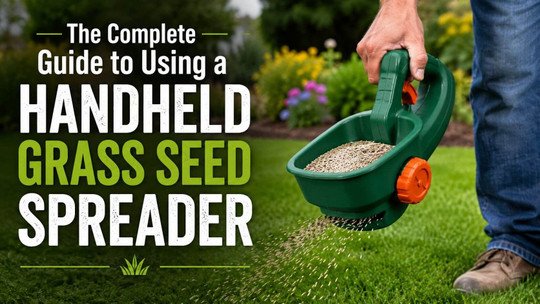
The Complete Guide to Using a Handheld Grass Seed Spreader
A lush, green lawn starts with even seed distribution, and one of the easiest ways to achieve professional-looking results is with a handheld grass seed spreader. Whether you're repairing bare patches, overseeding an existing lawn, or planting a brand-new yard, a handheld spreader helps ensure seeds are distributed evenly while saving time and effort.
In this guide, you'll learn how to use a handheld grass seed spreader correctly, avoid common mistakes, and get the best possible germination.
Why Use a Handheld Grass Seed Spreader?
Handheld spreaders are popular among homeowners because they're lightweight, affordable, and simple to use. Unlike larger push spreaders, they're perfect for:
- Small to medium-sized lawns
- Spot repairs
- Overseeding thin areas
- Tight spaces around gardens and landscaping
- Hillsides and uneven terrain
Because they allow better control, they're also excellent for spreading grass seed near sidewalks, flower beds, and driveways.
What You'll Need
Before getting started, gather the following:
- Grass seed
- Handheld grass seed spreader
- Garden rake
- Lawn roller (optional)
- Garden hose or sprinkler
- Starter fertilizer (optional)
Step 1: Prepare the Lawn
Proper soil preparation dramatically improves germination.
Begin by:
- Removing rocks and debris
- Mowing existing grass short (2–3 inches)
- Raking away dead grass and thatch
- Loosening the top ¼ inch of soil in bare areas
Good seed-to-soil contact is one of the biggest factors in successful germination.
Step 2: Choose the Right Grass Seed
Select a seed variety suited for your climate and sunlight conditions.
Popular choices include:
- Kentucky Bluegrass
- Perennial Ryegrass
- Tall Fescue
- Fine Fescue
- Bermuda Grass
- Zoysia Grass
Always check the recommended seeding rate on the seed package.
Step 3: Adjust the Spreader Setting
Every handheld spreader has an adjustable opening that controls how much seed is released.
If your spreader includes a settings chart:
- Locate your grass seed type.
- Set the dial according to the manufacturer's recommendation.
If no chart is available:
- Start with a lower setting.
- Test the spread pattern on a driveway or tarp.
- Increase or decrease the opening until the seed is distributed evenly.
It's much easier to make a second pass than to spread too much seed at once.
Step 4: Fill the Hopper
Pour grass seed into the spreader hopper.
Avoid overfilling it, especially when working on larger lawns, as carrying excessive weight can become tiring.
Keep the hopper dry to prevent seeds from clumping.
Step 5: Spread the Grass Seed
Walk at a steady pace while turning the crank or squeezing the trigger, depending on your spreader model.
For the most even coverage:
- Spread seed across the lawn in one direction.
- Make a second pass at a 90-degree angle.
- Slightly overlap each pass.
This crosshatch pattern minimizes missed spots and creates more uniform coverage.
Step 6: Lightly Rake the Seed
Once spreading is complete, lightly rake the area so the seeds are covered with about ⅛ to ¼ inch of soil.
Do not bury the seed too deeply.
Many grass species require light exposure or only a thin soil covering to germinate successfully.
Step 7: Water Properly
Water immediately after planting.
The goal is to keep the soil consistently moist—not soaked.
A good watering schedule is:
- 2–3 light waterings daily until germination
- Once seedlings emerge, water less frequently but more deeply
- Transition to normal lawn watering after the grass is well established
Allowing the soil to dry out during germination can significantly reduce success rates.
Common Mistakes to Avoid
Spreading Too Much Seed
More seed does not produce a thicker lawn.
Overcrowded seedlings compete for water, nutrients, and sunlight.
Walking Too Fast
Changing your walking speed causes uneven seed distribution.
Maintain a consistent pace throughout the job.
Using Wet Seed
Moisture causes grass seed to clump inside the hopper, creating uneven coverage.
Only load dry seed.
Skipping Soil Preparation
Throwing seed onto compacted ground greatly reduces germination.
A few minutes of soil preparation makes a huge difference.
Forgetting to Overlap Passes
Small gaps between passes often become visible after germination.
A slight overlap creates much more even results.
Can You Use a Handheld Spreader for More Than Grass Seed?
Absolutely.
Most handheld spreaders can also be used for:
- Lawn fertilizer
- Clover seed
- Wildflower seed
- Ice melt
- Pelletized lime
- Small granular lawn products
Always clean the spreader thoroughly before switching materials.
Cleaning and Storage Tips
Proper maintenance extends the life of your spreader.
After each use:
- Empty leftover seed.
- Brush out any remaining material.
- Rinse only if recommended by the manufacturer.
- Dry completely before storing.
- Store indoors in a dry location.
This prevents rust, corrosion, and clogged openings.
Frequently Asked Questions
Can I spread grass seed without a spreader?
Yes, but achieving even coverage by hand is difficult. A handheld spreader provides much more consistent results.
Should I spread seed before or after fertilizer?
Many homeowners apply a starter fertilizer immediately after seeding. Follow the recommendations for your specific grass seed and fertilizer.
How long does grass seed take to germinate?
It depends on the variety:
- Perennial Ryegrass: 5–10 days
- Tall Fescue: 7–14 days
- Kentucky Bluegrass: 14–30 days
- Bermuda Grass: 7–21 days
Can I use a handheld spreader for overseeding?
Yes. In fact, it's one of the easiest ways to evenly distribute seed across an existing lawn.
Final Thoughts
A handheld grass seed spreader is one of the most useful tools for homeowners looking to establish or maintain a healthy lawn. With proper lawn preparation, the correct spreader settings, and consistent watering, you can achieve even seed coverage and improve germination success.
Whether you're repairing a few bare patches or overseeding your entire yard, following these simple steps will help you grow a thicker, greener lawn with less effort and more consistent results.