
Posted by TJ Hopkins on Jul 7th 2026
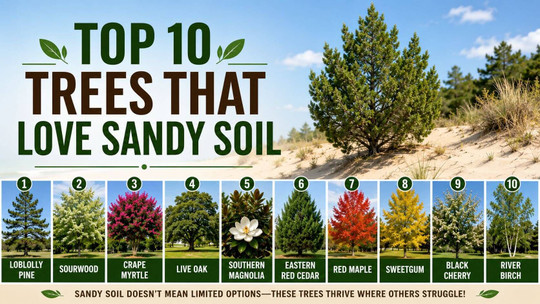
Top 10 Trees That Love Sandy Soil
Sandy soil often gets a bad reputation because it drains quickly and doesn't hold nutrients as well as heavier soils. While that can make gardening more challenging, many beautiful and resilient trees actually thrive in these conditions. Whether you live near the coast, have naturally sandy ground, or simply want low-maintenance trees that can tolerate dry conditions, there are plenty of excellent choices.
Here are ten outstanding trees that perform well in sandy soils.
1. Loblolly Pine (Pinus taeda)
Loblolly Pine is one of the fastest-growing native pine trees in the southeastern United States. It adapts well to sandy soils and develops into a tall, stately evergreen that provides excellent shade and wildlife habitat.
Why it thrives in sandy soil:
- Fast-growing
- Tolerates drought once established
- Excellent for windbreaks and privacy
- Provides year-round greenery
USDA Zones: 6–9
2. Sourwood (Oxydendrum arboreum)
Sourwood is prized for its fragrant white flowers during summer and brilliant scarlet-red fall foliage. It naturally grows in well-drained, acidic soils, making sandy locations ideal.
Benefits:
- Outstanding fall color
- Attractive white flowers
- Excellent tree for pollinators
- Compact size for residential landscapes
USDA Zones: 5–9
3. Crape Myrtle (Lagerstroemia indica)
Few trees offer as much summer color as Crape Myrtle. These ornamental trees produce months of vibrant blooms while tolerating heat, drought, and sandy soils with ease.
Highlights:
- Long-lasting flowers
- Available in many colors
- Attractive peeling bark
- Low maintenance
USDA Zones: 6–10
4. Live Oak (Quercus virginiana)
The Live Oak is one of the most iconic shade trees of the American South. Its massive canopy and incredible longevity make it an excellent investment for large properties with sandy soil.
Why gardeners love it:
- Extremely long-lived
- Exceptional drought tolerance
- Strong wind resistance
- Provides valuable wildlife habitat
USDA Zones: 8–10
5. Southern Magnolia (Magnolia grandiflora)
Southern Magnolia combines glossy evergreen foliage with enormous, fragrant white blossoms that bloom throughout late spring and summer. It performs surprisingly well in sandy soils if given adequate moisture during establishment.
Features:
- Large fragrant flowers
- Evergreen foliage
- Attractive seed cones
- Elegant landscape specimen
USDA Zones: 6–10
6. Eastern Red Cedar (Juniperus virginiana)
Eastern Red Cedar is one of the toughest native trees available. It naturally grows in rocky hillsides, dry fields, and sandy soils where many other trees struggle.
Advantages:
- Extremely drought tolerant
- Excellent privacy screen
- Provides winter food for birds
- Resistant to poor soils
USDA Zones: 2–9
7. Red Maple (Acer rubrum)
Although Red Maple grows in a wide range of soil types, it adapts well to sandy locations when provided occasional watering during dry periods. Its brilliant crimson autumn foliage is among the best of any shade tree.
Reasons to plant:
- Spectacular fall color
- Fast growth
- Adaptable to many conditions
- Attractive shade tree
USDA Zones: 3–9
8. Sweetgum (Liquidambar styraciflua)
Sweetgum is known for its star-shaped leaves and stunning fall display featuring shades of yellow, orange, purple, and red. It grows well in sandy, well-drained soils.
Key benefits:
- Brilliant autumn colors
- Strong pyramidal form
- Excellent shade tree
- Wildlife value
USDA Zones: 5–9
9. Black Cherry (Prunus serotina)
Black Cherry is a fast-growing native tree valued for its fragrant spring flowers, dark berries, and importance to wildlife. It performs well in sandy, well-drained soils.
Why choose Black Cherry:
- Beautiful spring blooms
- Fruits attract birds
- Fast growth
- Native wildlife tree
USDA Zones: 3–9
10. River Birch (Betula nigra)
River Birch is famous for its peeling cinnamon-colored bark and graceful appearance. While it naturally grows near streams, it adapts surprisingly well to sandy soils when provided supplemental water during prolonged drought.
Features:
- Attractive exfoliating bark
- Fast-growing
- Excellent ornamental tree
- Resistant to bronze birch borer
USDA Zones: 4–9
Tips for Growing Trees in Sandy Soil
Even trees that love sandy soil benefit from proper planting and care.
- Mix compost into the planting hole to improve moisture retention.
- Apply 2–4 inches of mulch around the tree to conserve water.
- Water regularly during the first one to two growing seasons.
- Use a slow-release fertilizer if growth appears sluggish.
- Avoid overwatering—sandy soil drains quickly but roots still need oxygen.
Final Thoughts
Sandy soil doesn't have to limit your landscaping possibilities. In fact, many beautiful trees have evolved to thrive in these fast-draining conditions. Whether you're looking for towering evergreens like Eastern Red Cedar and Loblolly Pine, colorful ornamentals like Crape Myrtle and Sourwood, or majestic shade trees like Live Oak and Southern Magnolia, there's an option for nearly every landscape.
With proper planting and a little extra care during establishment, these trees will reward you with decades of beauty, shade, wildlife habitat, and seasonal interest—even in soils where many other species struggle.