
Posted by TJ Hopkins on Jul 11th 2026
What Is My USDA Hardiness Zone and Why Does It Matter?
If you have ever looked at a plant tag, seed packet, or online plant description, you have probably seen a range of numbers such as “USDA Zones 4–8” or “Hardy in Zones 7–10.” These numbers can help determine whether a perennial plant, tree, shrub, or vine is likely to survive the winter where you live.
Knowing your USDA Hardiness Zone is one of the easiest ways to choose plants suited to your local climate. While a hardiness zone cannot predict every growing condition, it provides a valuable starting point when planning a garden, orchard, landscape, or backyard planting project.
What Is a USDA Hardiness Zone?
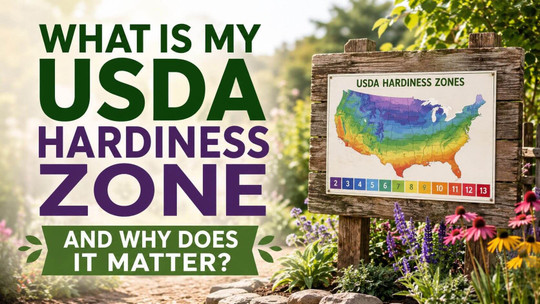
The USDA Plant Hardiness Zone Map divides the United States into geographic zones based on the average annual extreme minimum winter temperature recorded in each area.
In simpler terms, your hardiness zone estimates how cold your location typically gets during the coldest part of winter.
The zones range from Zone 1, which includes some of the coldest areas, to Zone 13, which includes very warm tropical locations. Each full zone represents a difference of approximately 10°F.
Every zone is also divided into two smaller sections:
- Zone “a” represents the colder half of the zone.
- Zone “b” represents the warmer half of the zone.
For example, Zone 5 is divided into:
- Zone 5a: Average annual extreme minimum temperatures of approximately -20°F to -15°F
- Zone 5b: Average annual extreme minimum temperatures of approximately -15°F to -10°F
Although the difference may appear small, five degrees can affect whether certain plants reliably survive the winter.
How Do I Find My USDA Hardiness Zone?
The easiest way to determine your USDA Hardiness Zone is to use the official USDA Plant Hardiness Zone Map and enter your ZIP code.
Your result may look something like:
- Zone 3b
- Zone 5a
- Zone 6b
- Zone 8a
- Zone 10b
The letter is important because it provides a more precise estimate of your area’s typical coldest winter temperatures.
You can also view the color-coded map to see how growing zones change throughout the country. However, searching by ZIP code generally provides more accurate local information than estimating your zone from a nationwide map.
Why Does Your USDA Hardiness Zone Matter?
Your hardiness zone helps you determine which perennial plants may be able to survive winter and return year after year.
This is especially useful when choosing:
- Trees
- Shrubs
- Perennial flowers
- Fruit trees
- Berry bushes
- Ornamental grasses
- Hardy herbs
- Vines
- Bulbs
For example, if a tree is recommended for USDA Zones 4–8 and you live in Zone 5, your winter temperatures are generally within the tree’s recommended hardiness range.
However, if you live in Zone 3, the tree may experience temperatures colder than it can tolerate. It could suffer winter damage or fail to survive an unusually cold season.
How to Read USDA Zone Information on Plant Labels
Plant labels and online descriptions usually display a range of suitable zones.
For example:
USDA Zones: 4–9
This means the plant is generally expected to tolerate the winter temperatures found in Zones 4 through 9.
The lowest number usually indicates the coldest zone where the plant may reliably survive winter. The highest number can provide a general indication of where the plant may begin experiencing challenges related to warmer conditions.
If your location falls within the recommended range, the plant may be a suitable choice. However, you should still consider sunlight, soil, moisture, summer heat, and other local growing conditions.
Can You Grow a Plant Outside Its Recommended Zone?
Sometimes, but success is not guaranteed.
If you live slightly colder than a plant’s recommended range, you may be able to improve its chances by planting it in a protected microclimate. Areas near a south-facing wall, stone foundation, fence, or windbreak may remain slightly warmer during winter.
You may also protect less-hardy plants by:
- Applying mulch around the root zone
- Protecting plants from strong winter winds
- Choosing a sheltered planting location
- Avoiding low areas where cold air collects
- Growing the plant in a container and moving it indoors for winter
Even with protection, temperatures below a plant’s cold-tolerance limit can damage roots, stems, buds, or branches.
Gardeners in warmer zones may also encounter problems when growing plants outside their recommended range. Some species require a period of winter cold, while others may struggle with excessive summer heat or prolonged warm temperatures.
What Are Microclimates?
A microclimate is a small area where growing conditions differ from the surrounding region.
Your property may contain several microclimates, even if the entire area is listed under one USDA Hardiness Zone.
For example:
- A south-facing wall may absorb sunlight and remain warmer.
- A low area may collect cold air and experience earlier frost.
- A windy, exposed hill may be colder and drier.
- An area near a large body of water may experience more moderate temperatures.
- A sheltered courtyard may remain warmer than an open yard.
These small differences can influence plant survival and may allow certain plants to grow in protected locations even when they are considered marginally hardy for the region.
Do USDA Hardiness Zones Apply to Annual Vegetables?
Hardiness zones are most useful for plants expected to survive outdoors for several years.
Annual vegetables such as tomatoes, cucumbers, peppers, beans, squash, and corn usually complete their life cycles within one growing season. Because they are not expected to survive winter, your local frost dates and growing-season length are often more important than your USDA zone.
When growing annual vegetables, consider:
- Your average last spring frost date
- Your average first fall frost date
- The number of frost-free growing days
- Summer temperatures
- Soil temperature
- Days to maturity
A gardener in Zone 5 may successfully grow many of the same summer vegetables as a gardener in Zone 8, but the planting dates and length of the growing season may be very different.
Does Your Hardiness Zone Tell You When to Plant?
Not necessarily.
Your USDA zone measures average annual extreme minimum winter temperatures. It does not provide exact planting dates or predict when the final spring frost will occur.
Two locations in the same hardiness zone can have different:
- Spring frost dates
- Fall frost dates
- Rainfall amounts
- Summer temperatures
- Humidity levels
- Growing-season lengths
For planting dates, use local frost-date information and regional growing recommendations in addition to your USDA Hardiness Zone.
Other Factors to Consider When Choosing Plants
Hardiness zones are helpful, but they are only one part of successful plant selection.
Before planting, also consider:
Sunlight
Determine whether the planting location receives full sun, partial shade, or full shade.
Soil Type
Some plants prefer sandy, fast-draining soil, while others tolerate clay or consistently moist conditions.
Soil Drainage
Many trees, shrubs, and perennials struggle in soil that remains waterlogged for long periods.
Soil pH
Certain plants prefer acidic soil, while others grow best in neutral or alkaline conditions.
Water Needs
Choose plants that match your local rainfall and the amount of supplemental watering you can provide.
Summer Heat
A plant may survive your winter temperatures but struggle during long periods of extreme heat.
Humidity
Some plants are more susceptible to fungal diseases in warm, humid climates.
Wind Exposure
Cold winter winds can damage plants, especially broadleaf evergreens and species growing near the edge of their recommended hardiness range.
Can USDA Hardiness Zones Change?
Hardiness zone maps can change as updated temperature records and improved mapping information become available.
A location may move into a warmer or colder zone when a new map is released. However, a change in zone does not mean extreme cold weather can no longer occur.
Even in a generally warmer zone, an unusually severe winter can damage plants that are only marginally hardy. For dependable long-term results, many gardeners choose plants that are comfortably hardy in their zone rather than selecting species at the very edge of their cold tolerance.
Tips for Choosing Plants Based on Your Zone
Use these simple guidelines when selecting plants:
- Find your USDA Hardiness Zone using your ZIP code.
- Choose trees, shrubs, and perennials recommended for your zone.
- Check the complete zone range rather than only the lowest zone number.
- Consider choosing plants hardy to at least one zone colder if your property is exposed, windy, or prone to extreme winter temperatures.
- Pay attention to local frost dates when planting annual flowers and vegetables.
- Consider sunlight, soil, drainage, moisture, and summer heat before making a final selection.
- Ask local gardeners, nurseries, or extension services which plants perform reliably in your area.
Final Thoughts
Your USDA Hardiness Zone is an important tool for choosing trees, shrubs, perennial flowers, fruits, and other plants that have a better chance of surviving winter in your area.
However, it should not be the only factor used when planning a garden. Soil conditions, sunlight, drainage, rainfall, summer heat, frost dates, and local microclimates can all influence how well a plant grows.
By combining your USDA Hardiness Zone with an understanding of your property’s unique growing conditions, you can make more informed plant choices and create a healthier, more successful garden.