
Posted by TJ Hopkins on Aug 6th 2026
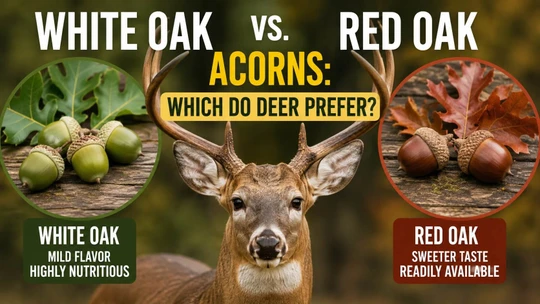
White Oak vs. Red Oak Acorns: Which Do Deer Prefer?
When fall arrives, oak trees begin dropping one of the most important wildlife foods in North America—acorns. For deer hunters, landowners, and wildlife enthusiasts, one question comes up every autumn: Do deer prefer white oak acorns or red oak acorns?
The short answer is that deer almost always prefer white oak acorns first, but both white and red oak trees play an essential role in providing food throughout the season.
Why Deer Prefer White Oak Acorns
White oak acorns contain lower levels of tannins, making them sweeter and less bitter than red oak acorns. Because of their pleasant taste and excellent nutritional value, deer will often seek them out as soon as they begin falling.
Benefits of white oak acorns include:
- Lower tannin content
- Sweeter, milder flavor
- Highly digestible
- Excellent source of carbohydrates and fats
- Preferred by deer, wild turkeys, squirrels, and many other wildlife species
In areas where both oak groups are growing, deer often consume nearly all available white oak acorns before moving on to other food sources.
Why Red Oak Acorns Still Matter
Although red oak acorns are generally more bitter because of their higher tannin content, they remain an incredibly valuable food source.
Advantages of red oak acorns include:
- Usually produced in large quantities
- Stay on the ground longer before spoiling
- Provide food later into fall and early winter
- Important nutrition once white oak acorns are gone
As food becomes scarcer later in the season, deer readily switch to feeding on red oak acorns.
White Oak vs. Red Oak Acorns
| Feature | White Oak | Red Oak |
|---|---|---|
| Taste | Mild and sweet | More bitter |
| Tannin Content | Low | High |
| Deer Preference | ★★★★★ | ★★★☆☆ |
| Wildlife Use | Extremely high | Very high |
| Germination | Often germinates soon after falling | Usually waits until spring |
| Availability | Early fall | Fall through winter |
Nutritional Value
Both white and red oak acorns provide deer with important nutrients before winter arrives.
Acorns contain:
- Healthy fats
- Carbohydrates for energy
- Protein
- Essential minerals
- Calories needed for fat reserves before winter
These nutrients help deer build body condition during the fall and prepare for colder months.
Hunting Around Oak Trees
Many experienced deer hunters focus on producing white oak trees during early archery season. Fresh white oak acorns can attract deer from long distances, especially when other food sources are limited.
As the season progresses and white oak acorns disappear, hunting near productive red oak stands often becomes more effective because deer begin relying on the remaining acorns.
Best Oak Trees for Wildlife
If you're planting trees to attract wildlife, consider growing a mix of both oak groups.
Excellent white oak species:
- White Oak (Quercus alba)
- Swamp White Oak (Quercus bicolor)
- Bur Oak (Quercus macrocarpa)
- Chinkapin Oak (Quercus muehlenbergii)
Excellent red oak species:
- Northern Red Oak (Quercus rubra)
- Pin Oak (Quercus palustris)
- Scarlet Oak (Quercus coccinea)
- Black Oak (Quercus velutina)
Planting several species helps provide a more dependable acorn crop from year to year while extending food availability throughout the fall and winter.
Final Thoughts
If given the choice, deer consistently prefer white oak acorns because they are sweeter, lower in tannins, and easier to digest. However, red oak acorns remain an extremely important food source, especially later in the season after white oak acorns have been eaten.
For landowners looking to improve wildlife habitat, planting both white and red oak species is one of the best long-term investments you can make. Together, they provide a reliable supply of nutritious acorns that support deer, turkeys, squirrels, and countless other wildlife throughout the fall and winter.