
Posted by TJ Hopkins on Jul 30th 2026
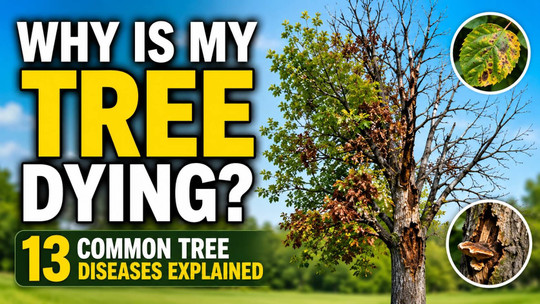
Why Is My Tree Dying? 13 Common Tree Diseases Explained
A healthy tree adds beauty, shade, and value to your landscape. When leaves begin turning brown, branches die back, or the trunk starts showing unusual damage, it's natural to wonder what's going wrong. Tree diseases can develop slowly or spread rapidly depending on the cause, making early identification essential.
This guide covers 13 of the most common tree diseases, how to recognize them, and what you can do to protect your trees before it's too late.
1. Anthracnose
Anthracnose is a fungal disease that commonly affects maple, sycamore, oak, ash, and dogwood trees.
Symptoms
- Brown or black leaf spots
- Curling or distorted leaves
- Premature leaf drop
- Dead twigs
Treatment
- Rake and dispose of infected leaves.
- Improve air circulation through pruning.
- Water at the base instead of overhead.
- Apply fungicide in early spring if infections are severe.
2. Apple Scab
Apple scab affects apple and crabapple trees and is one of the most recognizable fungal diseases.
Symptoms
- Olive-green to black leaf spots
- Scabby fruit
- Early leaf loss
- Reduced fruit quality
Treatment
- Remove fallen leaves every autumn.
- Prune crowded branches.
- Use resistant varieties whenever possible.
- Apply preventative fungicides during spring.
3. Cedar-Apple Rust
This disease requires both cedar (or juniper) and apple-family trees to complete its life cycle.
Symptoms
- Bright orange or yellow leaf spots
- Orange gelatinous growths on cedar trees
- Premature leaf drop
Treatment
- Remove nearby infected cedar galls if practical.
- Improve airflow around trees.
- Use resistant cultivars.
- Apply fungicides during spring if necessary.
4. Dutch Elm Disease
Dutch Elm Disease is caused by a fungus spread by elm bark beetles.
Symptoms
- Yellowing leaves
- Wilting branches
- Brown streaks beneath the bark
- Progressive dieback
Treatment
- Remove infected limbs immediately.
- Avoid pruning during beetle season.
- Sever root grafts between neighboring elms.
- Professional fungicide injections may save valuable trees.
5. Fire Blight
Fire blight commonly affects pear, apple, quince, and ornamental fruit trees.
Symptoms
- Blackened shoots resembling fire damage
- Shepherd's crook branch tips
- Oozing amber-colored sap
- Wilted blossoms
Treatment
- Prune infected branches at least 8–12 inches below visible damage.
- Sterilize pruning tools after every cut.
- Avoid excessive nitrogen fertilizer.
6. Oak Wilt
Oak wilt is one of the most destructive diseases affecting oak trees.
Symptoms
- Browning leaf edges
- Rapid leaf drop
- Branch dieback
- Tree death within weeks or months
Treatment
- Never prune oaks during active beetle season.
- Remove infected trees promptly.
- Install root barriers to stop underground spread.
- Preventive fungicide injections may help healthy nearby trees.
7. Powdery Mildew
Powdery mildew affects hundreds of tree and shrub species.
Symptoms
- White powder-like coating on leaves
- Curled foliage
- Stunted growth
- Premature leaf drop
Treatment
- Increase sunlight and airflow.
- Avoid overhead watering.
- Remove infected leaves.
- Use fungicides if outbreaks become severe.
8. Leaf Spot Diseases
Many fungal and bacterial pathogens cause leaf spot diseases.
Symptoms
- Small brown, black, or yellow spots
- Holes in leaves
- Premature leaf loss
Treatment
- Collect and dispose of fallen leaves.
- Water early in the day.
- Improve air circulation.
- Apply fungicide only when needed.
9. Verticillium Wilt
This soil-borne fungus attacks the tree's vascular system.
Symptoms
- Sudden wilting
- Yellow leaves
- Branch dieback on one side
- Stunted growth
Treatment
Unfortunately, there is no cure.
Management includes:
- Watering during drought.
- Fertilizing appropriately.
- Removing dead branches.
- Replacing severely affected trees with resistant species.
10. Cytospora Canker
Most common on spruce, poplar, willow, and fruit trees.
Symptoms
- Sunken bark areas
- Oozing sap
- Dead branches
- Discolored bark
Treatment
- Remove infected limbs.
- Reduce drought stress.
- Avoid trunk injuries.
- Keep trees healthy through proper watering.
11. Root Rot (Phytophthora)
Root rot develops in poorly drained soils.
Symptoms
- Yellow leaves
- Slow growth
- Wilting despite moist soil
- Soft, decaying roots
Treatment
- Improve drainage.
- Avoid overwatering.
- Remove severely infected trees.
- Plant in well-draining locations.
12. Sooty Mold
Sooty mold grows on sticky honeydew produced by insects such as aphids and scale.
Symptoms
- Black coating on leaves
- Reduced photosynthesis
- Sticky foliage
- Presence of insect pests
Treatment
- Control aphids, scale insects, and whiteflies.
- Wash leaves with water.
- Encourage beneficial insects.
13. Heart Rot
Heart rot is an internal fungal decay that weakens mature trees.
Symptoms
- Mushrooms or shelf fungi on the trunk
- Hollow trunk
- Dead branches
- Increased risk of falling
Treatment
There is no cure once decay is advanced.
Management includes:
- Regular inspections.
- Removing hazardous limbs.
- Consulting a certified arborist if structural damage is significant.
General Tips to Prevent Tree Diseases
Healthy trees are naturally more resistant to disease. Follow these best practices:
- Water deeply during dry periods.
- Avoid damaging bark with lawn equipment.
- Mulch around the base without piling mulch against the trunk.
- Prune dead or damaged branches.
- Sterilize pruning tools between trees.
- Avoid overfertilizing.
- Plant disease-resistant varieties whenever possible.
- Inspect trees several times each growing season.
When Should You Call an Arborist?
Professional help is recommended if you notice:
- Large dead branches
- Mushrooms growing from the trunk
- Extensive bark splitting
- More than 30% canopy dieback
- Leaning trees
- Sudden decline in mature trees
- Large trunk cavities
- Trees close to homes or power lines
Early diagnosis can often prevent a manageable problem from becoming fatal.
Final Thoughts
Tree diseases don't always mean a tree is beyond saving. Many problems can be managed successfully when caught early. Regular inspections, proper watering, good pruning practices, and maintaining healthy growing conditions are the best defenses against fungal infections, bacterial diseases, and decay.
By learning to recognize these 13 common tree diseases, you'll be better equipped to protect your landscape and enjoy healthy, beautiful trees for years to come.