
Posted by TJ Hopkins on Sep 6th 2026
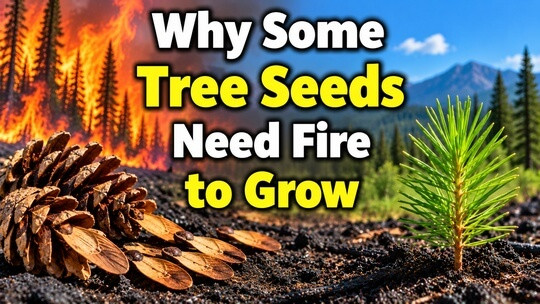
Why Some Tree Seeds Need Fire to Grow
Fire may look entirely destructive, but in many forests it also creates the conditions needed for new life. Certain tree species have adapted to landscapes where wildfires occur naturally. Their cones or seeds can remain dormant for years, waiting for heat, smoke, or freshly cleared soil before beginning the next generation of trees.
This remarkable survival strategy allows forests to recover after a fire and helps fire-adapted trees compete in environments where other plants may struggle.
Fire Can Unlock Sealed Cones
Some trees produce cones that are tightly sealed with resin. These are known as serotinous cones. Instead of opening as soon as the seeds mature, the cones can remain closed on the tree for several years.
When a wildfire moves through the forest, its heat softens or melts the resin holding the cone scales together. The cone then opens and releases its seeds onto the ground.
Lodgepole pine is one of the best-known examples. Its serotinous cones generally require temperatures of approximately 113°F to 120°F to release their seeds. The cones protect the seeds until conditions are favorable for regeneration. USDA Forest Service
Why Wait for a Fire?
Waiting for fire may seem risky, but it gives young seedlings several important advantages.
More Sunlight
A mature forest canopy can block much of the sunlight from reaching the ground. Fire removes some of the surrounding trees, shrubs, and undergrowth, allowing more sunlight to reach newly released seeds.
Young pine seedlings often need this bright, open environment to grow successfully.
Less Competition
Before a fire, the forest floor may be crowded with grasses, shrubs, tree seedlings, and other plants competing for water, light, and nutrients.
Fire temporarily reduces this competition. Seeds released shortly afterward have more room to germinate and establish their roots.
Exposed Soil
Thick layers of leaves, needles, and other plant material can prevent seeds from reaching the soil. Fire burns away some of this surface material and creates open seedbeds where roots can make direct contact with the ground.
This exposed soil often provides better conditions for germination than an undisturbed forest floor.
Nutrients Become Available
Burned plant material leaves behind ash containing minerals that can return to the soil. Although severe fires can damage soil, fires of suitable intensity may temporarily make certain nutrients more available to developing plants.
Trees That Benefit From Fire
Several tree species have developed adaptations that help them reproduce or survive in fire-prone environments.
Lodgepole Pine
Lodgepole pine trees may hold large numbers of seeds inside closed cones for years. When sufficient heat opens the cones, the seeds fall onto the newly cleared forest floor.
This can result in thousands of young lodgepole pine seedlings growing across a burned area. Some lodgepole pine populations produce mostly serotinous cones, while others also produce cones that open without fire.
Jack Pine
Jack pine is another tree commonly associated with fire. Many jack pine cones are sealed and can remain attached to their branches for years.
Heat opens the cones and releases the seeds. Fire can also prepare the exposed, sunny seedbed that jack pine seedlings need. Prescribed fire is sometimes used by land managers to open cones and support the regeneration of jack pine forests. USDA Forest Service
Pitch Pine
Pitch pine has several adaptations that help it live in fire-prone habitats. Some trees produce cones that remain closed until they are exposed to heat. Pitch pine may also survive fire by producing new growth from protected buds along its trunk and branches.
This combination allows established trees to recover while new seedlings begin growing nearby.
Giant Sequoia
Giant sequoias do not always require fire for their cones to release seeds, but fire can greatly improve the conditions those seeds encounter.
Fire opens the forest canopy, reduces competing vegetation, and exposes mineral soil. These changes create the sunny, relatively open ground needed for young giant sequoias to become established.
Some Cypress Species
Certain cypress trees also store seeds in closed cones that may open after exposure to heat. This allows large numbers of seeds to be released after a fire has created space for new seedlings.
Heat Is Not the Only Signal
Fire affects seed germination in several ways. Heat may open cones, but some plants respond to chemical compounds found in smoke. Others have hard seed coats that are weakened by heat, allowing water to reach the embryo.
These responses are not identical. Depending on the species, fire may:
- Open a sealed cone or woody fruit
- Weaken a hard seed coat
- Trigger germination through chemicals in smoke
- Clear vegetation covering the soil
- Increase the amount of available sunlight
- Reduce competition from surrounding plants
A species that responds to smoke may not need intense heat, while another may depend primarily on heat to release seeds from its cones.
Can Fire Become Too Hot?
Fire is beneficial only within certain limits. An extremely intense or prolonged fire can kill seeds, damage soil, and destroy the cones that would otherwise help a forest recover.
Timing matters as well. If fires happen too frequently, young trees may be killed before they become old enough to produce seeds. If fire is absent for an unusually long period, dense vegetation and accumulated fuel can change how the next fire behaves.
Fire-adapted forests therefore depend on an appropriate fire pattern rather than simply needing as much fire as possible.
Does This Mean You Should Burn Tree Seeds?
No. Tree seeds should never be placed in an open flame. Direct burning will usually kill them and can create an unnecessary fire hazard.
If you purchase seeds from a fire-adapted species, follow the germination instructions provided specifically for that species. Some seeds require no treatment once they have been removed from their cones. Others may need controlled heat, warm-water treatment, smoke water, scarification, or another carefully managed pretreatment.
Never assume that every seed from a fire-adapted tree needs fire. The tree may depend on fire to open its cones or prepare its natural habitat, while the released seed itself may germinate normally when planted.
Fire and the Renewal of Forests
Wildfire is often viewed only as an ending, but in fire-adapted forests it can also mark a beginning. Heat opens cones, sunlight reaches the soil, competition decreases, and stored seeds are released into a newly created growing space.
Trees such as lodgepole pine and jack pine demonstrate how plants can adapt to even the harshest natural forces. Where people see a blackened landscape, thousands of waiting seeds may encounter their first real opportunity to grow.