
Posted by TJ Hopkins on Oct 26th 2026
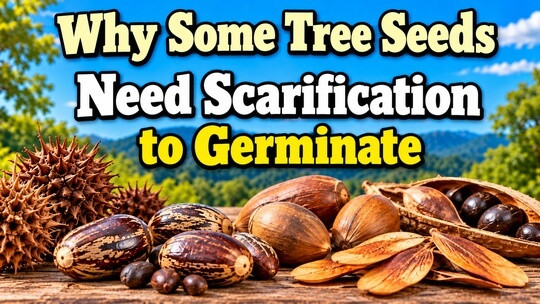
Why Some Tree Seeds Need Scarification to Germinate
Growing trees from seeds is a rewarding experience, but some tree seeds can be surprisingly difficult to germinate. You may plant seeds in the perfect soil, provide adequate moisture, and maintain the right temperature, only to discover that nothing sprouts. In many cases, the problem is not the growing conditions but the seed's tough outer coating.
Some tree species naturally produce seeds with hard, water-resistant shells that prevent moisture from reaching the embryo inside. This protective coating helps seeds survive harsh environmental conditions, but it can also delay germination for months or even years.
Fortunately, a simple technique called seed scarification can help overcome this natural barrier and encourage faster, more consistent germination.
In this guide, we'll explain why certain tree seeds require scarification, how the process works, which tree species benefit from it, and the best methods for preparing hard-coated seeds before planting.
What Is Seed Scarification?
Seed scarification is the process of weakening, scratching, nicking, or softening a seed's outer coating to allow water to penetrate and initiate germination.
In nature, scarification can occur through several environmental processes, including weathering, abrasion against rocks and soil, temperature changes, and passage through the digestive systems of animals.
These natural processes gradually weaken the protective seed coat, allowing moisture to reach the embryo and begin the germination process.
Gardeners and tree growers can imitate these conditions using several simple techniques.
The three most common scarification methods are:
-
Mechanical Scarification: Physically scratching, sanding, filing, or nicking the seed coat.
-
Hot Water Scarification: Soaking certain hard-coated seeds in heated water to help soften their outer coating.
-
Chemical Scarification: Using specialized chemical treatments to weaken exceptionally hard seed coats, primarily in professional or laboratory settings.
The best method depends on the tree species, the thickness of the seed coat, and the seed's specific germination requirements.
Why Do Some Tree Seeds Have Hard Outer Coatings?
Hard seed coats are an important survival adaptation found in many tree species.
Trees growing in challenging environments often produce seeds that can withstand prolonged periods of drought, temperature fluctuations, and unfavorable growing conditions.
A hard outer coating can protect the embryo from environmental damage while preventing premature germination.
For example, some tree seeds remain dormant in the soil until environmental conditions gradually weaken their protective covering.
This natural delay helps ensure that seeds do not germinate during a brief period of moisture when conditions may not support seedling survival.
However, when gardeners attempt to grow these seeds in containers or seed-starting trays, the same protective coating can become an obstacle.
Without proper preparation, some hard-coated seeds may remain dormant even when temperature, moisture, and soil conditions appear ideal.
How Scarification Helps Tree Seeds Germinate
Scarification works by creating an opening or weakening a section of the seed coat so that water can enter.
Once moisture reaches the inside of a viable, nondormant seed, several important processes begin.
-
Water Absorption: The seed absorbs moisture through the weakened outer coating.
-
Seed Rehydration: Internal tissues rehydrate, allowing normal metabolic activity to resume.
-
Enzyme Activation: Enzymes become active and help mobilize stored nutrients.
-
Embryo Growth: The embryo begins growing when its dormancy requirements have been satisfied.
-
Root Emergence: The first root, called the radicle, emerges from the seed.
-
Seedling Development: The young plant begins establishing roots and producing its first leaves.
Scarification can significantly improve germination in species with water-impermeable seed coats.
However, it is important to understand that scarification does not eliminate every type of seed dormancy. Some tree seeds also require cold stratification, warm stratification, or other treatments before they will germinate.
10 Tree Seeds That May Benefit From Scarification
Many trees produce seeds with hard protective coverings. The following species are examples where scarification is commonly recommended or can be beneficial, depending on the seed lot.
1. Kentucky Coffeetree (Gymnocladus dioicus)
Kentucky Coffeetree produces large, hard seeds enclosed in thick pods. The seeds have extremely tough outer coatings that can prevent water absorption.
Mechanical scarification or a suitable hot-water treatment can help break physical dormancy and encourage germination.
2. Honey Locust (Gleditsia triacanthos)
Honey Locust seeds have hard, water-resistant coats that allow them to remain dormant for extended periods.
Carefully nicking or filing the seed coat can help moisture penetrate and improve germination.
3. Black Locust (Robinia pseudoacacia)
Black Locust seeds frequently exhibit physical dormancy caused by their hard outer coating.
Scarification is commonly used to promote more rapid and uniform germination.
4. Eastern Redbud (Cercis canadensis)
Eastern Redbud seeds possess a hard seed coat and typically require more than one dormancy-breaking treatment.
Scarification is commonly followed by cold, moist stratification to help overcome both physical and physiological dormancy.
5. Texas Mountain Laurel (Dermatophyllum secundiflorum)
Texas Mountain Laurel, also known as Sophora secundiflora, produces distinctive red seeds with extremely hard coatings.
Mechanical scarification is commonly recommended to allow moisture to enter the seed.
These seeds are poisonous if ingested and should be kept away from children and pets.
6. Mimosa Tree (Albizia julibrissin)
Mimosa Tree seeds have hard outer coverings that can restrict water absorption.
Scarification or an appropriate hot-water treatment may help improve germination speed and consistency.
7. Golden Chain Tree (Laburnum anagyroides)
Golden Chain Tree produces hard-coated seeds that often benefit from mechanical scarification.
The seeds are highly poisonous if ingested, so careful handling and secure storage are essential.
8. Royal Poinciana (Delonix regia)
Royal Poinciana seeds have tough, water-resistant coats that may prevent germination without pretreatment.
Mechanical scarification is frequently used to encourage water absorption.
9. Acacia Trees (Acacia species)
Many Acacia species produce hard-coated seeds adapted to survive challenging environmental conditions.
Scarification or hot-water treatment is commonly used for certain species, although requirements vary considerably.
10. Mesquite Trees (Prosopis species)
Many Mesquite species produce seeds with hard, protective coverings.
Mechanical scarification can help improve water absorption and germination in species or seed lots exhibiting physical dormancy.
How to Scarify Tree Seeds Using Sandpaper
Mechanical scarification is one of the simplest methods for preparing hard-coated tree seeds.
This technique is especially useful for larger seeds that can be safely held and handled individually.
Step 1: Examine the Seeds
Inspect each seed for cracks, damage, or signs of deterioration. Select healthy, mature seeds for treatment.
Step 2: Choose Fine or Medium Sandpaper
Use sandpaper or a small nail file to gently wear away a portion of the seed's outer coating.
Step 3: Scratch the Seed Coat
Carefully rub a small section of the seed against the sandpaper until the outer coating becomes thinner or a slightly different-colored layer appears.
Avoid sanding deeply enough to damage the embryo.
Step 4: Soak the Seeds
Place the scarified seeds in room-temperature water for approximately 12–24 hours, provided this soaking period is appropriate for the species.
Step 5: Check for Swelling
Seeds that absorb moisture may become noticeably larger or softer.
Swelling is a useful indication that water has entered the seed, although not every species will show an obvious change.
Step 6: Plant the Seeds
Sow the seeds according to the species' recommended planting depth, temperature, and moisture requirements.
How to Scarify Tree Seeds Using a Nail File
A nail file provides another convenient way to scarify larger tree seeds.
This method is particularly helpful when working with a small number of seeds.
Begin by holding the seed securely and gently filing one small area of the outer coating.
Continue until the hard surface has been weakened without exposing or injuring the embryo.
For seeds with a clearly identifiable hilum or embryo location, choose a safe filing area away from those structures.
After filing, soak and plant the seeds according to the requirements of the particular species.
This method provides greater control than aggressive cutting and can reduce the risk of damaging delicate internal tissues.
How to Scarify Tree Seeds Using Hot Water
Hot-water scarification is another method used for certain hard-coated tree seeds.
The treatment works by exposing the seed coat to heat, which can increase its permeability to water.
However, hot-water treatment is not suitable for every tree species, and excessive temperatures or exposure times can kill the embryo.
A typical procedure for species known to tolerate hot-water scarification involves the following steps:
-
Heat water to the temperature recommended for the species.
-
Remove the water from the heat source if directed by the treatment instructions.
-
Add the seeds using the species-specific procedure.
-
Allow the seeds to soak for the recommended period.
-
Remove the seeds and inspect them for swelling.
-
Sow the treated seeds according to their planting requirements.
Some species tolerate brief exposure to very hot water, while others require much gentler treatments.
Always follow species-specific instructions rather than applying boiling water indiscriminately.
Scarification vs. Stratification: What's the Difference?
Scarification and stratification are two common seed pretreatment methods, but they serve different purposes.
|
Scarification |
Stratification |
|---|---|
|
Weakens or opens the seed coat |
Exposes seeds to controlled moist temperature conditions |
|
Helps water penetrate hard seed coverings |
Helps overcome certain internal dormancy mechanisms |
|
May involve sanding, filing, or hot water |
Usually involves cold or warm, moist conditions |
|
Often used for physically dormant seeds |
Often used for physiologically dormant seeds |
Some tree species require only scarification, while others require only stratification.
Certain species, including Eastern Redbud, may require both treatments.
Understanding the difference is essential because using the wrong pretreatment may result in poor germination.
Can You Scarify Tree Seeds Too Much?
Yes. Excessive scarification can permanently damage a seed.
The goal is to weaken the outer coating, not remove the entire shell or injure the embryo.
Common signs of excessive scarification include:
-
Deep cuts extending into the internal seed tissue.
-
Crushed or cracked embryos.
-
Large sections of the seed coat removed unnecessarily.
-
Seeds that become damaged or begin deteriorating after treatment.
A small scratch or carefully filed area is often sufficient for many hard-coated species.
When working with unfamiliar seeds, consider treating a small sample first to determine whether the method is appropriate.
How Long Do Scarified Tree Seeds Take to Germinate?
Germination time varies considerably depending on the tree species, seed freshness, temperature, moisture, and any additional dormancy requirements.
Some properly scarified seeds may germinate within one to three weeks under favorable conditions.
Others may take several weeks or longer.
Scarification does not guarantee immediate germination, particularly when seeds have additional dormancy mechanisms.
For example, Eastern Redbud seeds may still require a period of cold, moist stratification after scarification.
Always research the specific tree species before selecting a germination schedule.
Common Mistakes When Scarifying Tree Seeds
Even experienced gardeners occasionally make mistakes when preparing hard-coated seeds.
Avoiding the following problems can improve germination results.
Scarifying Seeds That Do Not Need It
Not all tree seeds require scarification. Many species naturally absorb water through their seed coats and may be damaged by unnecessary treatment.
Damaging the Embryo
Cutting or filing too deeply can destroy the living tissue responsible for germination.
Using Excessively Hot Water
Water that is too hot can kill seeds instead of improving germination.
Skipping Required Stratification
Scarification will not replace cold or warm stratification when those treatments are necessary.
Allowing Seeds to Dry Out After Germination Begins
Once seeds absorb water and begin active germination, prolonged drying can damage developing tissues.
Planting Seeds Too Deeply
Even properly scarified seeds may fail to emerge if planted too deeply.
Using Old or Nonviable Seeds
Scarification cannot restore life to dead seeds. Seed freshness and proper storage remain important factors.
Do All Hard Tree Seeds Need Scarification?
No. A seed's hardness alone does not determine whether scarification is necessary.
Some tree seeds have hard-looking shells but remain naturally permeable to water.
Other species possess internal dormancy mechanisms that require temperature treatments rather than physical damage to the seed coat.
For example, many oak acorns have firm protective coverings but generally do not require mechanical scarification. Depending on the oak species, they may germinate readily when fresh or require cold stratification.
Likewise, many pine, spruce, and fir seeds do not require scarification, although some benefit from cold, moist stratification.
The best approach is to identify the species and follow its specific germination requirements.
Best Growing Conditions After Scarification
Once tree seeds have been properly scarified, providing suitable growing conditions is essential.
Use a Well-Draining Growing Medium
A quality seed-starting mix helps maintain moisture while allowing excess water to drain.
Maintain Consistent Moisture
Keep the growing medium evenly moist without allowing it to become waterlogged.
Provide Appropriate Temperatures
Different tree species require different germination temperatures. Tropical species often prefer warmer conditions, while temperate species may have cooler requirements.
Use Clean Containers
Clean seed trays and containers help reduce the risk of fungal contamination and seedling diseases.
Provide Proper Light
Some tree seeds require light for germination, while others germinate best when lightly covered. Follow species-specific recommendations.
Monitor Seedlings Carefully
Once seedlings emerge, provide appropriate light, airflow, and moisture to encourage healthy development.
Frequently Asked Questions About Tree Seed Scarification
Can I use sandpaper to scarify any tree seed?
No. Sandpaper should only be used on seeds that benefit from mechanical scarification. Thin-coated or delicate seeds can easily be damaged.
Should I soak tree seeds before or after scarification?
For many hard-coated species, soaking after mechanical scarification helps water enter the seed. However, treatment order and soaking duration depend on the species.
Can I use a knife to scarify tree seeds?
A sharp knife can be used to nick certain large, hard seeds, but it carries a greater risk of injury to both the seed and the person handling it. A nail file or sandpaper is often easier to control.
What happens if I plant hard-coated seeds without scarification?
Seeds with physical dormancy may remain dormant for an extended period because water cannot penetrate their outer coating. Natural weathering may eventually weaken the seed coat, but germination can be delayed or irregular.
Can scarification improve germination rates?
Yes. For viable seeds with physical dormancy, proper scarification can improve both germination percentage and uniformity. Results depend on the species and treatment method.
Should I scarify seeds immediately before planting?
In most cases, it is best to scarify seeds shortly before soaking or sowing. This helps reduce the time treated seeds remain exposed to moisture fluctuations and potential contamination.
Is scarification necessary for freshly harvested tree seeds?
Freshness does not necessarily eliminate physical dormancy. Some freshly harvested seeds still have impermeable coats and require scarification, while others do not.
Final Thoughts: Why Scarification Matters for Growing Trees from Seeds
Scarification is an important germination technique for tree species that produce hard, water-resistant seed coats.
By carefully scratching, filing, nicking, or appropriately softening the outer coating, gardeners can help moisture penetrate seeds that might otherwise remain dormant for extended periods.
Trees such as Kentucky Coffeetree, Honey Locust, Black Locust, Texas Mountain Laurel, and Royal Poinciana are examples of species that may benefit from scarification.
However, successful germination begins with understanding the specific needs of each tree species.
Some seeds require scarification, others need stratification, and certain species require a combination of treatments.
The key to successful tree seed germination is using the correct pretreatment without damaging the seed. With proper preparation, suitable growing conditions, and a little patience, even stubborn hard-coated tree seeds can develop into healthy young trees.