
Posted by TJ Hopkins on Sep 6th 2026
Why Some Trees Produce Seeds Only Every Few Years
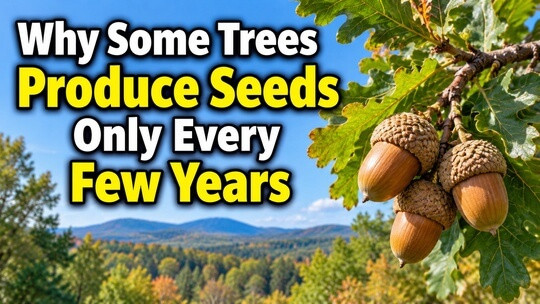
Have you ever noticed that an oak tree may cover the ground with acorns one autumn but produce almost none the following year? This irregular pattern is not unusual. Many trees naturally alternate between years of abundant seed production and years when they produce very few seeds.
A year in which trees produce an unusually large seed crop is called a mast year. The behavior itself is known as masting or mast seeding. Oaks are especially well known for it, but many other trees—including beeches, hickories, chestnuts, walnuts, maples, and certain conifers—can also produce seeds in irregular cycles.
Mast seeding is one of the fascinating ways trees use timing, stored energy, weather conditions, and cooperation with neighboring trees to improve the chances that their seeds will survive.
What Is a Mast Year?
During a mast year, a tree—or sometimes nearly every tree of the same species within an area—produces an exceptionally large number of seeds. An oak forest may suddenly be filled with acorns, while a beech grove may produce an unusually heavy crop of beechnuts.
The following year, those same trees may produce very little.
The time between large seed crops differs by species. Some trees may have a good crop every two or three years, while others may wait considerably longer. Jack pine, for example, commonly produces good seed crops at intervals of approximately three to four years, although cone production also varies with the tree’s age and growing conditions. University of Minnesota Extension
These cycles are not controlled by a perfectly predictable calendar. Weather, tree health, stored energy, pollination conditions, insects, and other environmental influences can all affect the size of a particular year’s seed crop.
Producing Seeds Requires a Great Deal of Energy
Trees receive energy through photosynthesis, but that energy must be divided among many important jobs. A tree needs resources to produce new leaves, extend its branches and roots, repair damage, defend itself from insects and disease, and survive periods of heat, cold, or drought.
Flowering and producing thousands of mature seeds also require a substantial investment.
Instead of producing the largest possible seed crop every year, some trees spend one or more years accumulating carbohydrates and nutrients. Once the tree has stored enough energy—and environmental conditions are favorable—it can direct more of those resources toward reproduction.
After a particularly heavy crop, the tree’s reserves may be temporarily reduced. It may then need additional growing seasons to rebuild its energy before producing another exceptionally large crop.
Large Seed Crops Overwhelm Hungry Wildlife
One of the leading explanations for mast seeding is called predator satiation.
Acorns, nuts, and other tree seeds are valuable food for squirrels, mice, deer, birds, insects, and many other animals. If a tree produced approximately the same number of seeds every year, local seed-eating animals could consume a large percentage of them.
Mast years disrupt that balance.
During years with small seed crops, wildlife may eat nearly all the seeds that are available. Animal populations cannot expand indefinitely when their food supply remains limited. Then, when trees suddenly produce an enormous crop, there are more seeds than the existing animals can possibly consume.
Even after wildlife has eaten its fill and carried away seeds for storage, many seeds remain. Some of those uneaten or forgotten seeds can germinate and develop into seedlings.
The strategy does not protect every seed. Instead, it increases the likelihood that at least some will escape hungry animals long enough to grow.
Producing Seeds Together Can Improve Pollination
Many mast-producing trees are pollinated by wind. This includes familiar trees such as oaks, beeches, hickories, and numerous conifers.
When many trees of the same species flower heavily at approximately the same time, the air can carry an abundance of pollen between them. This synchronized flowering may increase the likelihood of successful pollination and seed development.
Research on North American oaks has documented synchronized acorn production among trees, and in some cases even among different oak species growing in the same area. USDA Forest Service research
Synchronization is especially helpful when trees are spread across a woodland. One tree cannot control where the wind carries its pollen, but thousands of flowering trees can collectively release enough pollen to improve the odds of fertilization.
Weather Helps Set the Stage
Weather can strongly influence when trees flower and how many seeds eventually mature.
Conditions during spring flowering are particularly important. A late frost can damage flowers, while prolonged rain can interfere with pollen movement. Warm, dry weather may support better pollination for some wind-pollinated species.
Summer conditions matter as well. Drought, excessive heat, severe storms, or insect outbreaks can reduce the resources available for seed development. Favorable temperatures and sufficient moisture may allow a tree to mature a much larger crop.
Weather may also act as a regional signal. Because neighboring trees experience similar temperatures and precipitation, they may respond at the same time. This helps explain why entire groups of trees sometimes produce heavy crops together.
Studies of oak production show that acorn crops vary greatly from year to year and that climate, resources, species, and individual tree characteristics can all influence the result. USDA Forest Service
Not Every Tree Follows the Same Schedule
Even within the same species, individual trees can produce very different numbers of seeds.
Several factors may affect a tree’s productivity:
- Age and maturity
- Overall health
- Amount of sunlight
- Crown size
- Access to water and nutrients
- Damage from frost or storms
- Competition from nearby trees
- Insect and disease pressure
- Genetic differences
- Success of flowering and pollination
A large, healthy oak growing in an open field may receive more sunlight and have a wider crown than an oak crowded inside a dense forest. As a result, the open-grown tree may begin producing acorns earlier or produce heavier crops.
Young trees generally do not produce large quantities of seeds because much of their energy is being used for growth. Seed production normally increases after a tree reaches reproductive maturity, although the age at which this occurs differs considerably among species.
Why a Tree May Suddenly Stop Producing Seeds
A poor seed year does not necessarily mean that the tree is unhealthy.
The tree may simply be recovering from a previous mast crop or waiting for more favorable conditions. A small crop could also be caused by a spring frost, drought, unsuccessful pollination, insect damage, or the natural reproductive cycle of the species.
However, a mature tree that repeatedly fails to flower or produce seeds may be experiencing other problems. Limited sunlight, poor soil, root damage, severe pruning, disease, or declining health can all reduce reproduction.
Some trees also require pollen from another compatible tree. A healthy tree growing alone may flower normally but fail to produce a substantial crop if adequate pollination is unavailable.
Mast Years Affect the Entire Forest
A heavy seed crop can influence far more than the trees themselves.
Abundant acorns and nuts provide an important food source for deer, turkeys, squirrels, chipmunks, mice, and other wildlife. Deer, for example, consume mast foods such as acorns in autumn as they prepare for winter. University of Minnesota Extension
Large seed crops may improve animal survival and contribute to population increases. In later seasons, higher rodent populations can affect predators that depend on them, including foxes, hawks, owls, and other wildlife.
Mast years can also create opportunities for forest regeneration. When many seeds escape predators and land in favorable locations, a larger-than-normal group of seedlings may emerge the following spring.
Most of those seedlings will not survive to maturity, but producing them in large numbers gives the tree species more chances to establish the next generation.
What Mast Years Mean for Seed Collectors
Mast years can be excellent times to collect tree seeds because the supply is abundant and seed eaters may leave more behind. However, a large crop does not automatically mean every seed is viable.
Collectors should still look for mature, undamaged seeds and avoid those with holes, cracks, mold, or other signs of deterioration. Collection timing is also important because animals can quickly remove fresh nuts after they fall.
In a light seed year, collectors may need to check more trees or visit several locations. One tree may produce very few seeds while another nearby tree has a better crop.
It is also important to identify the tree correctly and learn the germination requirements of its species. Some tree seeds can be planted soon after collection, while others require cold stratification, warm stratification, scarification, or another treatment before they will germinate.
A Long-Term Survival Strategy
Trees that produce seeds only every few years are not failing during the quiet years. They are following a long-term reproductive strategy.
By storing energy, responding to favorable weather, flowering alongside neighboring trees, and occasionally producing more seeds than wildlife can consume, these trees improve the chances that at least a few seedlings will survive.
The next time you see a forest floor covered with acorns, walnuts, beechnuts, or cones, you may be witnessing a carefully timed mast year—one of nature’s most impressive examples of patience, coordination, and survival.